
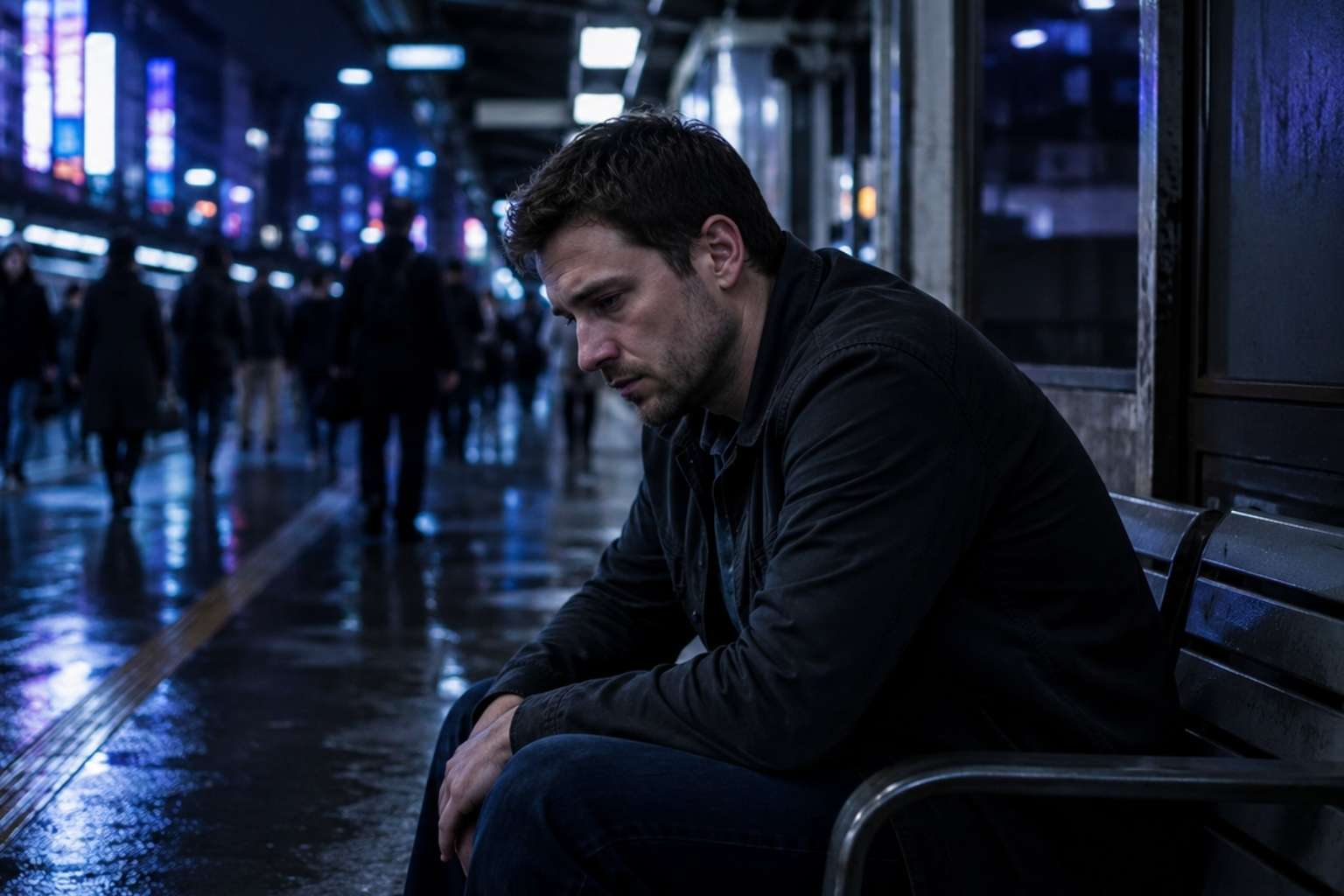
Burnout in Japan is not only about stress; it is about being told your suffering is normal.
This story will resonate with foreigners, workers, and long-term residents who feel isolated behind polite silence.
It matters because emotional pain becomes more dangerous when everyone around you expects you to endure it quietly.
The hardest part about burnout in Japan was not the pressure itself.
It was the moment I realized people could see that pressure and still tell me to treat it like ordinary life.
Long work hours. Silent expectations. Always staying polite. Always pretending you are okay.
For years, I tried to survive that rhythm.
Then I hit a wall.
Why This Story Hits Hard
Burnout does not arrive all at once.
It builds quietly.
At first, you think you are just tired. Then you think you need better sleep. Then you start wondering why simple things feel heavy. Messages feel heavy. Work feels heavy. Speaking honestly feels heavy.
But in Japan, the hardest part can come when you finally admit that you are not okay.
When I tried to talk honestly about my mental health, the response was not the support I expected.
It was quiet dismissal.
“Everyone works hard.”
“You should sleep more.”
“Try to endure.”
That was the moment everything changed for me.
I realized that emotional pain here can be treated less like a health problem and more like a discipline problem.
The Expectation vs Reality Shift
Before living in Japan long-term, I thought quietness meant peace.
I thought politeness meant care. I thought a calm society would make emotional life easier. I thought order would reduce stress, not hide it.
The reality was more complicated.
In Japan, you are often expected to carry stress quietly so you do not disturb the harmony around you. The mask matters. The smooth surface matters. The ability to keep going matters.
The moment your mask slips, people can become uncomfortable.
Not always because they dislike you.
Often because vulnerability itself feels inconvenient.
That is a hard thing to understand as a foreigner. You may come from a culture where talking about stress is treated as a step toward healing. In Japan, opening up can sometimes feel like creating trouble for the people around you.
[The Hidden Cost of Raising Kids in Japan]
What Changed Mentally
The scariest part of burnout in Japan is how quickly you start blaming yourself.
You begin to think maybe you are weak.
Maybe everyone else can handle it better.
Maybe you just need to try harder, complain less, sleep more, smile more, and stop being so sensitive.
Meanwhile, your mental health keeps getting worse behind a polite smile.
That is where burnout becomes dangerous. Not because stress exists, but because stress becomes normalized.
The pressure can look like this:
- burnout being treated as ordinary adult life
- foreigners feeling emotionally isolated in crowded cities
- “gaman” replacing actual support
- silence being mistaken for peace
Once that mindset enters your head, it is hard to remove.
You stop asking for help because you already expect dismissal. You stop explaining yourself because you do not want to sound dramatic. You keep functioning, but only on the outside.
The Hardest Lesson
The hardest lesson was learning that endurance is not the same as strength.
Japan often teaches people to keep going. There is dignity in effort. There is beauty in patience. There is value in not collapsing at the first sign of difficulty.
But endurance becomes harmful when it replaces care.
There is a difference between being resilient and being emotionally abandoned. There is a difference between handling pressure and being expected to suffer quietly because everyone else is suffering too.
That difference matters.
When people say “everyone works hard,” they may think they are comforting you. But sometimes that sentence makes the pain worse.
It tells you that your suffering is not serious.
It tells you that your breaking point is just normal life.
It tells you that asking for help is a failure of discipline.
That is not support.
That is gaslighting, even when it is spoken softly.
What Living in Japan Revealed
Living in Japan revealed how easily silence can be misunderstood.
A quiet office does not mean people are fine. A polite smile does not mean someone is coping. A clean train station, a calm street, and an orderly workplace do not show what is happening inside people’s minds.
Foreigners often feel this deeply.
You can be surrounded by people and still feel completely alone. You can speak the language and still feel emotionally untranslated. You can love Japan and still feel harmed by parts of the culture around stress.
That is the contradiction many long-term residents carry.
I still love many things about Japan.
But I stopped romanticizing the silence.
Because sometimes silence is not peace.
Sometimes it is just people suffering quietly together.
[Japan’s Free Homes Reveal a Painful Akiya Crisis]
What I Understand Now
I understand now that burnout in Japan is not only a personal issue.
It is also social.
It grows inside systems where people are praised for enduring, where emotional honesty feels risky, and where asking for support can be treated as weakness or disruption.
That does not mean every person in Japan lacks compassion. Many people care deeply. Many people are kind. Many people are also trapped inside the same pressure.
But kindness without language for pain can still leave people alone.
That is what makes mental health so difficult here.
The problem is not only that people suffer.
The problem is that many people are taught to suffer correctly.
Quietly.
Politely.
Without making anyone uncomfortable.
Final Thought
The hardest lesson I learned after years in Japan is that burnout becomes worse when nobody names it.
Stress can be survived for a while. Pressure can be managed for a while. But being told your pain is normal can make you disappear inside yourself.
I still believe Japan has many beautiful things.
But I no longer confuse silence with peace.
And I no longer believe endurance should be the only answer to suffering.
Question for readers: Have you ever tried opening up about burnout or mental health in Japan and felt like people just expected you to endure it?