
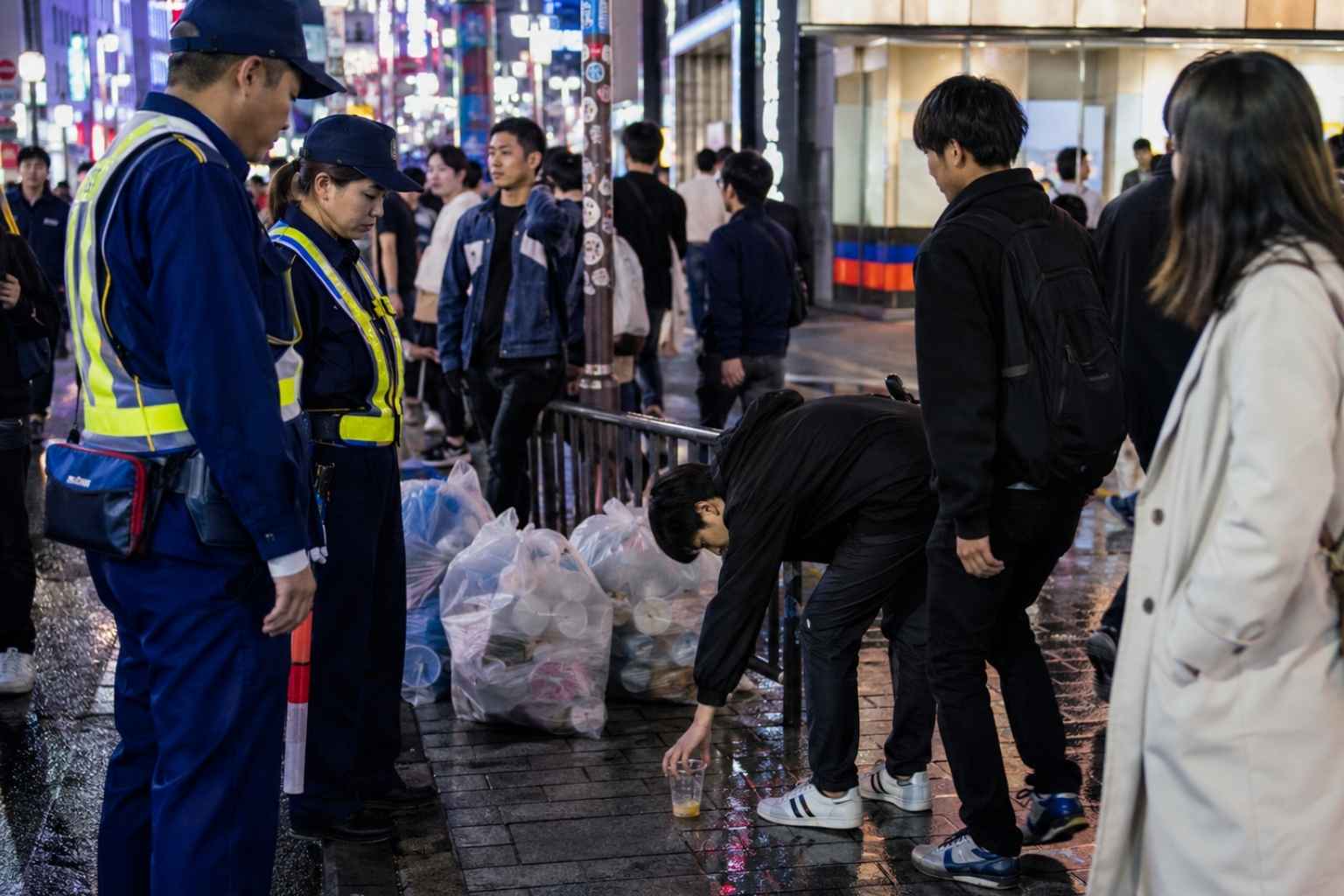
Dropping trash in Shibuya can now cost you 2,000 yen on the spot.
The rule affects tourists, nightlife visitors, foreign residents, students, workers, and anyone walking through the ward.
It matters now because the Shibuya public littering fine applies across the entire ward, not just around the famous crossing.
Shibuya Ward says it changed its littering rules because post-pandemic visitor numbers rose and litter increased beyond what awareness campaigns alone could handle. The ward’s official page says the revised ordinance was passed on December 10, 2025, and the 2,000 yen penalty began applying from June 1, 2026.
What Happened
Shibuya Ward has moved from asking people to keep the streets clean to financially punishing people who do not. The official rule applies to “everyone,” across the entire ward, including some privately owned spaces where the public or others have rights over the property.
The penalty is 2,000 yen. Shibuya’s official Q&A says ward patrol instructors can collect the administrative fine when they directly witness someone littering.
The ward says payment is expected in cash as a general rule, with cashless payment also planned. This is important for tourists who may not carry much cash while walking through nightlife areas.
The rule is not limited to cigarette butts. Shibuya defines litter as items such as cigarette ends, cans, bottles, PET bottles, packaging, chewing gum waste, wrappers, bags, printed materials, and similar scattered trash.
That means a drink cup, snack wrapper, bottle, or takeout package can become a real penalty issue if it is thrown away in the wrong place.
Why the Shibuya Public Littering Fine Matters
The Shibuya public littering fine is getting attention because Shibuya is one of Tokyo’s most visited areas. Tourists come for the scramble crossing, nightlife, shopping, food, music, and the constant movement around the station area.
But those same crowds create pressure. A small number of people leaving cans, wrappers, and food containers on sidewalks can quickly make a street feel dirty, especially late at night after convenience store drinking or takeout eating.
Shibuya says its basic policy has been “take your own trash home.” The ward now argues that stronger penalties are needed because litter increased as visitors returned after the pandemic.
This is why the rule feels different from ordinary travel etiquette. It is no longer only about being polite. It is now a local enforcement issue.
[Mount Fuji Climbing Rules 2026: New Caps And Fees Explained]
Where Do the Rules Apply?
The official page says the target area is all of Shibuya Ward. That means visitors should not assume the rule only covers Shibuya Scramble Crossing or the streets immediately around Shibuya Station.
In practical terms, travelers should be careful in well-known areas such as Shibuya, Harajuku, Ebisu, Omotesando, Yoyogi, and other places inside the ward.
The rule also applies beyond obvious tourist zones. If you drop litter on a quiet side street, park area, or commercial road inside the ward, the same 2,000 yen penalty can still apply.
This matters because many visitors move between famous neighborhoods without realizing they are still inside the same ward. A person shopping in Harajuku, drinking near Shibuya Station, and eating in Ebisu may all be covered by the same local rule.
Businesses Have New Trash Bin Duties Too
The revised rules do not only target individuals. Shibuya has also introduced trash-bin duties for some businesses that sell food and drinks.
The ward says eligible businesses that sell food or drinks must install and properly manage collection containers for trash created by what they sell. The rule applies in listed areas including parts of Shibuya, Harajuku, and Ebisu.
Examples listed by the ward include convenience stores, supermarkets, drugstores, cafes, fast food shops, bakeries, kitchen cars, and street-facing takeout-style businesses.
The business penalty is much higher than the individual fine. Shibuya says a business that does not comply after the ward’s process can face publication of its details and a 50,000 yen administrative fine.
The ward also says public trash bin installation is still being considered in cooperation with shopping districts. That detail matters because tourists often complain that Japan has very few public trash cans.
Who Is Affected
Tourists are the most obvious group affected by the Shibuya public littering fine. Many visitors are used to cities with public trash cans on almost every block, so Japan’s trash system can be confusing.
Nightlife goers are also at higher risk. People drinking, eating convenience store snacks, or moving between bars may hold trash for longer than expected because there is no public bin nearby.
Foreign residents, students, and workers should also pay attention. This is not a tourist-only rule, and Shibuya’s official page says the target is everyone.
Families and group travelers should be careful too. One person tossing a bottle or wrapper can create a penalty problem for the whole group, especially if a patrol officer sees it directly.
What This Means For Foreigners
For foreigners, the safest habit is simple: carry your trash until you find a proper place to dispose of it.
Practical steps:
- Carry a small plastic bag for wrappers and empty containers.
- Use bins at the shop where you bought takeout, if available.
- Do not leave cans or cups beside vending machines unless the container is meant for that item.
- Do not place trash on top of public ledges, planters, fences, or station exits.
- Check whether a shop bin is for customers only.
- Keep nightlife trash in your bag until you return to your hotel.
This is especially important because Shibuya also has separate street-drinking restrictions. Public drinking around Shibuya Station is banned from 6 p.m. to 5 a.m., according to reporting on the ward’s year-round rule.
However, this article is about the littering fine. Travelers should not assume that the 2,000 yen littering fine automatically applies to drinking itself unless Shibuya Ward separately confirms a specific financial penalty for street drinking.
What To Know Now
The key number is 2,000 yen. The key location is all of Shibuya Ward. The key risk is throwing trash anywhere other than an approved bin or collection point.
The rule is also enforceable. Shibuya says unpaid administrative fines can be handled strictly, including measures similar to delinquent tax collection.
So this is not a symbolic warning. If a patrol officer sees the littering, the person can be approached and fined.
The easiest way to avoid trouble is to treat trash in Shibuya the same way many locals do: keep it with you, take it back, or use a proper store bin.
Official Note
According to Shibuya Ward, the revised littering rule applies to everyone across the entire ward, carries a 2,000 yen administrative fine, and began applying from June 1, 2026. The ward also says patrol instructors can collect the fine when they directly witness littering, and that cashless payment is planned alongside cash collection.
According to Shibuya Ward’s separate trash-bin rule page, certain food and drink businesses in designated Shibuya, Harajuku, and Ebisu areas must install and manage customer-accessible trash containers, with a possible 50,000 yen fine after noncompliance procedures.
[Why Your Next Flight From Japan Just Got More Expensive]
Shibuya is still one of Tokyo’s most exciting places to visit. But under the new rules, keeping your trash in your hand or bag may be the easiest way to protect your wallet.
Question for readers: Is Shibuya’s 2,000 yen littering fine a fair way to protect the city, or will it make Tokyo nightlife feel too strict for visitors?