
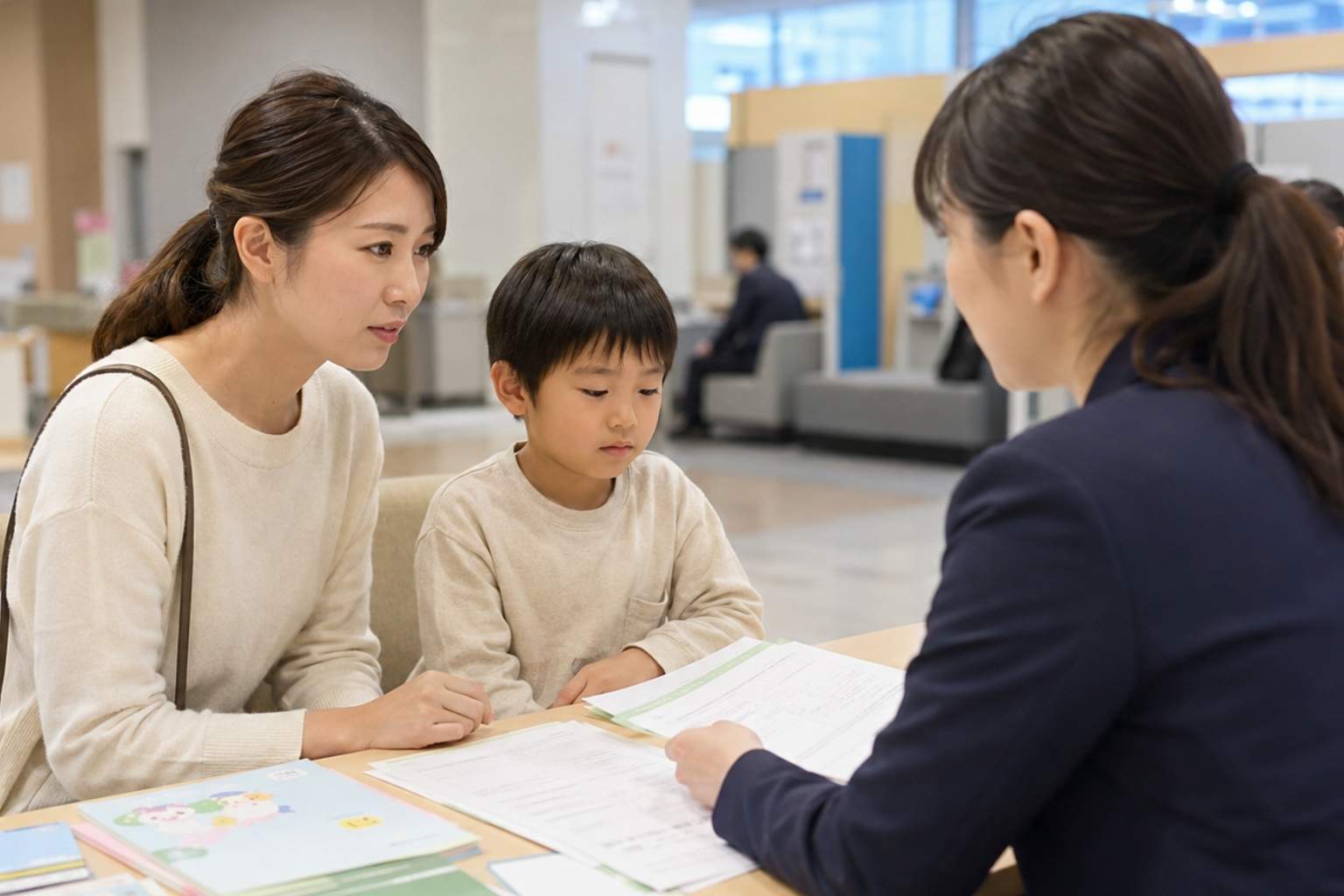
A practical step-by-step guide for foreign families preparing for Japanese public elementary school enrollment.
Learn the city office process, key documents, health-check timeline, and the mistakes that delay admission.
Moving your family to Japan is stressful enough before school paperwork enters the picture. This guide explains how to enroll child public school japan, where the process starts, which documents matter most, and how the annual schedule works for new first-graders and mid-year arrivals. It is for foreign workers, spouses, students with families, and long-term residents who need a clear school-enrollment path without getting lost in municipal procedures.
The biggest surprise for many parents is that enrollment usually does not begin at the school gate. It begins with your municipality and its Board of Education or school management division, because your child’s school placement is tied first to your registered address and local school district, not to whichever school building you visit first.
That is why timing matters so much. Japan’s school year starts in April and ends the following March, and the public enrollment process for first grade usually starts months before the first day of class through mailed notices, municipal paperwork, and pre-entry health checks.
Why This Guide Matters
If you are a foreign resident, your child is not automatically pushed through the public-school system in the same way Japanese compulsory education is handled for Japanese nationals. Official Shinjuku guidance says foreign residents are not obliged to attend Japanese compulsory education, but they may apply to enroll or transfer their children into municipal elementary or junior high school. That means the process depends on the parent taking action.
This matters because the enrollment system is built around local government administration. MEXT’s official guidebook for foreign children includes a model notice from the Board of Education telling parents to file the admission application form with the Board of Education if they want their child to attend the named municipal school. In practice, that means the city or ward office side is where your child’s school path gets activated.
It also matters because the assigned school is normally linked to where you live. Yokohama’s official new-enrollment page says the notice sent to parents includes the school the child will attend, and Shinjuku’s official guidance explains that school districts are designated according to the neighborhood where you live, even though some municipalities allow exceptions in special cases.
For families arriving from overseas, the emotional stakes feel high because the system mixes several different tasks into one season. You are not only enrolling a child. You are also proving residence, checking the school district, managing a health-check notice, and preparing a child to start in a completely new language and school culture.
The good news is that public elementary school itself is not the expensive part. Official municipal guidance says there is no charge for enrollment, classes, or textbooks at municipal elementary and junior high schools. The costs parents still need to plan for are the side expenses such as school supplies, field trips, excursions, lunches, and other daily school items.
That one distinction helps a lot. The real challenge in Japanese public school enrollment is usually not tuition. It is getting the paperwork, timing, and support systems lined up early enough that your child’s first day does not begin with confusion.
What This Is and Who Needs It
This guide is for parents enrolling a child in a Japanese municipal elementary school for the first time, whether your child is entering first grade in April or joining after a move. It is especially useful for foreign families whose everyday life in Japan is already underway but whose school paperwork still feels unclear.
It is also useful if your child will need language support. Shinjuku’s official foreign-resident guide says the city offers Japanese-language support classes for children transferring into kindergarten, elementary school, or junior high school in Japan who cannot yet speak Japanese, and it also offers school-based support where instructors can help with both language and communication between school and family.
That matters because many parents make the mistake of separating enrollment from language support. In reality, these things often need to be discussed together. If your child is entering school with limited Japanese, the best time to raise that issue is not after weeks of classroom stress. It is during the early consultation stage when the Board of Education or school-management office is already handling your case.
This guide is especially relevant if you fall into one of these situations:
- your child is turning six and will start elementary school next April
- your family moved into Japan or to a new municipality during the school year
- you received an autumn notice and do not know what happens next
- your child’s vaccination history and health records are in another country’s format
- you are worried about school zoning, language support, or side costs
Official sources support all of those pressure points. Yokohama says notices for new first-graders go out around October 15, followed by health checks from late October to early December and entrance briefings from late January to February. Shinjuku says foreign residents can apply for admission and transfer, and municipal guides make clear that language support exists but is handled through the local system, not by guesswork at the school gate.
Costs, Documents, or Setup Steps
The first step is not visiting the school directly. The first step is contacting the municipal side that handles school placement, usually the Board of Education, school management division, or the city or ward office section responsible for enrollment. MEXT’s guidebook and municipal foreign-resident guides both point parents to the Board of Education side for application and consultation.
For the core paperwork, the most consistently named items in official municipal guidance are your child’s residence card and your own residence card. Shinjuku’s current foreign-resident guide says parents should bring both their own and their child’s residence cards and consult with the Board of Education, and its earlier enrollment guidance says the same documents are used for the designated procedures.
If your municipality has already mailed an enrollment notice, bring that too. Yokohama’s official new-enrollment page says the notice sent around mid-October includes the school your child is scheduled to attend, the health-check timing, and the entrance ceremony date. That notice is not just informative. It is the paper trail that links your child to the municipal enrollment schedule.
The health side is the next major step. Yokohama’s official health-check page says the start-of-elementary-school health checkup is conducted under the School Health and Safety Act for children entering the following April, and it includes a physical exam, eye exam, dental exam, vision test, interview, and sometimes hearing tests or educational consultations.
This is where vaccination records enter the process, but parents need to understand it correctly. The health-check notice itself does not mean your child is barred from school unless every overseas record matches Japanese forms. What the official materials show is that the health survey used for the school-entry checkup asks for vaccination history, and if you need to fill that survey out at the checkup site, Yokohama tells parents they will need the Mother and Child Health Handbook because the vaccination history must be entered there.
So the safest practical move is this: gather whatever official immunization record you have before the municipal health-check period begins. If your child has a Japanese Mother and Child Health Handbook, bring or reference it. If not, organize your home-country records early so you are not trying to reconstruct vaccine history at the last minute.
The yearly timeline for children starting first grade is also more structured than many families expect. Yokohama’s official schedule says parents receive the school notice around October 15, school health checks run from late October through early December, entrance briefings are usually in late January to February, and the entrance ceremony is held around April 5.
That means the process works best when parents think in seasons, not in one sudden school-day deadline. Autumn is paperwork and notices. Late autumn is the health check. Winter brings more school-specific instructions. Spring is entry.
If your family arrives in the middle of the school year, do not wait for the next April cycle. Official Shinjuku guidance says foreign residents may apply not only for admission but also for transfer, and the city’s support system explicitly covers children who transferred into school in Japan and need Japanese-language adjustment.
That is the practical mid-year rule: as soon as your address is settled, contact the municipal education side and start the transfer process immediately.
[Moving to Japan Address Registration: City Office Guide]
Common Mistakes and Practical Tips
The most common mistake is going only to the school and assuming the school can solve everything on its own. Public school placement in Japan is tied to municipal records and school districts, so the school itself is often not your true starting point. The Board of Education or school-management side is.
Another common mistake is waiting until spring. By that point, the most useful notices, health checks, and preparations for first grade may already have been scheduled months earlier. Families who start in autumn or winter are usually in a much better position than families who begin asking questions only when April is close.
A third mistake is assuming the health check is just a hospital-type formality. It is actually part of the school-entry system, and the official notice includes the exact date, time, and location tied to the designated school. At the same time, parents should know one reassuring detail from Yokohama’s official FAQ: missing the checkup does not by itself affect school admission, but you should still contact the school and follow the instructions if you cannot attend.
Another easy mistake is under-preparing for the side costs. Public elementary school tuition is free, but the school year still comes with expenses. Official municipal guidance says families still pay for school supplies, field trips, excursions, lunches, and other educational materials, and income-based aid may be available if the household is struggling.
That is why the best practical checklist is not only about documents. It should include:
- residence cards for both parent and child
- the mailed enrollment notice if your city has issued one
- health-check papers and immunization records
- a note of your designated school and school district
- a question list about language support, lunches, supplies, and school-day expectations
One more mistake matters a lot for foreign families: assuming all municipalities offer the same level of English help at the counter. Some cities publish strong foreign-resident guidance, but the actual enrollment conversation may still happen mainly in Japanese. That is why parents should ask ahead about language support and not be embarrassed to seek help early if the office language feels overwhelming. Official Shinjuku guidance on enrollment has repeatedly told applicants to consult the Board of Education directly and, in earlier notices, advised parents who could not speak Japanese to come with someone who could.
What To Do Next
If your child is about to enter first grade next April, the smartest move is to treat autumn as the real starting season. Watch for the mailed school notice, open it immediately, and do not postpone the health-check step just because the entrance ceremony still feels far away.
If your family has just moved to Japan or to a new municipality, make the school consultation one of your first local-government tasks after your address is settled. The longer you wait, the more likely you are to create unnecessary delays for a child who could otherwise enter smoothly.
If your child will need Japanese-language support, ask that question at the beginning, not after admission is already in motion. Shinjuku’s official foreign-resident materials show that municipalities can offer support classes, tutors, and consultation between school and family, but those systems help most when parents bring up the need early.
And if you are feeling overwhelmed by the entire process, remember the most important point: public elementary school entry in Japan is usually a paperwork-and-timing challenge, not a tuition challenge. Once the municipal steps are done properly, the path ahead becomes much more predictable.
[Tokyo Garbage Guide: How to Sort Trash Without Mistakes]
Official Note
This guide is based on current official MEXT and municipal materials, including MEXT’s school-entry guide for foreign children, Yokohama’s current elementary-entry and health-check pages, and Shinjuku’s foreign-resident education guidance. Exact documents, counter names, and language-support arrangements can vary by municipality, so parents should always confirm the latest details with their own ward or city Board of Education before visiting.
For foreign families, enrolling a child in Japanese public school is one of those tasks that feels intimidating until the process becomes visible. Once you understand the notice, the office, the health check, and the timeline, it stops feeling like a bureaucratic mystery and starts feeling manageable.
Question for readers: Have you encountered any difficulties or unexpected language barriers while dealing with your local ward office for school enrollment?