
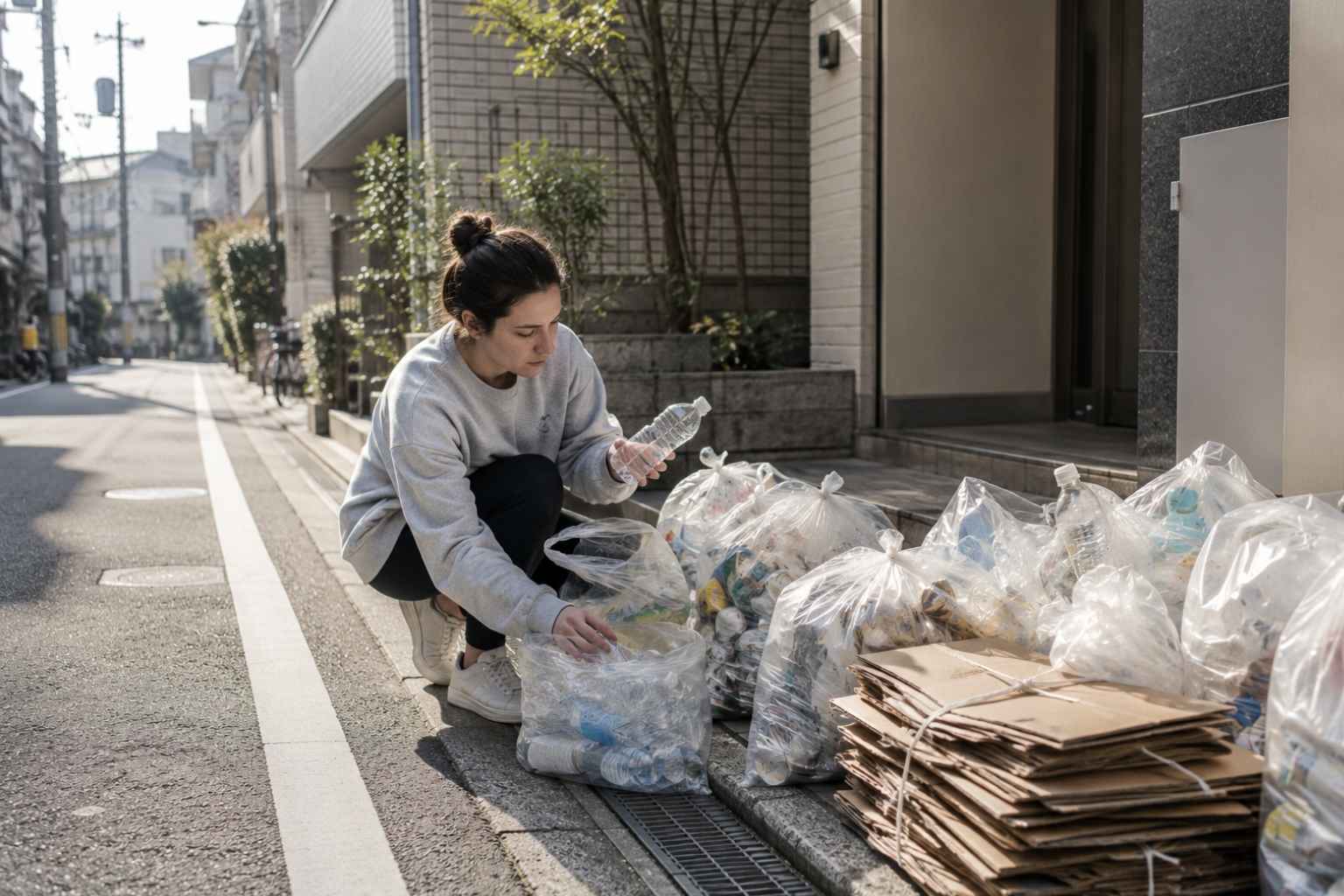
A practical Tokyo garbage sorting guide for residents who want to separate waste correctly, follow local collection rules, and avoid rejected bags.
Built for newcomers, foreign residents, students, and families who need a clear system before their first mistake becomes a neighborhood problem.
Tokyo garbage sorting can feel like a test you did not know you were taking. This guide covers the essential Tokyo garbage sorting rules, who needs to learn them fast, and why getting them wrong can cause left-behind bags or complaints from neighbors. It matters now because every ward has its own system, and even simple mistakes can create friction the moment you start living in a new neighborhood.
The hard part is not only the trash itself. It is the fact that Tokyo expects you to follow a local routine that changes by municipality, starts early in the morning, and leaves very little room for guesswork. One wrong bag, one missed category, or one badly timed drop-off can suddenly make a private household mistake feel public.
That is why this guide matters so much for long-term search. People moving to Tokyo are not really asking how to throw something away. They are asking how to avoid the stress of being the person whose garbage gets left behind.
Why This Guide Matters
Tokyo garbage sorting feels complicated because it is not one citywide habit with one simple set of bins. It is a local system managed at the ward level, and that means the rules shift depending on where you live.
That is the first thing new residents get wrong. They assume trash works the same way across the city. It does not.
Your raw details make that clear. Minato Ward, Shinjuku Ward, and Shibuya Ward all have their own schedules and specific colored bags. That means even if a friend in another part of Tokyo explains their system to you, that does not automatically mean it matches yours.
This matters because trash in Japan is not treated like a casual household chore. It is part of local community life. Streets stay clean because people are expected to sort properly, follow the calendar, and respect the collection point.
That is why garbage mistakes carry more social weight than many newcomers expect. If your trash is repeatedly rejected, it does not stay invisible for long. Building managers and neighborhood associations notice patterns.
The result is simple. Good garbage sorting reduces stress fast. Bad garbage sorting creates repeated small problems that can make daily life feel tense for no good reason.
That is also why Tokyo garbage sorting is one of the most important practical systems for foreigners to learn early. You may be able to delay mastering other paperwork or routines for a while. Trash is different because it starts affecting your daily life immediately.
What This Is and Who Needs It
This is a practical guide to the basic Tokyo household trash system based on the key rules in your raw details. It is not a ward-by-ward calendar, and it is not a replacement for your local official notice. It is a working guide to the categories, timing, and mistakes that cause the most trouble.
This guide is especially useful for:
- newcomers moving into their first Tokyo apartment
- foreign residents trying to understand local garbage rules fast
- students living alone for the first time in Japan
- couples or families doing a move-in setup
- anyone whose trash has already been rejected once
It is also useful for people who think they understand the basics but still get tripped up by details like PET bottle caps, bag rules, cardboard handling, or large-item disposal.
That is where most garbage problems begin. Not with a huge misunderstanding, but with one small wrong assumption repeated over and over.
The best way to use this guide is to think in layers. First, learn the four main categories. Then learn the local timing rules. Then fix the small mistakes that cause rejection.
Once those three parts are clear, Tokyo garbage sorting becomes far less intimidating.
Costs, Documents, or Setup Steps
The foundation of Tokyo garbage sorting is separation at home. According to your raw details, most wards divide household waste into four primary categories, and you are expected to sort before taking anything to the neighborhood collection point.
1) Combustible Waste (Burnable)
This category includes:
- food scraps
- paper waste
- rubber items
- leather goods
- small plastic items that cannot be recycled
One detail matters especially here: food waste should be drained of water completely before disposal. That is easy to overlook, but it is one of the most useful practical habits in the whole system.
If you do only one thing better with burnable trash, do that. Wet food waste makes bags heavier, messier, and more likely to become a problem.
2) Incombustible Waste (Non-burnable)
This category covers:
- glass bottles for medicine or cosmetics
- ceramics
- metals
- pots
- pans
- small electronic appliances
This is one of the most common trouble areas because people tend to assume that if something is small, it must be easy to throw away. But small does not always mean burnable, and small electronics do not belong in ordinary household bags just because they fit.
3) Recyclables
This group includes:
- clean plastic bottles (PET)
- aluminum and steel cans
- glass beverage bottles
- paper products such as newspapers and cardboard boxes
The most important word here is clean. Recyclables are not just about material. They are also about condition.
That is why rinsing and separating matter so much. A recyclable item that still carries the wrong parts or the wrong dirt becomes much more likely to be handled incorrectly.
4) Large Waste (Sodai Gomi)
Any household item measuring more than 30 centimeters on any side usually falls into this category. Your raw details list examples such as:
- furniture
- mattresses
- bicycles
This is where people make the most expensive or embarrassing mistake. You cannot simply leave a chair, microwave, or other large item at the normal trash spot and hope it gets taken.
The correct process in your raw details is clear:
- contact your local Sodai Gomi center
- pay a fee
- buy the correct sticker at a convenience store
- attach it to the item
- book a collection date
That is not optional detail. It is the difference between proper disposal and an obvious neighborhood problem.
Collection Days and Timing
Tokyo garbage collection is managed by ward, which means your exact collection days depend on where you live. That is why your own ward’s official calendar matters so much.
Most areas collect:
- burnable trash twice a week
- non-burnables and recyclables once a week or once every two weeks
Timing matters just as much as category. Your raw details say trash usually must be placed at the designated neighborhood collection spot on the correct morning, usually before 8:00 AM.
Another key rule is just as important: leaving trash out the night before is highly discouraged because it attracts crows and stray animals.
That single habit causes a lot of avoidable trouble. Even if the bag is sorted correctly, the timing can still make it wrong.
[The Frozen Account Trap in Japan: Why Legal Residents Get Locked Out During Visa Renewal]
Common Mistakes and Practical Tips
Most garbage mistakes in Tokyo are not dramatic. They are small, specific, and completely avoidable once you know what collection workers are looking for.
Leaving Caps and Labels on PET Bottles
This is one of the clearest examples in your raw details. PET bottles are not ready for recycling until you:
- remove the plastic cap
- remove the plastic wrap label
- rinse the bottle
- flatten it
- place it in the PET bottle bin
The cap and label do not stay on the bottle. They go into the plastic recyclable bin. That is one of the details many new residents miss.
Using the Wrong Trash Bags
Another major mistake is using black or fully opaque bags. Your raw details say many Tokyo wards require official semi-transparent bags authorized by local government.
That matters because workers need to see what is inside. If the contents are hidden, the bag may be rejected even before anyone gets into the finer details of how it was sorted.
Mixing Paper Types
Paper looks simple until it is not. Your raw details make a few important distinctions:
- cardboard boxes must be flattened
- cardboard must be tied together with string
- dirty food-stained pizza boxes do not go with clean recyclable paper
- dirty paper belongs in burnable trash
This is a common beginner mistake because people often think all paper belongs together. In Tokyo garbage sorting, condition matters as much as material.
Dumping Large Items Without a Permit
This is the mistake that creates the most obvious neighborhood backlash. Large items do not go out with ordinary household trash.
If you remember nothing else about Sodai Gomi, remember this: do not leave bulky items at the regular collection point without booking the proper pickup and attaching the proper sticker.
A Better Daily Routine
The easiest way to reduce garbage stress is to make sorting a kitchen habit, not a last-minute trash-day panic.
A stronger home routine looks like this:
- keep burnables and recyclables separate from the start
- rinse PET bottles, cans, and bottles as you use them
- remove PET caps and labels immediately
- flatten cardboard when it enters the house
- check your ward calendar before disposal day
- put trash out only on the correct morning, usually before 8:00 AM
That routine matters because it turns Tokyo garbage sorting from a weekly puzzle into a daily system.
What To Do Next
If you just moved to Tokyo, the smartest first step is not memorizing every rule at once. It is learning your ward’s official collection calendar and matching your home setup to the four main categories in this guide.
Start by doing these things first:
- look up your specific ward’s official garbage calendar
- confirm the correct collection days for your area
- check whether your ward requires official semi-transparent bags
- create four simple sorting areas at home
- identify a plan for Sodai Gomi before you need it
Then focus on the mistakes that get bags rejected most often:
- PET bottles with caps and labels still attached
- wrong bags
- dirty paper mixed with recyclables
- large items dumped without booking collection
- trash left out the night before
That is the practical order that saves the most stress the fastest.
For foreigners, this is also about community life, not only trash technique. Your raw details make that point clearly. Proper garbage sorting shows respect for the neighborhood and helps you avoid building-manager complaints or local friction.
That is why learning the system early matters. Garbage is one of the first ways daily life in Tokyo tests whether you can adapt to local routines without drama.
Once you understand your ward schedule, the four categories, and the common errors, the whole system stops feeling like a mystery. It becomes one more part of ordinary life that you can handle smoothly.
[How to Print Juminhyo at a Convenience Store in Japan]
Official Note
Tokyo garbage sorting is handled at the ward level, so exact schedules, bag requirements, and collection details can change depending on where you live. The practical rules in this guide are based on the raw details above, including the four main waste categories, the usual before-8:00-AM collection timing, PET bottle handling, semi-transparent bag use, cardboard rules, and the Sodai Gomi sticker-and-booking process for large items.
Getting Tokyo garbage sorting right is not about perfection. It is about learning the local system early enough that daily life stays smooth instead of awkward.
Question for readers: What was the hardest part about learning the trash system when you first moved to your Tokyo neighborhood?