
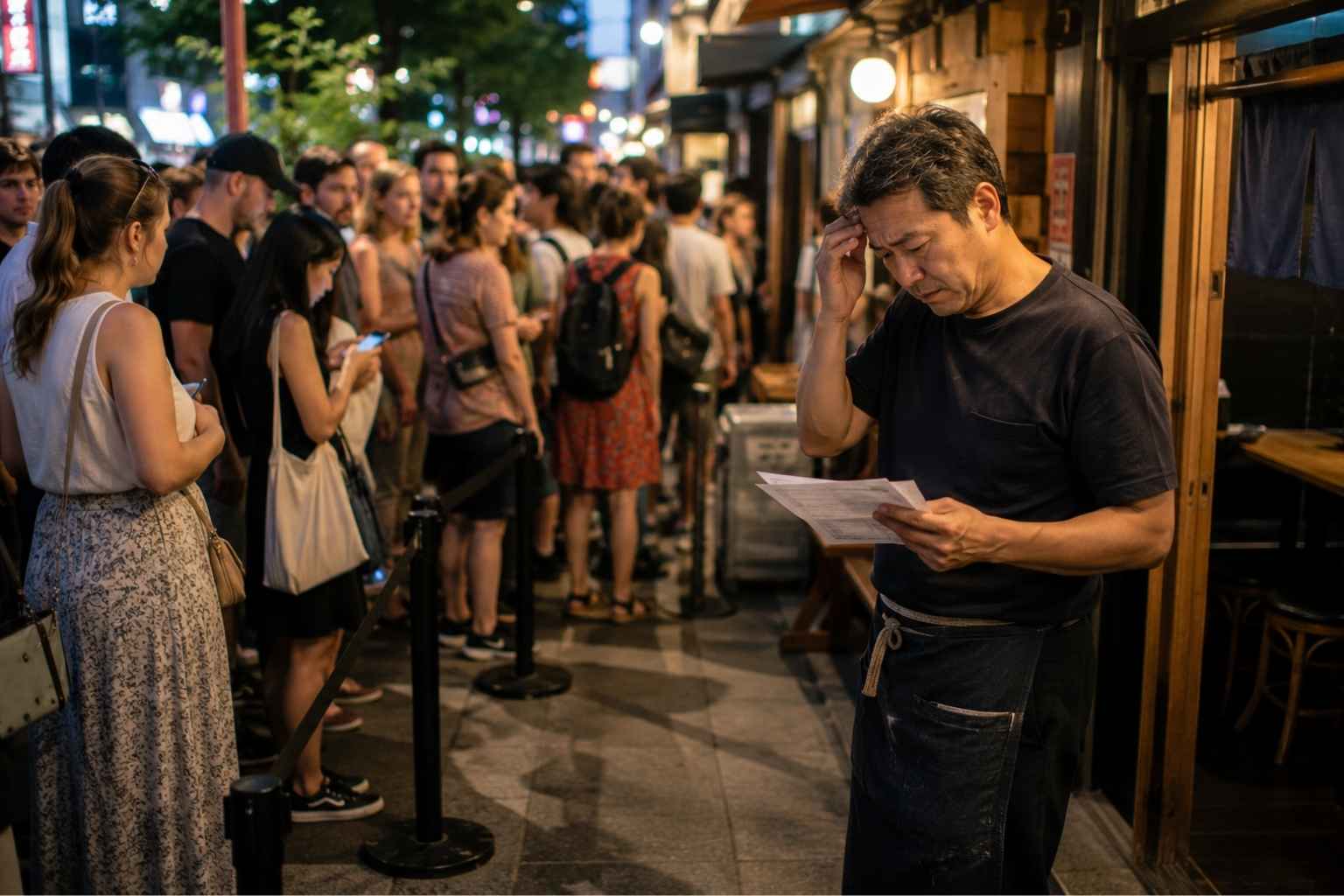
Japan has stopped most new foreign food service hiring under one of its main work routes.
That freeze is hitting just as tourism demand stays high and restaurants still need staff.
The Japan restaurant worker visa freeze took effect on April 13, 2026, after the Immigration Services Agency said the food service sector was on course to exceed its 50,000 intake ceiling around May. It affects foreign job seekers, hospitality students hoping to switch status, restaurant owners, and Specified Skilled Worker applicants targeting restaurant jobs. It matters now because the freeze landed while inbound travel remains near record levels and service demand has stayed strong.
According to official guidance, this is not a blanket shutdown for everyone already in the sector. Renewals still go through normal review, and some limited exceptions remain for certain in-country cases, including some job changes and specific transition paths.
Japan Restaurant Worker Visa Freeze: What Happened
The immediate trigger was the cap itself. On March 27, 2026, Immigration said the number of Specified Skilled Worker No. 1 residents in the food service sector had already reached about 46,000 by the end of February and was expected to exceed the 50,000 ceiling around May 2026. That ceiling covers the fiscal 2024 to 2028 intake window, so the sector is effectively hitting a five-year limit far earlier than many employers expected.
Here is what the official change means in practice:
- New Certificate of Eligibility applications for Specified Skilled Worker No. 1 in food service accepted on or after April 13, 2026 are not being issued.
- Change-of-status applications into food service SSW accepted on or after April 13 are generally being denied.
- In-sector job changes for people already in Japan on food service SSW status can still be reviewed in the usual way.
- Some transition cases remain open, including certain technical intern trainees and people already on the special “preparation for SSW transition” status.
- Stay renewals for people already holding food service SSW status continue under normal review.
- OTAFF has also suspended reservations for the food service sector skills exam in Japan and overseas until further notice.
That makes this more than a routine visa slowdown. For many would-be hires, the door is not merely slower to open. It is effectively shut unless they fall into a narrow exception.
Who Is Affected
The biggest hit falls on people who were still in the pipeline rather than already settled inside the sector. That includes overseas applicants, students planning a status switch, and restaurant operators who were counting on the SSW route for near-term hiring.
The groups most exposed now are:
- Foreign job seekers trying to enter Japan directly for restaurant or food service work under SSW No. 1.
- Hospitality students and part-time workers who hoped to move into full-time restaurant employment through the food service SSW route.
- Restaurant owners and chains that built staffing plans around new foreign recruitment.
- Existing food service employers waiting for exam slots, because the sector test booking process is also paused.
- Current SSW food service workers who are safer than new applicants, but still need to understand the limits on who can newly enter the sector.
For applicants already outside Japan, this is especially harsh. According to the official notice, applications filed before April 13 may still be processed within the cap, but anything accepted after that date falls into the new freeze rules.
Why This Matters for Workers
The timing is the real problem. Japan welcomed about 42.7 million foreign visitors in 2025, the highest annual total on record, and February 2026 alone brought a record 3.466 million arrivals for that month. At the same time, Reuters reported strong services demand in early 2026, showing the wider service economy was still benefiting from rising activity and customer turnout.
That means the cap did not arrive during a quiet patch. It hit while restaurants were still dealing with heavy customer demand and a long-running staffing problem.
Some of that pressure is already showing up at company level. Seoul Economic Daily, citing Nikkei, reported that SFP Holdings was considering shorter operating hours and reviewing store-opening plans after the freeze, while Skylark paused plans to move some international student part-timers into full-time roles through the SSW pathway. That report also said the food service job-to-applicant ratio was 2.4, far above the overall average.
This is why the policy gap looks so sharp. Japan created the specified skilled worker system to address shortages in sectors that could not fill jobs domestically, yet one of the most visible shortage sectors has now run into a hard administrative ceiling while demand is still strong.
For workers, the result is simple but painful:
- A passed exam or employer offer is no longer enough if the application timing misses the cutoff.
- A route that looked open a few months ago is now largely closed for new outside hires.
- Businesses may shift harder toward in-country recruitment, poaching, or internal transfers because brand-new overseas intake has been cut off.
[Japan’s 2027 Residency Squeeze Is Starting to Show]
What To Know Now
If you are planning restaurant work in Japan, the first thing to check is not your test score. It is whether your case still fits one of the few lanes left open under the current rules.
A practical checklist now looks like this:
- If you are applying from overseas for a new food service SSW job, assume the route is effectively blocked unless policy changes again.
- If your application was accepted before April 13, it may still be processed, but delays are expected.
- If you are already in Japan on food service SSW and changing employers inside the same sector, your case can still be reviewed normally.
- If you were planning to take the food service skills test soon, note that reservations are suspended until further notice.
- If you are an employer, you now need backup hiring plans that do not depend on brand-new food service SSW intake.
The bigger lesson is that quota-driven labor policy can move much faster than worker planning. In this case, people who were preparing legally for food service jobs may now find that the system changed before they could finish the process.
[Japan’s Business Visa Shock Is Hitting Small Firms Fast]
Official Note
This article is based on Immigration Services Agency guidance issued on March 27, 2026, OTAFF’s notice suspending food service exam reservations, and recent reporting on tourism demand and restaurant-side impact. The official materials confirm the cap pressure, the April 13 freeze date, the limited exceptions, and the fact that renewals continue under normal review.
Japan says the freeze is about operating within the sector’s intake ceiling. But for restaurants short on staff and workers who were counting on this route, it looks like a labor shortage policy that has run straight into its own limit.
Question for readers: Why is Japan shutting out willing restaurant workers when so many food service businesses still cannot find enough staff?