
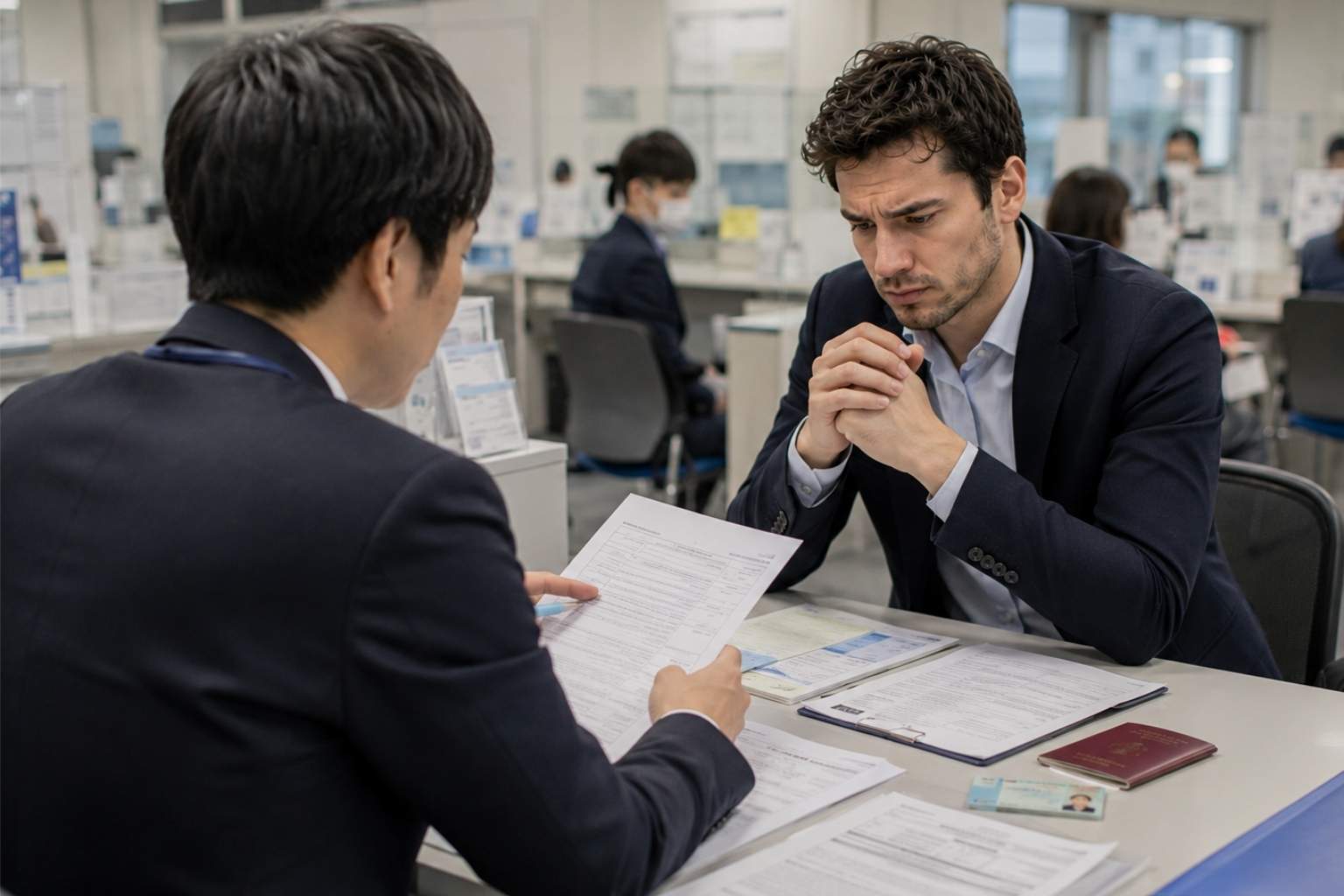
The crackdown is not one single new law.
But the pressure on long-term foreign workers in Japan is already getting harder to miss.
The Japan permanent residency rules 2027 issue is taking shape through several separate changes, not one simple headline rule. It affects long-term foreign workers, engineers, humanities specialists, and expats planning permanent residency or routine renewals. It matters now because official guidance already tightened some visa checks in 2026, current permanent residency guidance contains a key March 31, 2027 cutoff, and the government is openly considering clearer income screening while also moving toward higher immigration-related fee ceilings.
That makes this a paperwork and planning story as much as an immigration story. Workers who assume their next renewal or PR application will work the same way it did a few years ago may be relying on rules that are already changing.
Japan permanent residency rules 2027: What Happened
One confirmed 2027 checkpoint is already written into the official permanent residency guideline. The Immigration Services Agency says that only until March 31, 2027 will a current period of stay of three years be treated as the “longest period of stay” for PR purposes; after that date, the standard rule on holding the longest period of stay applies again.
The same February 2026 PR guideline also makes something else very clear: permanent residency applicants are expected to be properly paying taxes, public pension, and public medical insurance premiums, and even if overdue amounts are later paid off, late payment is still generally assessed negatively. That means compliance timing matters, not just whether the balance is eventually cleared.
A second confirmed shift comes from the 2024 immigration law revision and the agency’s own Q&A on permanent resident status. The government says intentional nonpayment of public dues, including taxes and social insurance-style public charges, can become grounds for cancelling permanent resident status or changing it to another status, while illness or job loss that makes payment impossible is not the situation the measure is aimed at.
That is important because some viral claims are getting ahead of the official text. In the current February 2026 PR guideline, the legal requirements listed are good conduct, stable livelihood, proper payment of public obligations, holding the longest period of stay, meeting applicable landing standards, and not creating a public health risk. The official guideline does not currently list a stand-alone Japanese language test as a formal PR requirement.
What official policy papers do show is movement on income screening. The government’s comprehensive measures say Japan will consider setting income benchmark amounts under the stable-livelihood and national-interest parts of the PR framework in order to improve predictability and transparency. That means income screening is a live policy direction, but the reviewed official materials do not yet publish one final across-the-board PR minimum income number for everyone.
Who Is Affected
The workers most exposed are the ones who thought they were in the “safe” middle: long-term residents with stable jobs, people planning PR around the old three-year assumption, and foreign staff whose taxes or insurance paperwork is not perfectly clean.
Several groups stand out:
- Foreign workers planning PR applications around a current three-year period of stay before the March 31, 2027 cutoff
- Permanent residents with unresolved or repeated problems paying taxes, pension, or public medical insurance on time
- Workers on Engineer/Specialist in Humanities/International Services status at smaller private employers, especially in language-heavy roles
- Lower-wage workers who could be squeezed harder if formal income benchmark amounts are set more clearly in the future
There is also a large work-visa population sitting under stronger scrutiny already. Official year-end 2025 data shows 475,790 people in the Engineer/Specialist in Humanities/International Services category, making it one of the largest statuses in the country.
From April 15, 2026, category 3 and 4 applications in that status must attach extra documents, and if the work mainly involves language-based interpersonal duties, applicants must provide CEFR B2-equivalent proof, with examples such as JLPT N2 or BJT 400+. The same official page says the extra proof can also be required at renewal if someone changes jobs or duties into that kind of role.
That tightening is tied to a broader misuse concern. Immigration policy materials say there have been multiple cases where people approved under the humanities status were later found doing work that did not match the specialized activity described in the application, including site-level work that did not qualify under the category.
Why This Matters for Workers
The practical risk is not just rejection. It is that more parts of a foreign worker’s life are now connected in one review chain: job content, employer category, tax record, pension payments, insurance payments, and even whether the current period of stay still fits future PR timing.
That can change how workers make decisions. A job switch that looks harmless on paper may suddenly matter at renewal if the new role is more client-facing and language-heavy. A PR plan built around a three-year status may need to move faster before the March 2027 cutoff. And a tax or insurance delay that once felt like a fixable admin problem may now carry immigration consequences if the government views it as intentional noncompliance.
Cost pressure is also growing. Current official fee pages show that since April 1, 2025, extending period of stay costs ¥6,000 in person or ¥5,500 online, while permanent residency permission costs ¥10,000. On top of that, a Cabinet bill submitted to the Diet on March 10, 2026 would raise the legal fee ceilings to ¥100,000 for change or extension of status and ¥300,000 for permanent residence, even though the actual future fee amounts would still be set separately.
That is why the story reaches beyond immigration lawyers and visa groups. When compliance costs, timing risk, and document burdens all rise together, even workers who are following the rules can start feeling that staying long term is getting harder and more expensive than planned.
[Why High-Level Japanese Still Does Not Guarantee High Pay]
What To Know Now
For foreign workers already in Japan, the safest move is to stop treating PR and renewals as routine.
A practical checklist now looks like this:
- Check whether your current PR timing depends on the temporary three-year treatment that ends on March 31, 2027
- Make sure resident tax, pension, and public medical insurance records are fully up to date and paid on time, not just eventually paid
- If you are on Humanities status, confirm your employer category and whether your actual work is mainly language-based interpersonal work
- Budget for today’s higher immigration fees and keep an eye on the 2026 bill that could allow much larger fee hikes later
- Do not assume every widely shared “2027 rule” is already official; check the actual published guideline first
Official Note
This article is based on official Immigration Services Agency guidance on permanent residency, the agency’s Q&A on PR cancellation and status change, official 2025-2026 fee pages and bill materials, official 2025 foreign resident statistics, and the published April 15, 2026 changes for Engineer/Specialist in Humanities/International Services applications. The official materials reviewed here confirm tighter public-dues scrutiny, a March 31, 2027 PR timing cutoff, stronger humanities-visa checks, and possible future income-benchmark setting, but they do not currently publish a stand-alone PR Japanese-language test requirement as a finalized rule.
The real warning is not that every foreign worker is about to be pushed out at once. It is that Japan’s immigration system is becoming less forgiving of weak paperwork, weaker timing, and assumptions based on older rules.
Question for readers: Do you think these tighter rules protect the system, or are they making Japan a harder place for the long-term foreign workers it still needs?