
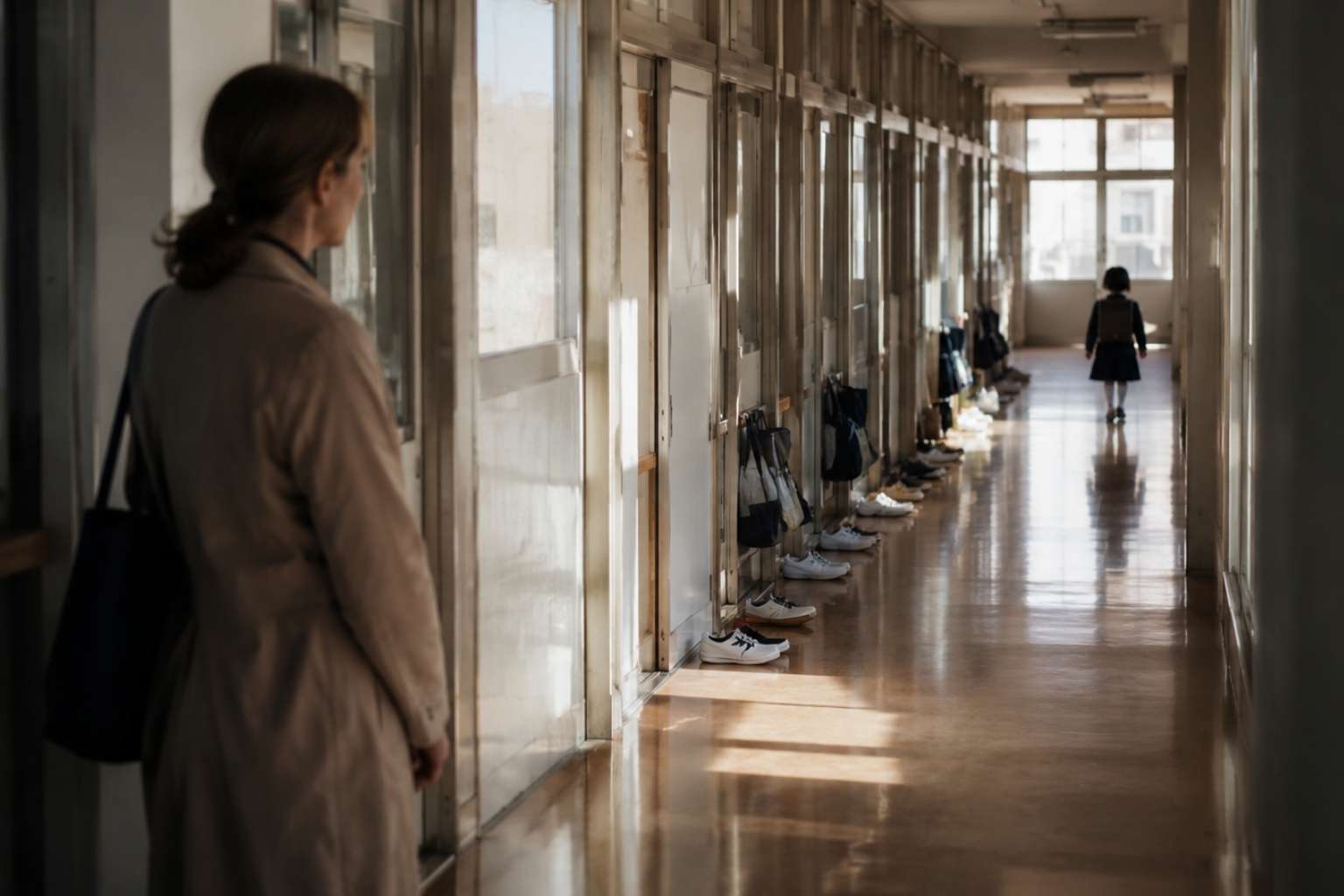
I moved to Japan believing I was giving my children a safer and better future.
This story will resonate with foreign parents, mixed families, and anyone raising children inside Japan’s school culture.
It matters because a country can feel safe for a child’s body while still being difficult for their identity.
The hardest parenting lesson I learned in Japan was not about language.
It was realizing how early children here can be taught that fitting in matters more than being themselves.
When we first moved here, I thought I had chosen the perfect place for my kids. Safe streets. Clean schools. Respectful classrooms. A society where children can walk home alone and parents do not have to panic every afternoon.
It felt like a dream.
Then school started.
Why This Story Hits Hard
At first, the rules seemed harmless.
The same bags. The same shoes. The same hairstyles. The same way of speaking. The same quiet rhythm inside the classroom.
I understood the reason behind it. Japan values order. Schools try to create calm spaces where children learn how to live together. There is beauty in that. There is comfort in that.
But over time, I started noticing something deeper.
The system did not always feel designed to raise unique human beings. It often felt designed to create smooth social harmony.
That difference matters.
Because children are not only learning math, reading, cleaning routines, and classroom manners. They are also learning what parts of themselves are acceptable.
The Expectation vs Reality Shift
The expectation was that Japan would give my children structure without fear.
The reality was more complicated.
I watched children get corrected for solving problems differently. I watched mixed children feel embarrassed for looking “too foreign.” I watched teachers focus more on “not disrupting the class” than protecting individuality.
That was when the fear hit me.
Because the highest compliment in many schools here is not always, “Your child is creative.”
It is often closer to: “Your child does not cause trouble.”
And honestly, that sentence haunted me.
As a parent, I started asking questions I did not know how to answer. Do I teach my child to adapt so they survive socially? Or do I protect the parts of them that make them different?
[Why Japan’s Young Generation Has Stopped Chasing Big Dreams]
What Changed Mentally
Once I saw the pressure clearly, I could not unsee it.
I began noticing how much energy children spend learning how not to stand out. How to speak at the right volume. How to dress the right way. How to answer in the expected pattern. How to avoid becoming the child everyone notices for the wrong reason.
In Japan, standing out can come with a price.
Sometimes that price is isolation.
Sometimes it is bullying.
Sometimes it is quiet exclusion that nobody openly talks about.
The pressure can look small from the outside, but it shapes a child from the inside.
For foreign and mixed children, that pressure can become even heavier. They may already look different, speak differently at home, or carry more than one culture inside them. But instead of feeling proud of that difference, they can slowly learn to hide it.
The Hardest Lesson
The hardest lesson was realizing that safety and identity are not the same thing.
Japan can be incredibly safe in many visible ways. Children can walk to school. Classrooms can feel orderly. Public spaces can feel calm. Parents can feel grateful for the structure.
But identity is quieter.
A child can be physically safe and still feel emotionally squeezed.
That is the part nobody shows in the perfect Japan family life videos online. The daily pressure to smooth every edge. The pressure to be easy. The pressure to not cause trouble. The pressure to make teachers comfortable, classmates comfortable, and society comfortable.
And before anyone misunderstands this, there are incredible teachers in Japan.
There are schools doing beautiful things.
Many children thrive here.
But long-term foreign parents know this pressure is real. It is not always dramatic. It is often slow, polite, and invisible.
That is what makes it hard to talk about.
What Living in Japan Revealed
Living in Japan revealed that harmony can be beautiful, but it can also become heavy.
When harmony means kindness, patience, and respect, it helps children grow. But when harmony means silence, self-erasure, and fear of standing out, it becomes something else.
That is where many parents struggle.
The pressure can show up in simple ways:
- children being rewarded more for obedience than originality
- emotional honesty being treated as disruption
- mixed or foreign children feeling pressure to hide parts of themselves
- parents constantly balancing individuality against social survival
None of this means Japan is bad for children.
It means raising kids here requires clear eyes.
You can love the safety, respect the culture, and still worry about what the system is teaching your child to bury.
[Why Japan Spouse Visa Fees and Paperwork Frustrate Families]
What I Understand Now
Ten years later, I still love many things about raising children in Japan.
I love the safety. I love the care many teachers put into daily routines. I love the sense that children are expected to think about others, not only themselves.
But I also understand something painful now.
A child should not have to disappear to belong.
As a parent, that is the line I keep coming back to. I want my children to adapt. I want them to understand the society they live in. I want them to be respectful, thoughtful, and able to move through Japan without unnecessary pain.
But I do not want them to confuse survival with identity.
I do not want them to believe that being easy for others is the same as being good.
Final Thought
Raising kids in Japan taught me that the safest-looking life can still carry invisible pressure.
The hardest part is not rejecting the system completely. It is learning how to help your child live inside it without losing themselves.
Because sometimes the real fear is not that your child will stand out.
It is that they will learn not to.
Question for readers: If you are raising children in Japan, have you ever felt forced to choose between protecting their individuality and helping them fit in?