
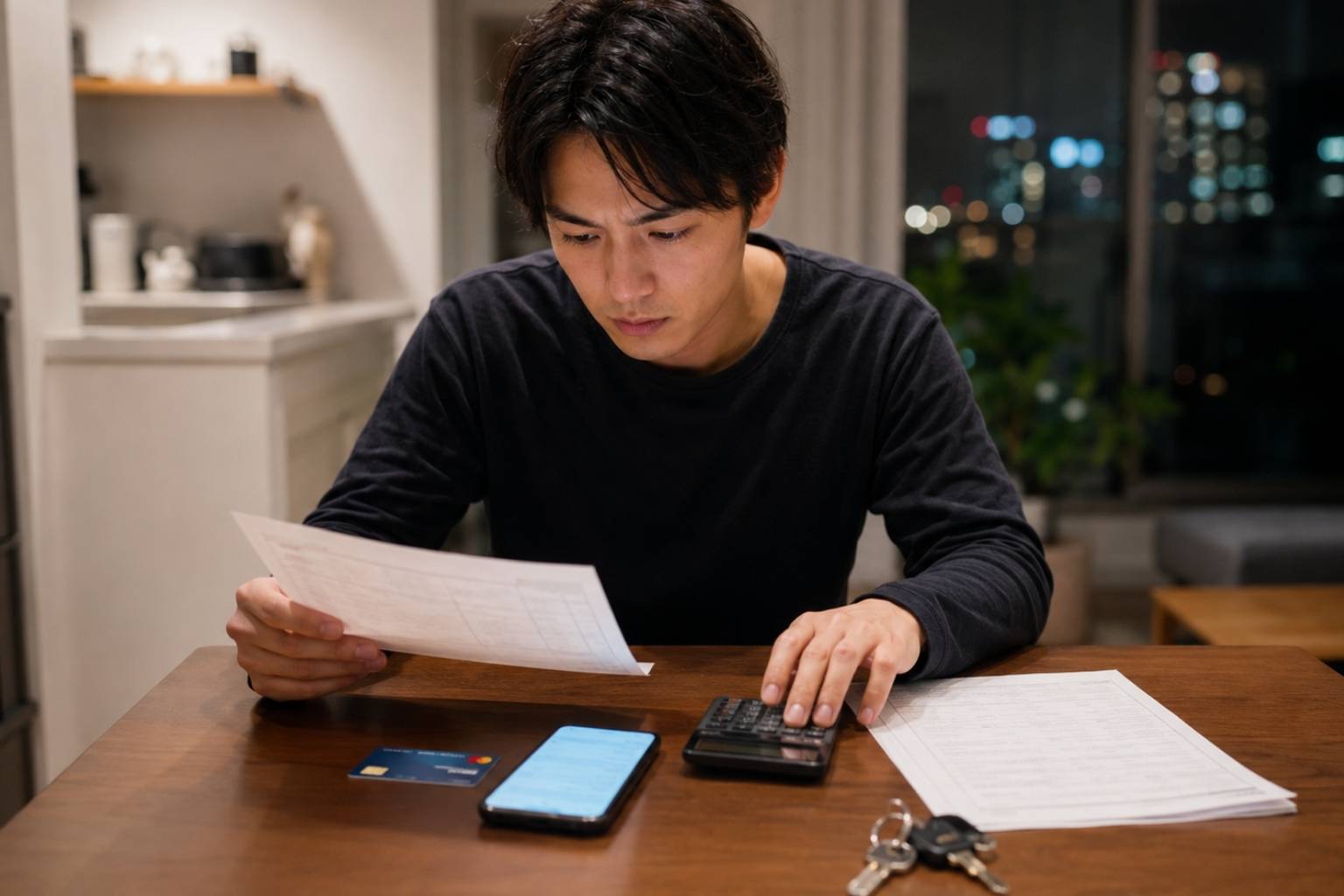
A practical guide to how to pay rent in Japan, avoid payment mistakes, and stay on top of deadlines.
Built for new arrivals, apartment renters, and long-term residents who want a stress-free payment system.
Paying rent in Japan sounds simple until the first deadline arrives. This guide covers how to pay rent in Japan, which payment methods are most common, what happens if you pay late, and why guarantor company rules matter more than many foreign renters expect. It matters now because rent in Japan is usually paid in advance, contracts are strict, and one missed payment can quickly create trouble with both the landlord and the guarantee company.
The biggest mistake is assuming rent works the same way it did back home. In Japan, landlords usually want a clear, trackable payment route, the due date is written into the lease, and reliability matters more than excuses. If you do not build a clean monthly routine early, the problem is not just one late payment. The problem is that the whole rental system starts reading you as risky.
Why This Guide Matters
Japanese rental housing runs on discipline. The Ministry of Land, Infrastructure, Transport and Tourism’s English housing guide says rent for the current month is generally due at the end of the previous month, which means your October rent is usually due before October starts. That alone surprises many newcomers, especially if they are used to paying during the month they are living in.
This matters because late payment in Japan is not treated as casual slippage. Your lease, your management company, and your guarantor company all care whether the money arrives on time and in the correct way. The faster you understand the payment structure, the less likely you are to create unnecessary problems with housing, renewals, and future screening.
Another reason this guide matters is that payment method affects stress. A renter who pays manually every month needs to think about transfer timing, bank fees, and weekends. A renter using automatic withdrawal needs to think about account balance, withdrawal dates, and what happens if the debit fails. Both systems work, but both can create avoidable trouble if you are not watching the details.
For foreign residents, the risk feels even sharper because rent is not just another bill. It is the bill tied directly to where you live, your guarantor contract, and your reputation as a tenant. Japan’s housing system gives very little reward for improvisation. It rewards routine.
What This Is and Who Needs It
This is a practical guide for people renting normal residential housing in Japan and trying to make sure the rent gets paid correctly every month. It is not a full legal manual for every lease type. It is a day-to-day payment guide for renters who need the system explained in plain English.
This guide is especially useful for:
- newcomers renting their first apartment in Japan
- foreign workers paying rent from a Japanese bank account
- students managing a tight budget and fixed due dates
- long-term renters dealing with guarantor companies
- anyone switching apartments and worried the new payment rules will be different
The key problem is simple. The rent number is only one part of the system. The real issue is how the payment is made, when it has to land, and who gets involved if it does not.
The MLIT housing guide says that when forming a rental agreement in Japan, using a rental guarantee company or providing a guarantor is necessary in case the tenant cannot pay rent. In practice, many foreign renters now see a professional guarantor company instead of a personal guarantor. That means your monthly rent behavior is not only visible to the landlord. It is also visible to the company backing the lease.
That is why this guide goes beyond “send the money on time.” Paying rent in Japan is part banking routine, part lease compliance, and part reputation management.
Costs, Documents, or Setup Steps
The first thing to understand is the payment method written into your lease. Do not assume you can choose whatever is most convenient for you. In Japan, the contract usually drives the payment method.
The two most common systems are:
- bank transfer, usually called furikomi
- automatic withdrawal from your bank account, often called kōza furikae or auto debit
Bank Transfer (Furikomi)
With furikomi, you manually send the rent to the landlord’s or management company’s designated bank account. This can be done at an ATM or through online banking.
The practical advantage is control. You choose when to send it. The practical disadvantage is risk. If you forget, mistype, send it on the wrong day, or rely on a bank schedule that does not line up with your due date, the mistake is yours.
It also usually costs extra. Bank transfer fees vary by bank, channel, destination, and amount. MUFG’s published fee tables show that online transfers can be much cheaper than ATM or branch transfers, and JP Bank also shows separate fee tables depending on whether you use the counter, ATM, or online/app route.
That is why renters using furikomi need a routine, not just good intentions. The safest version is to schedule the transfer a few days early, keep the receipt or screenshot, and never assume the last business day will be relaxed or convenient.
Automatic Debit (Account Transfer)
Automatic debit removes the monthly memory problem. Your rent is pulled directly from your bank account on the contractually designated date.
This method feels safer for many renters because it reduces the chance of simply forgetting. Official rent-payment guidance from UR and other housing providers shows bank account transfer as a normal rent collection method, and some rental systems require you to file a bank withdrawal form through a designated financial institution.
But automatic debit is not foolproof. If the money is not in the account when the withdrawal happens, the payment still fails. That means automatic debit solves the “I forgot” problem, but not the “I did not leave enough money in the account” problem.
A smart setup for automatic debit looks like this:
- know the exact withdrawal date in your contract
- keep a balance cushion in the account
- avoid cutting it close with other bill payments
- check the account after the withdrawal date to confirm it actually went through
Rent Is Usually Paid in Advance
One of the most important practical rules in Japan is that rent is generally paid in advance. MLIT’s housing guide explains that the rent for the current month is generally due at the end of the previous month, and rent for a partial month is usually prorated.
This matters because it changes how you budget. If your due date is the 25th or the last day of the month, that payment is often funding the month ahead, not the month you just finished living in.
That means travel, job changes, and payday timing all matter. If you are going to be outside Japan near the due date, or your salary lands later than your rent deadline, you need to plan for that gap before it hurts you.
Guarantor Company Rules
The guarantor company is not a backup friend. It is a contract-based risk manager.
If you fail to pay rent, the guarantor company may cover the landlord and then turn to you for repayment. Housing support and guarantor-company materials explain this clearly: the guarantee company pays the landlord or covers the default, then charges the tenant for the unpaid amount. In other words, the debt does not disappear just because the landlord got paid.
That is why communication matters. If your phone number, job, bank account, or contact details change, update the landlord, manager, and guarantor company quickly. In this system, missing information can turn a simple payment problem into a contract problem.
[Tokyo Rent Renewal Shock: How to Fight an Unfair Price Hike]
Common Mistakes and Practical Tips
The biggest mistake is treating the due date like a suggestion. In Japan, it is a contract line.
Another common mistake is assuming one late payment cannot matter much. It can. Even if the landlord does not react dramatically on day one, late payment can trigger late damages, management pressure, and guarantor company contact.
The legal side also matters here. Under the Consumer Contract Act, in consumer contracts, the portion of a fixed late-payment damages clause that exceeds 14.6% per year is invalid. That means landlords and managers cannot simply write any penalty rate they want and expect all of it to hold up.
But that does not mean paying late is harmless. Houterasu, Japan’s legal support body, explains that if rent non-payment does not reach the level of breaking the relationship of trust, the lease cannot be canceled, and that a clause requiring immediate vacancy after even one missed payment may be invalid. At the same time, it notes that non-payment for three months or more is generally considered enough to have broken that relationship of trust.
That is one of the most important practical truths in the whole rental system. There is no simple magic number that says “late once and you are out.” But there is also no safe zone where repeated non-payment stays consequence-free.
A few strong habits make a big difference:
- put the due date in your phone calendar with an early reminder
- keep a payment cushion in the bank account
- never assume weekends or holidays will work in your favor
- save transfer receipts or screenshots
- if the payment may fail, contact the management side before the due date, not after
Another mistake is assuming the guarantor company has to wait a fixed legal number of days before things get serious. The reality is more complicated. There is no simple universal countdown written into ordinary renter guidance that says a guarantor company must wait X days before action begins. The real legal risk grows when arrears pile up, the trust relationship breaks down, and the problem moves toward formal demand and litigation.
That is why early communication matters so much. A financial emergency handled early is still a problem, but it is a smaller problem than silence.
What To Do Next
If you just signed a lease, do not wait until the first payment month to figure out the system. Check the contract now.
Confirm these five points immediately:
- exact due date
- exact payment method
- name of the receiving party
- whether the guarantor company is involved in collection
- what contact details you must keep updated
If you pay by furikomi, send the money early and save proof. If you pay by automatic withdrawal, keep a balance cushion and verify that the debit actually happened.
If you already suspect you may miss a payment, act before the due date. Contact the landlord, property manager, or guarantor company as early as possible. The best time to explain a problem is before the payment fails, not after everyone has started chasing it.
If you are traveling outside Japan when rent is due, plan ahead. That may mean funding the account early, sending the transfer before departure, or switching to automatic debit if your lease allows it.
Rent in Japan becomes easy once the routine is built. The problem is not the payment itself. The problem is waiting too long to build a system you can trust.
[Moving to Japan Address Registration: City Office Guide]
Official Note
This guide is based on current official and quasi-official housing and legal materials, including MLIT’s housing guide, UR rent-payment guidance, the Consumer Contract Act, and Houterasu’s housing guidance. Exact late-damages wording, payment dates, and guarantor procedures can still vary by lease, landlord, management company, and guarantor contract, so always check your own documents first.
The easiest way to stay out of rent trouble in Japan is not guessing better. It is building a payment system that works even on a tired, busy, expensive month.
Question for readers: Have you ever had an issue paying your rent or dealing with a guarantor company while living in Japan?