
A sharp look at why more young workers in Japan are giving up on marriage, homes, and long-term milestones.
When the math stops working, ambition starts looking less like hope and more like self-harm.
This article is about why Japan’s young generation is stepping back from traditional dreams like marriage, home ownership, and family life. It will resonate with young workers, foreign residents, students, and anyone trying to understand why ambition feels weaker in a country still celebrated for economic success. It matters because when ordinary people no longer believe the future is affordable, the problem is no longer personal. It is structural.
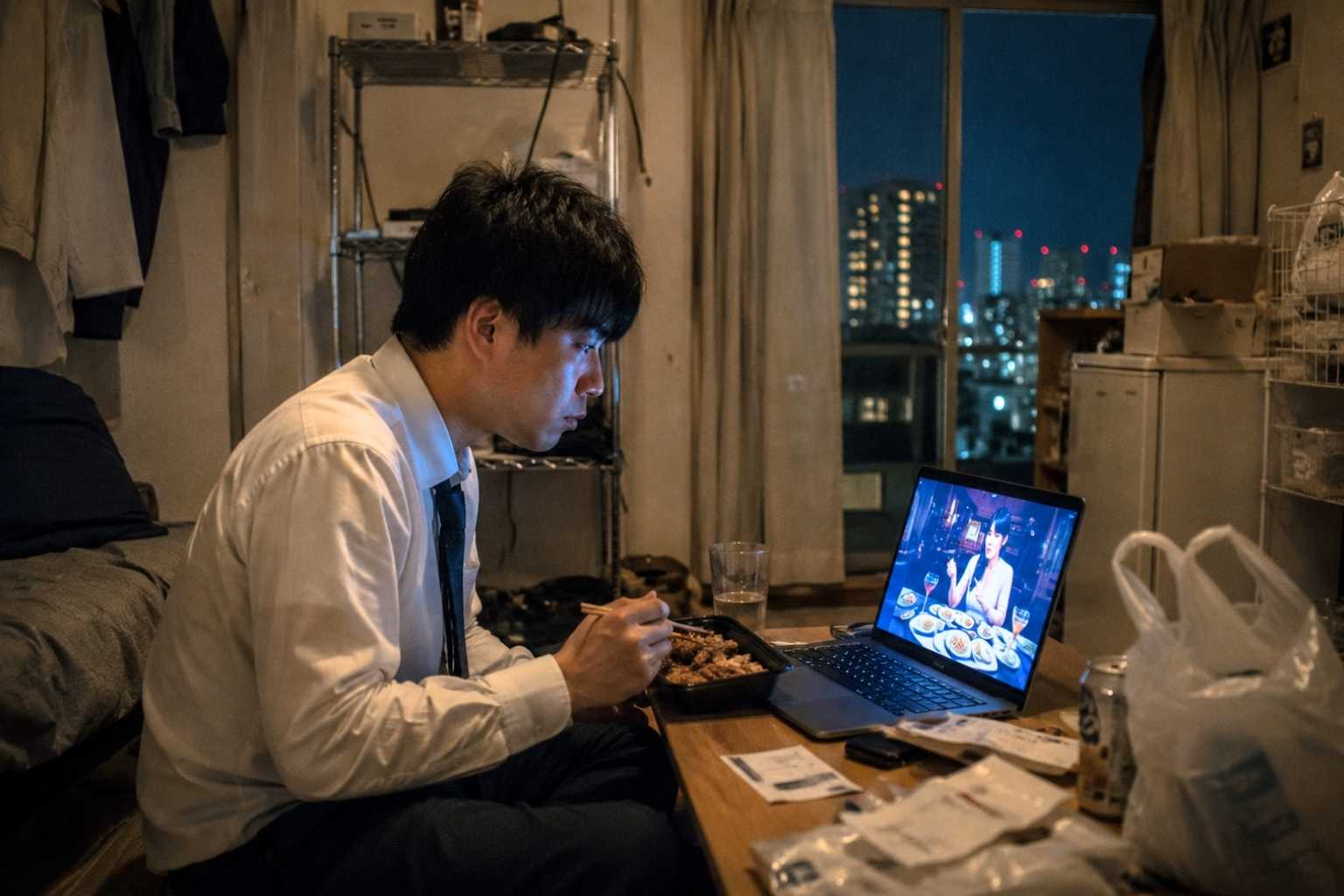
A 33-year-old salaryman in Yokohama recently spent his entire seasonal bonus on a single luxury dinner.
He did not celebrate with friends. He ate it alone in his apartment while watching a livestream of someone else consuming an even more expensive meal.
That image captures something bigger than one isolated night. It shows what happens when long-term goals start feeling so distant that people stop chasing them and settle for one small moment of comfort before returning to work the next morning.
Why This Story Hits Hard
This is the emotional center of the so-called Satori Generation.
Traditional milestones that once defined adulthood in Japan, buying a house, getting married, raising a family, are fading from view for many younger workers. Not because people suddenly stopped caring, but because the financial math no longer supports the dream.
That is the part older narratives often miss.
When real wages keep weakening and basic living costs keep climbing, ambition starts to look irrational. A person who cannot afford a secure future is not necessarily giving up. They may simply be refusing to chase a promise that no longer matches reality.
Government data previously revealed that Japan’s real wages dropped for a record 25 straight months, the longest continuous decline since comparable data became available in 1991. At the same time, everyday expenses kept rising.
That gap changes how people think.
The Expectation vs Reality Shift
On paper, political leaders can still point to GDP growth and record stock markets.
In daily life, that does not mean much if groceries, utilities, and city rents keep getting harder to absorb. The stock market can look strong while people inside the economy feel poorer every month.
That is the paper illusion.
It is one thing to hear that the economy is growing. It is another to stand in a supermarket, pay the rent, open the utility bill, and realize your life feels smaller than it did before.
This is why Japan’s young generation is not chasing big dreams the way previous generations did. Not because they lack discipline. Not because they are passive. Because the rewards attached to risk now look thinner, slower, and less believable.
What Changed Mentally
Instead of saving for distant milestones they increasingly doubt they can reach, many younger workers are choosing smaller, immediate comforts.
That choice is often misunderstood.
It gets framed as apathy, low ambition, or lack of seriousness. But the behavior makes sense when seen through cost-of-living pressure. If marriage, property, and long-term security all feel financially unstable, then one good meal tonight can feel more real than a dream that keeps moving further away.
That is the psychological shift.
- Real wages falling changes how people define success
- Rising daily expenses make long-term planning feel unrealistic
- Small comforts start replacing larger life goals
- Reduced ambition becomes a protective response, not a character flaw
The Hardest Lesson
The hardest part is that this is no longer only a Japan story.
The frustration felt by that Yokohama salaryman mirrors what many urban workers now feel in London, Sydney, Vancouver, Seoul, and other expensive global cities. A whole generation is working harder than the one before it while living in smaller rooms with less faith in upward mobility.
Corporate profits keep growing.
The cost of living keeps rising.
And average people are left wondering who this economy is actually helping anymore.
That is why the Satori Generation matters beyond Japan. It offers a name for something increasingly global: the point where economic pressure becomes so constant that “big dreams” start to feel like fantasies for somebody else.
[When Pregnancy Feels Like a Career Threat in Japan]
What Living in Japan Revealed
For foreigners, students, and expats, understanding this matters.
If your Japanese colleagues seem cautious, unambitious, or unwilling to take financial risks, it may have much less to do with personality than with decades of stagnation and shrinking purchasing power. The problem is not simple laziness. It is a logical response to an economy where effort no longer guarantees meaningful progress.
That changes how daily life in Japan should be read.
The emotional tone of the workplace, the caution around marriage, the reluctance to buy property, the preference for stability over risk, all of it makes more sense once you accept that many people no longer trust the future enough to invest themselves in it.
[INTERNAL LINK: Related article idea 1 — Why Japan’s Cost of Living Crisis Feels Worse Than the Headlines Suggest]
What I Understand Now
For foreign residents planning a long-term future in Japan, this is not background noise.
It is a warning.
Relying only on traditional local pay scales may make it much harder to build wealth or buy property. Anyone serious about staying long term has to budget around permanent economic pressure, not temporary discomfort. That means looking toward industries with globally competitive salaries or building flexible skill sets that are less exposed to local purchasing power decline.
Because the deeper issue is not mood.
It is math.
[Why Western Women Give Up on Dating in Tokyo]
Final Thought
Japan’s young generation did not wake up one day and stop believing in marriage, homes, or family life for no reason.
They looked at the numbers, looked at the future, and adjusted. That is what makes this shift feel so severe. It is not a trend built on taste. It is a defense mechanism built on reality.
When a single luxury dinner feels more reachable than a stable life, the economy is telling the truth more clearly than any political speech ever could.
Question for readers: Who is this economy actually helping anymore if ordinary people can no longer afford to live inside it?