
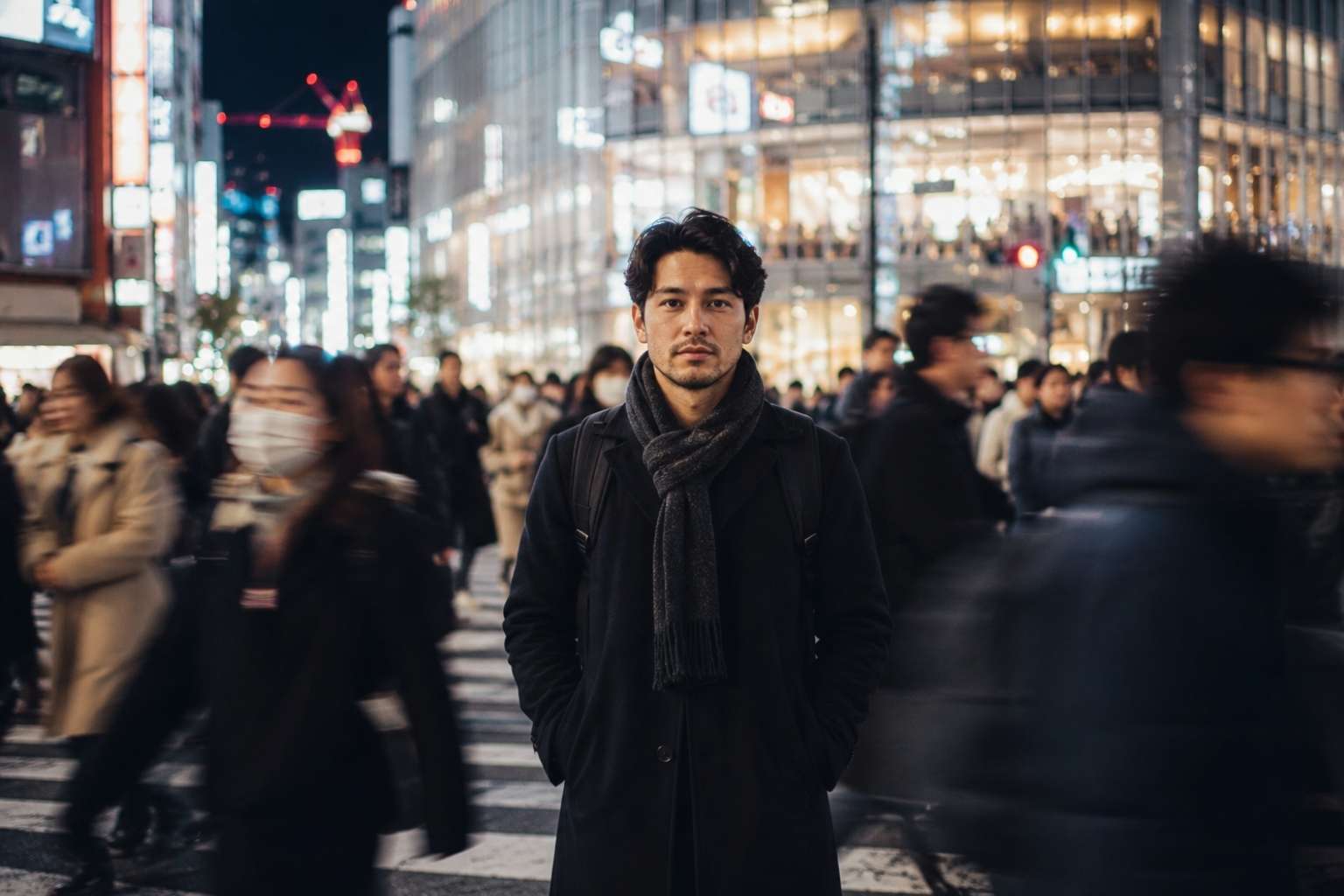
A first-person reflection on the invisible barrier that never fully disappears.
And how life got lighter once I stopped treating acceptance like belonging.
This is about what ten years in Japan taught me about belonging, distance, and the quiet truth many long-term foreign residents eventually face. It will resonate with anyone who has spent years here believing fluency, effort, and respect would eventually turn acceptance into full inclusion. It matters because life changes the moment you stop chasing an approval that was never actually being offered.
When I moved to Japan ten years ago, I believed there would be a finish line.
I thought there would be a moment when I would finally feel fully inside. Maybe after my Japanese improved. Maybe after enough years passed. Maybe after I proved I respected the culture enough.
So I did everything right.
I separated my trash perfectly. Paid my taxes on time. Joined local events. Learned the language until I could dream in it.
And still, years later, I was hearing the same line.
“Wow, your Japanese is so good.”
From the same people I had spoken to for years.
Why This Story Hits Hard
That was the moment the deeper truth started becoming impossible to ignore.
Japan did not expect me to become Japanese. It expected me to behave correctly beside Japanese people. There is a difference, and once you see it, you cannot unsee it.
That is what makes this story hit so hard.
It is not about open rejection. It is not about obvious hostility. In most cases, the barrier is much quieter than that. It shows up in the extra explanations, the slight hesitation in certain conversations, the subtle reminders that no matter how integrated you become, you are still being viewed from the outside.
And because that distance is wrapped in politeness, it can take years to name properly.
At first, I took every reminder personally.
I thought I had not tried hard enough. Not adapted hard enough. Not earned enough trust. I kept treating belonging like a reward I might eventually unlock if I got everything right.
That mindset exhausted me more than I understood at the time.
The Expectation vs Reality Shift
The expectation was simple: effort leads to belonging.
The reality was harder: effort can lead to smoother coexistence, but not necessarily inclusion.
That gap is where a lot of long-term residents quietly break.
You can build a life here. You can pay into the system. You can follow the rules, speak the language, and understand the social cues. But you can still feel the invisible circle holding its shape around you.
That is the real shift.
I stopped seeing Japan as a place where I might one day become fully “inside.” I started seeing it as a place where I could live honestly without pretending the barrier would disappear. That did not erase the pain of it, but it made the experience clearer.
And clarity, even painful clarity, is easier to carry than endless self-doubt.
What Changed Mentally
Once I accepted that there was no gold star of belonging waiting for me, my mind changed.
I stopped performing.
I stopped treating every interaction like a test of whether I was finally “good enough” to be seen as more than a guest. I stopped measuring my life here through the reactions of strangers and half-familiar acquaintances.
A few things shifted fast:
- I stopped apologizing for being different
- I stopped chasing approval through perfection
- I stopped shrinking myself to fit invisible expectations
- I started building a life that actually felt honest
That was the first real relief I had felt in years.
[Why Japan’s Young Generation Has Stopped Chasing Big Dreams]
The Hardest Lesson
The hardest lesson was this: the barrier is usually not hate.
It is distance.
You are welcomed, but carefully. Accepted, but conditionally. Allowed to stay, contribute, work, and participate, but often with the quiet understanding that your place remains slightly separate from the center.
That realization hurt more than I want to admit.
Because once I saw it clearly, I had to face how much of my life here had been built around trying to overcome something that may never have been designed to disappear. You can spend decades here building a life and still understand, deep down, that your place is tied to a residence card sitting inside your wallet.
That recognition broke something in me at first.
Then, strangely, it freed me.
What Living in Japan Revealed
What Japan revealed to me was not that I had failed to belong.
It revealed that I had been confusing peace with permission.
I kept waiting for someone else to confirm my place here. I kept hoping the culture around me would eventually hand me some invisible certificate saying I was no longer outside. But that kind of recognition was never the real foundation of a stable life.
Identity cannot rest on that.
Once I stopped trying to earn that final approval, Japan became easier. Not warmer. Not more inclusive. Easier. Because I was no longer fighting the same invisible wall every day.
I was living beside it instead.
And that is a very different kind of life.
What I Understand Now
I understand now that being a guest does not have to mean being weak.
It can also mean being free.
Free from having to mirror every expectation. Free from building my self-worth around cultural approval. Free from the exhausting fantasy that one day I might finally be told I had crossed some hidden line.
I no longer need strangers to confirm my place here.
I already know who I am.
And that peace feels more valuable than belonging ever did.
[When Pregnancy Feels Like a Career Threat in Japan]
Final Thought
I moved to Japan believing that if I stayed long enough, worked hard enough, and respected the culture deeply enough, I would eventually stop feeling outside.
Ten years later, I see the truth more clearly.
For many of us, the invisible barrier is real. It may never fully disappear. But once you stop treating that reality like a personal failure, something loosens. The performance ends. The pressure drops. And the life you build becomes more honest than the one you were trying to earn.
That was the hardest lesson I learned here.
It also became the most freeing one.
Question for readers: At what moment did you realize the invisible barrier in Japan was real?