
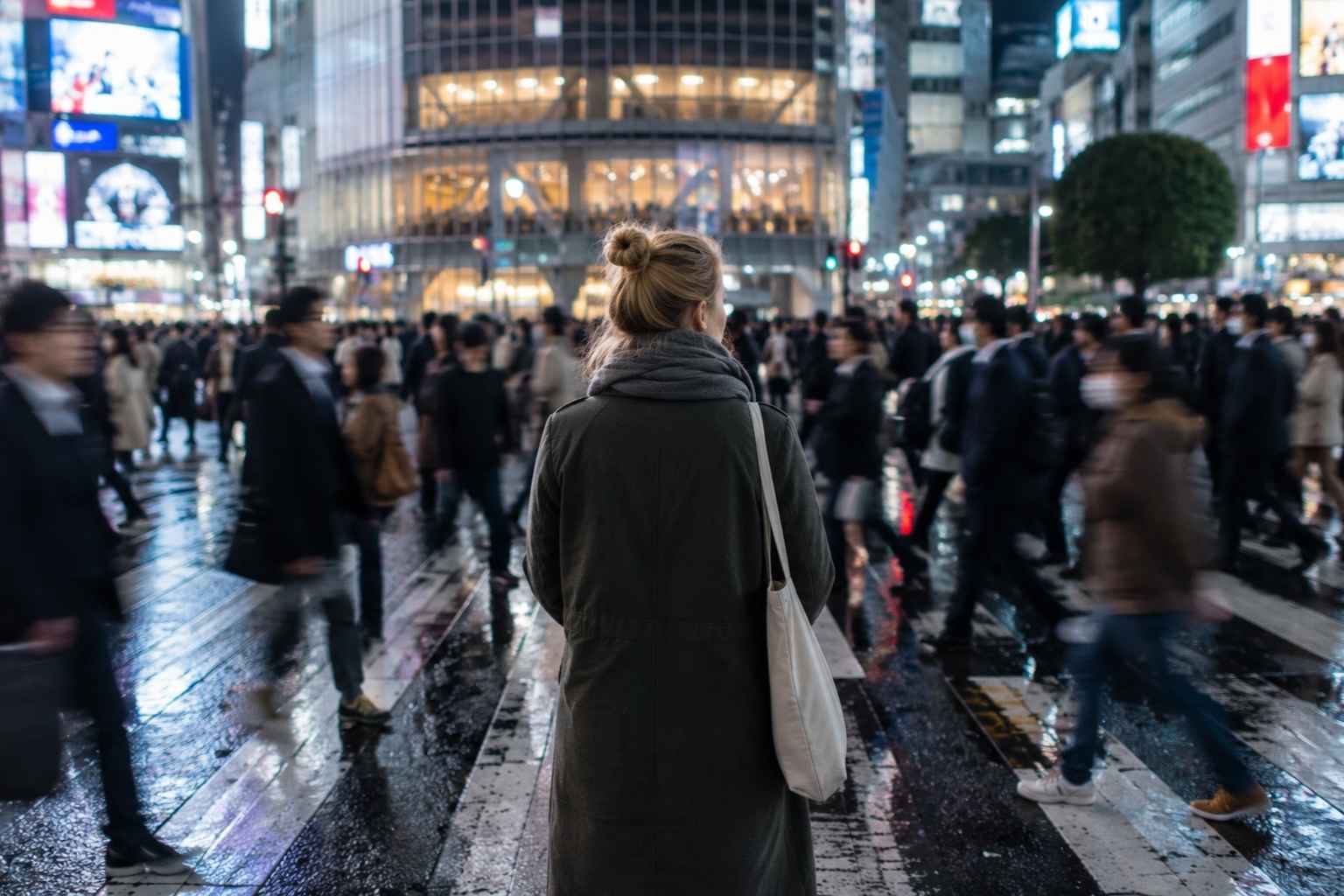
Moving to Japan can feel like the smartest decision of your life at first.
For many foreigners, the harder truth comes later, when politeness, distance, and invisible rules start replacing the fantasy.
This article is about why moving to Japan can quietly become a life mistake for some foreigners. It will resonate with people who came here full of hope, worked hard to adapt, and still found themselves stuck behind a wall they could never fully cross. It matters because the most painful part of life in Japan is often not open rejection, but the slow realization that you may always remain a guest.
The first stage is easy to understand.
Japan can feel magnetic when you first arrive. The neon lights, the order, the safety, the politeness, the feeling that daily life is more controlled and more beautiful than the places you came from.
Then the honeymoon starts wearing off.
Why This Story Hits Hard
That is when the dream becomes expensive in ways no travel video explains.
The lights stop feeling magical and start feeling lonely. The train ride home stops feeling cinematic and starts feeling like another crowded, silent commute. The same city that once looked exciting starts feeling like a place where you can disappear in public every single day.
That shift breaks people quietly.
Not because Japan suddenly becomes hostile, but because it stays polite while keeping its distance. That is what makes the isolation here hit so hard. In ruder places, rejection is obvious. In Japan, distance can arrive wrapped in kindness.
You get smiles, but not closeness.
You get help, but not full trust.
You get welcomed, but not fully let in.
The Expectation vs Reality Shift
Many foreigners come here believing the language barrier is the main obstacle.
It is not.
Language matters, but it is only part of the problem. The bigger wall is cultural. You can speak well, follow the rules, and still feel like you are missing the deeper code that decides who is fully inside and who stays politely outside.
That is where the gaijin wall starts becoming real.
It follows people into apartment hunting, job growth, friendships, and the small daily moments that should feel normal but never fully do. The “gaijin card” works one way when you are a tourist. It works very differently when you are trying to build a real life.
That is the hidden cost of staying too long in the fantasy.
What Changed Mentally
The emotional labor becomes exhausting.
Living here often means constantly reading invisible rules, adjusting yourself, and performing the correct version of calm. It is not just about speaking properly. It is about moving properly, reacting properly, and staying easy enough that no one feels discomfort around you.
That pressure adds up.
- Surface-level kindness is not the same as social acceptance
- Polite distance can feel lonelier than open rudeness
- Emotional labor becomes a daily tax on mental health
- Wanting to fit in can slowly turn into losing yourself
The Hardest Lesson
The hardest lesson is accepting that full belonging may never arrive.
For many foreigners, that truth feels devastating at first. The natural response is to try harder. Better Japanese. Better manners. Better self-control. Less friction. Less visibility.
But the more some people try to earn full acceptance, the more drained they become.
That is why giving up on Japan is not always failure. Sometimes it is clarity.
Sometimes leaving is the first honest decision a person makes after years of trying to force a life that never truly held them.
What Living in Japan Revealed
What life in Japan reveals is not that the country is fake.
It is that admiration and belonging are not the same thing.
A place can be beautiful, safe, efficient, and still emotionally hard to survive in if every step of your life depends on staying correct, quiet, and permanently grateful. That is where the isolation deepens. The environment still looks good, so people struggle to admit how bad it feels inside.
That silence keeps the “silent exit” growing.
Not everyone leaves loudly. Many just reach the point where protecting their identity matters more than protecting the dream.
What I Understand Now
The most important shift is this: reclaiming your happiness is not weakness.
Walking away from Japan does not mean you failed to appreciate it. It means you finally stopped confusing endurance with success. For many people, the brave act is not staying longer. It is choosing a life where they can feel fully human again.
The dream is powerful.
But so is the cost of staying too long inside the wrong one.
[Japan’s Young Workers Are Too Exhausted to Build a Life]
Final Thought
Japan can still be incredible and still be the wrong place for someone to build a life.
That is the truth behind the silent exit. What looks like giving up from the outside can actually be a person choosing mental health, identity, and a future that feels real. Sometimes the biggest mistake is not leaving too early. It is staying too long just because the dream looked good.
Question for readers: Is Japan a paradise only when you are visiting, or have you actually found a way to belong here?