
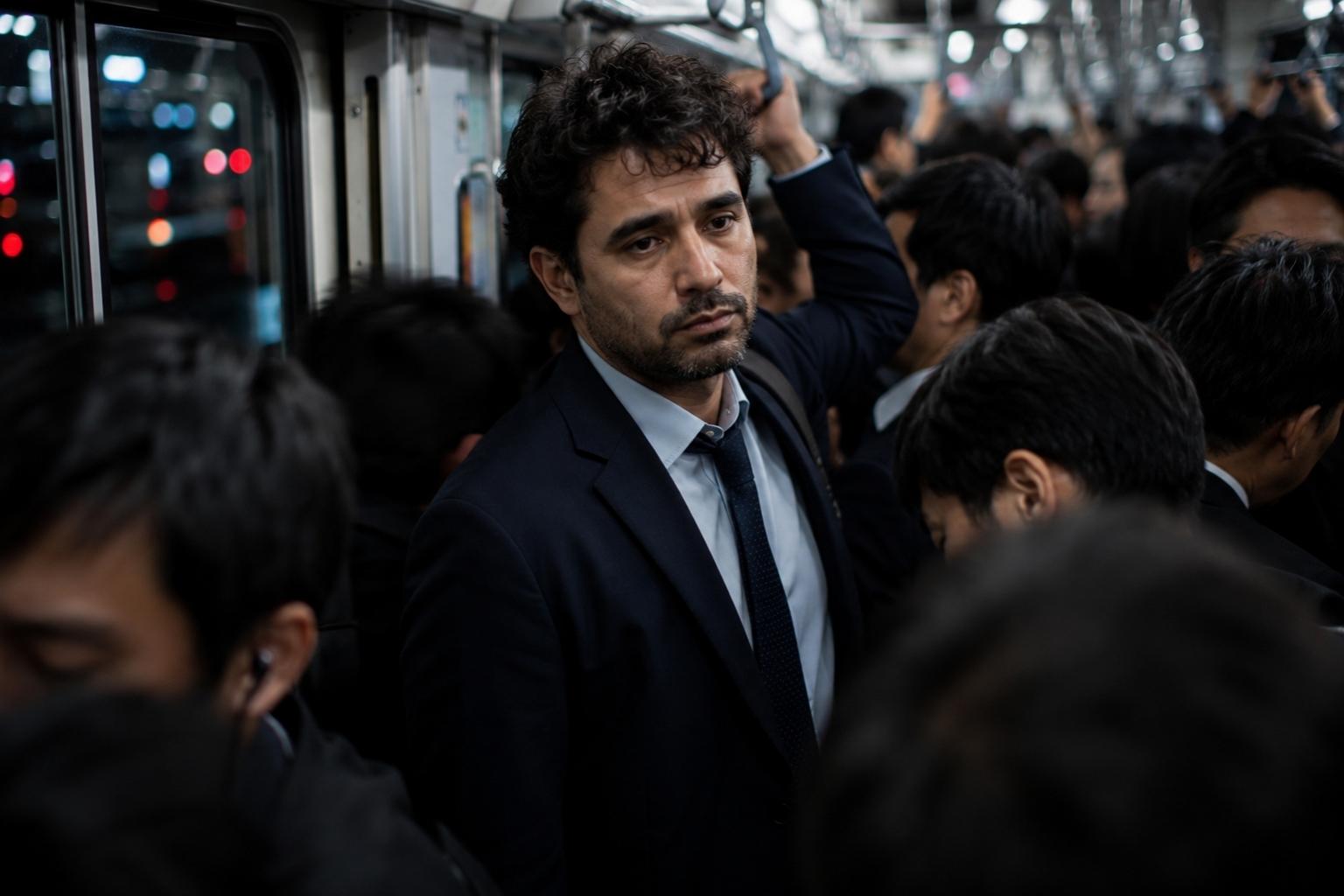
I spent five years building a life in Japan that looked impressive from the outside.
Then I had to admit that loving a place is not always enough to survive inside it.
This is about why I am leaving Japan after spending five years trying to build a dream life in Tokyo. It will resonate with anyone who has moved abroad, loved the culture deeply, and still found themselves worn down by isolation, overwork, and the feeling of never fully being inside the life around them. It matters because some dreams do not collapse all at once. They become harder to breathe inside.
When I first came here, I was wide-eyed.
Japan felt like the version of life I had been promised by every beautiful image, every perfect travel story, every carefully framed idea of what a “better” place could be. I loved the order, the culture, the care in small things, and the feeling that I had made it to a country so many people only ever get to admire from a distance.
Then I became a resident.
And slowly, the dream became a routine.
That is where the real story starts.
Why This Story Hits Hard
For years, I lived the transition from wide-eyed tourist to exhausted resident.
The prestige stayed. The reality changed.
I worked 12-hour shifts. I learned how to keep moving even when I was drained. I learned how to look functional while feeling increasingly absent from my own life. The city still looked incredible, but I was no longer experiencing it as wonder. I was enduring it as structure.
That is the part people do not see when they fantasize about moving here.
Tokyo can give you beauty, efficiency, and endless convenience. It can also give you a life where you are always tired, always moving, and always just outside the thing you thought you came here to find.
And then there is the deeper loneliness.
Not dramatic loneliness. Not the kind that announces itself. The quieter kind that comes from realizing you can speak the language fluently, know the rules, follow the rhythm, and still remain a stranger in ways that never fully disappear.
That is the gaijin wall.
It is not always loud. It is not always hostile. But it is there.
The Expectation vs Reality Shift
I thought loving Japan would be enough.
I thought effort would be enough too. Learn more. adapt more. work harder. become easier to place. become easier to accept. Eventually, I believed, the distance would close.
It did not.
I could feel myself becoming more capable and more exhausted at the same time. I could function better inside the system, but that did not mean I felt more held by it. In some ways, the opposite happened. The more I adapted, the less of myself I could still hear clearly.
That is what changed the dream into something heavier.
The life I fought to build started feeling like a gilded cage. Stable. Impressive. Smooth on paper. But emotionally airless.
The hardest part was the guilt.
Because how do you admit you want to leave a place other people would do anything to live in? How do you say that a country so admired, so beautiful, and so culturally rich has also become the place where your mental health started slipping away?
That kind of honesty makes you feel ungrateful even when it is the truth.
What Changed Mentally
The turning point was not dramatic.
It was cumulative.
I stopped asking whether I loved Japan. I knew I did. I started asking whether love alone was enough to carry a life built on overwork, invisibility, and a constant feeling of being socially outside.
It was not.
A few truths became impossible to ignore:
- A “cool” country does not protect you from burnout
- Fluent Japanese does not automatically remove the gaijin wall
- Convenience cannot replace genuine human connection
- Prestige can keep you stuck in a life that is hurting you
That last one hit hardest.
Because there is a strange pride in saying you live in Tokyo. A strange attachment to the image of the life you built. Letting go of that image felt like failure at first.
Then it started feeling like honesty.
The Hardest Lesson
The hardest lesson was realizing that mental health matters more than prestige.
That sounds obvious when you say it plainly. It does not feel obvious when you have spent years earning the right to stay somewhere, building routines, collecting proof that you made it work, and trying to convince yourself that the struggle is just part of the privilege.
But there comes a point where staying stops being brave.
It starts becoming self-abandonment.
That is where I found myself.
Not because Japan is empty. Not because Japan has nothing to offer. But because what it offered me was no longer enough to outweigh what it was taking from me.
I could get anything from a vending machine at almost any hour. I could depend on systems. I could move through a city that rarely stopped functioning.
None of that replaced being known.
None of that replaced warmth.
None of that replaced a life where I could exhale.
What Living in Japan Revealed
What living here revealed to me is that admiration and survival are not the same thing.
You can deeply respect a place and still not be able to live well inside it.
You can love the culture and still feel crushed by the corporate rhythm.
You can appreciate the beauty and still reach a point where everything you once loved starts feeling like suffocation.
That is not betrayal.
That is a limit.
And limits are not failures.
They are information.
Once I accepted that, the guilt started loosening. I stopped framing departure as giving up. I started seeing it for what it actually was: choosing a life I could still recognize as mine.
What I Understand Now
I understand now that leaving does not cancel the love I had for this place.
It just means love did not solve everything.
Japan gave me discipline. Perspective. Humility. Some of the sharpest, hardest lessons of my life. It also showed me that a dream country can still become the wrong place for you if the daily life inside it is slowly hollowing you out.
I am not leaving because Japan meant nothing.
I am leaving because it meant enough for me to finally tell the truth about what it cost.
That feels painful.
It also feels clean.
Final Thought
There is a version of this story where I stay, keep pushing, and protect the image of the dream I fought for. From the outside, that story probably looks stronger.
But it would not be honest.
The more truthful version is this: I loved Japan, and I still reached a point where staying felt more damaging than leaving. Sometimes the bravest thing you can do is stop confusing endurance with success.
Sometimes the dream country is still the wrong life.
Question for readers: Is it better to live a difficult life in your dream country, or a genuinely happy life in a place that looks less impressive from the outside?