
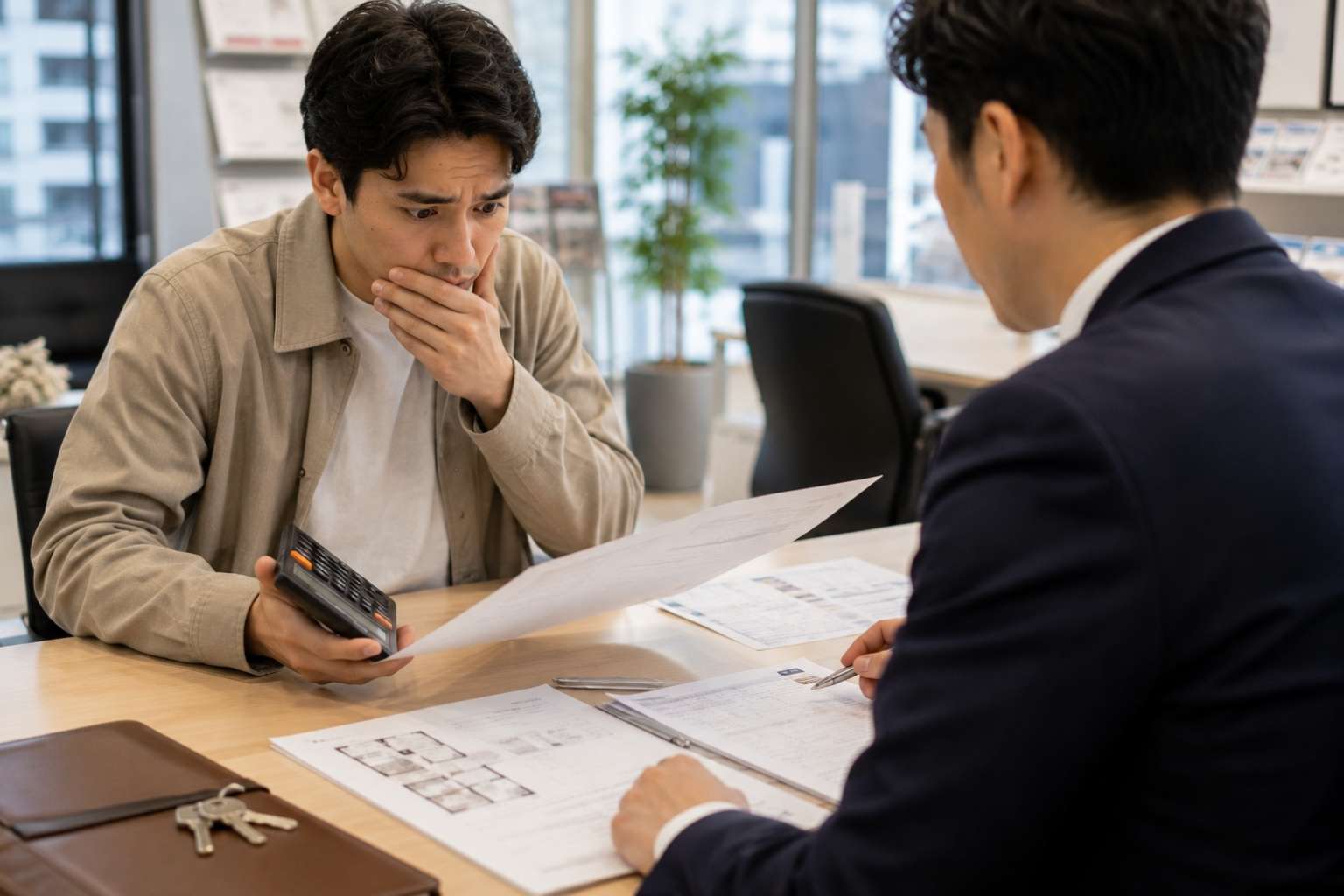
A practical guide to the real cost of renting an apartment in Japan beyond the advertised base rent.
For newcomers, students, and first-time house hunters who do not want move-in costs to spiral out of control.
This guide covers hidden apartment fees in Japan, what they really mean, and why an apartment that looks affordable online can become far more expensive by the time you are ready to sign. It is for newcomers, students, and anyone hunting for a first apartment in Japan who wants to avoid contract shock. It matters now because housing is usually the biggest expense in Japan, and the most painful costs often appear after you already think you found a good deal.
This is the trap. You see ¥80,000 rent, do the mental math, and think the place fits your budget. Then the contract starts filling up with gift money, guarantor fees, lock exchange, insurance, management costs, and deductions you did not fully expect.
That is why this topic gets saved. It is not just about paying rent. It is about understanding how landlords, contracts, and fee structures can quietly turn one number into something much bigger.
Why This Guide Matters
Apartment hunting in Japan is stressful before the hidden fees even show up. You are already comparing neighborhoods, train access, room size, and whether the building will even accept your application.
Then the second layer appears. The number in the listing stops being the number that matters most.
That is where people get hit. The advertised base rent feels simple. The real cost is not.
The raw details in this guide point to the biggest problem areas. You are not only paying rent. You may be paying non-refundable gift money, a mandatory guarantor company fee, lock exchange, fire insurance, management fees, and later deductions that reduce what you thought would come back to you.
This matters because housing decisions in Japan are often made under pressure. People want a place fast, especially if they are about to start work, move schools, or leave temporary housing. Under that pressure, many renters stop asking whether the apartment is truly affordable and start asking only whether they can somehow survive the move-in payment.
That is exactly how the trap works. Once you are emotionally attached to the apartment, every extra fee becomes harder to challenge.
This is also why the article matters for long-term search intent. People looking up apartment costs in Japan are not really asking only about rent. They are asking why the number in the ad and the number on the contract feel like two different realities.
What This Is and Who Needs It
This is a practical guide to the hidden fee structure behind many Japanese apartment contracts. It is not a legal handbook, and it is not a city-by-city breakdown. It is a plain-English survival guide to the major charges that make a cheap-looking apartment feel expensive.
This guide is especially useful for:
- Newcomers renting their first apartment in Japan
- Students moving into a first long-term place
- Foreign workers comparing apartments only by base rent
- House hunters trying to avoid move-in sticker shock
- Anyone who already found a place and is now staring at a cost breakdown in disbelief
The key problem is simple. The base rent is often only the entry point.
That is why the most useful mindset shift is this: stop treating the listed monthly rent as the whole apartment price. Treat it as the first number in a much longer sentence.
The raw details here focus on five main fee traps:
- Reikin or gift money
- Guarantor company fees
- Lock exchange fees
- Fire insurance
- Management fees
There is also a second layer many people forget until later: some money they thought would come back may not come back fully, especially if professional cleaning deductions get applied.
That is what turns a basic housing search into a financial education. You are not just choosing a room. You are choosing a fee structure.
Costs, Documents, or Setup Steps
The smartest way to read an apartment listing in Japan is to break the total into categories before you get emotionally invested.
Reikin: Gift Money You Never Get Back
The raw details describe Reikin in the clearest possible way: it is gift money. You pay non-refundable cash to the landlord just for saying yes.
That is why this fee hurts so much. It does not feel like a deposit, a service, or a useful improvement. It feels like a one-way payment tied to approval.
The most important rule here is simple: count Reikin as gone from the start. Do not mentally treat it like recoverable money.
Guarantor Company Fees
This is one of the biggest shocks for first-time renters. The raw details say guarantor company fees are mandatory even if you have a Japanese friend willing to sign.
That matters because many newcomers assume a personal connection will solve the problem. Then they discover the fee still exists.
The cost is also serious. The raw details frame it as a major extra charge that can push the real cost much higher than expected.
Lock Exchange and Fire Insurance
These are two classic contract add-ons that often sit quietly in the fine print. The raw details call them mandatory fees that many renters do not fully notice until they are already close to signing.
That is why they matter. Each one may not look as emotionally offensive as gift money, but they still add real cost to the move-in total.
Shikikin and Cleaning Deductions
The raw details also warn about money people expect to get back. Even when renters think upfront money will be refundable, professional cleaning deductions can reduce what is returned.
That means you should never build your budget around the assumption that every yen of upfront recoverable money will come back untouched.
Hidden Monthly Management Fees
This is one of the easiest traps to miss because it hides behind the rent instead of in front of it. The raw details point to management fees (kanrihi) that are not included in the advertised base rent.
That changes the real monthly number immediately. A place that looks like ¥80,000 may already be more expensive before any move-in fee is added.
A stronger apartment search checklist looks like this:
- Check the advertised base rent
- Ask if there is a monthly management fee
- Check whether Reikin is required
- Ask whether the guarantor company fee is mandatory
- Ask about lock exchange and fire insurance
- Ask what part of upfront money may later be reduced by professional cleaning deductions
[Japan’s Hidden Residents Tax Shock: Why Year Two Wrecks Your Budget]
Common Mistakes and Practical Tips
The biggest mistake is comparing apartments only by rent. That is the number agents and listings use to pull you in, but it is not always the number that tells you what the apartment will actually cost.
Another mistake is assuming that because a fee sounds normal, it must be small. That is how renters end up accepting a contract that feels manageable in pieces but painful in total.
A third mistake is thinking the fine print will not change the deal much. In Japan apartment contracts, the fine print often is the deal.
These practical tips help:
- Do not judge an apartment by base rent alone
- Do not assume a Japanese friend can replace a mandatory guarantor company fee
- Do not treat Reikin like recoverable money
- Do not forget monthly management fees
- Do not assume all upfront money comes back untouched
The most practical question you can ask is not “What is the rent?” It is “What is the full monthly cost and the full move-in cost?”
That one change protects you from the worst kind of contract shock.
Another strong tip is to ask early about negotiation. Your raw details specifically point to hidden fees that you can negotiate away. That means the first quote should not always be treated like the final reality.
This is where many renters lose money. They feel lucky the apartment is available, so they stop pushing. But housing decisions are too expensive to handle passively.
What To Do Next
If you are apartment hunting right now, slow the process down before you sign. Do not let the base rent make the decision for you.
Use this practical move-in checklist:
- What is the base rent?
- What is the monthly management fee?
- How much is Reikin?
- Is the guarantor company fee mandatory?
- How much are lock exchange and fire insurance?
- What deductions may reduce any refundable upfront money?
- Which of these fees can be negotiated away?
Then compare apartments again using the real total, not the ad number.
That is the only fair comparison. A place with higher rent but fewer hidden fees may actually be the cheaper choice. A place with lower rent but stacked extras may be the real trap.
This is also where confidence matters. The raw details say these are the kinds of fees renters can sometimes negotiate away. That means asking direct questions is not being difficult. It is basic financial self-defense.
Because once the contract is signed, the shock becomes cash. And cash leaves faster than regret.
[5 Secret Japan Government Discounts for Foreigners to Save Money]
Official Note
This guide is based on the fee traps listed above: Reikin as non-refundable gift money, mandatory guarantor company fees, hidden lock exchange and fire insurance costs, upfront money that may be reduced by professional cleaning deductions, and monthly management fees that are not included in the advertised base rent.
[The “No Foreigners” Wall in Japan Apartment Hunting]
The biggest apartment mistake in Japan is not always choosing the wrong room. It is signing for the wrong total cost because the listing number was never the real number.
Question for readers: Which apartment fee in Japan shocked you most: gift money, guarantor fees, management fees, or the money you thought would come back but did not?