
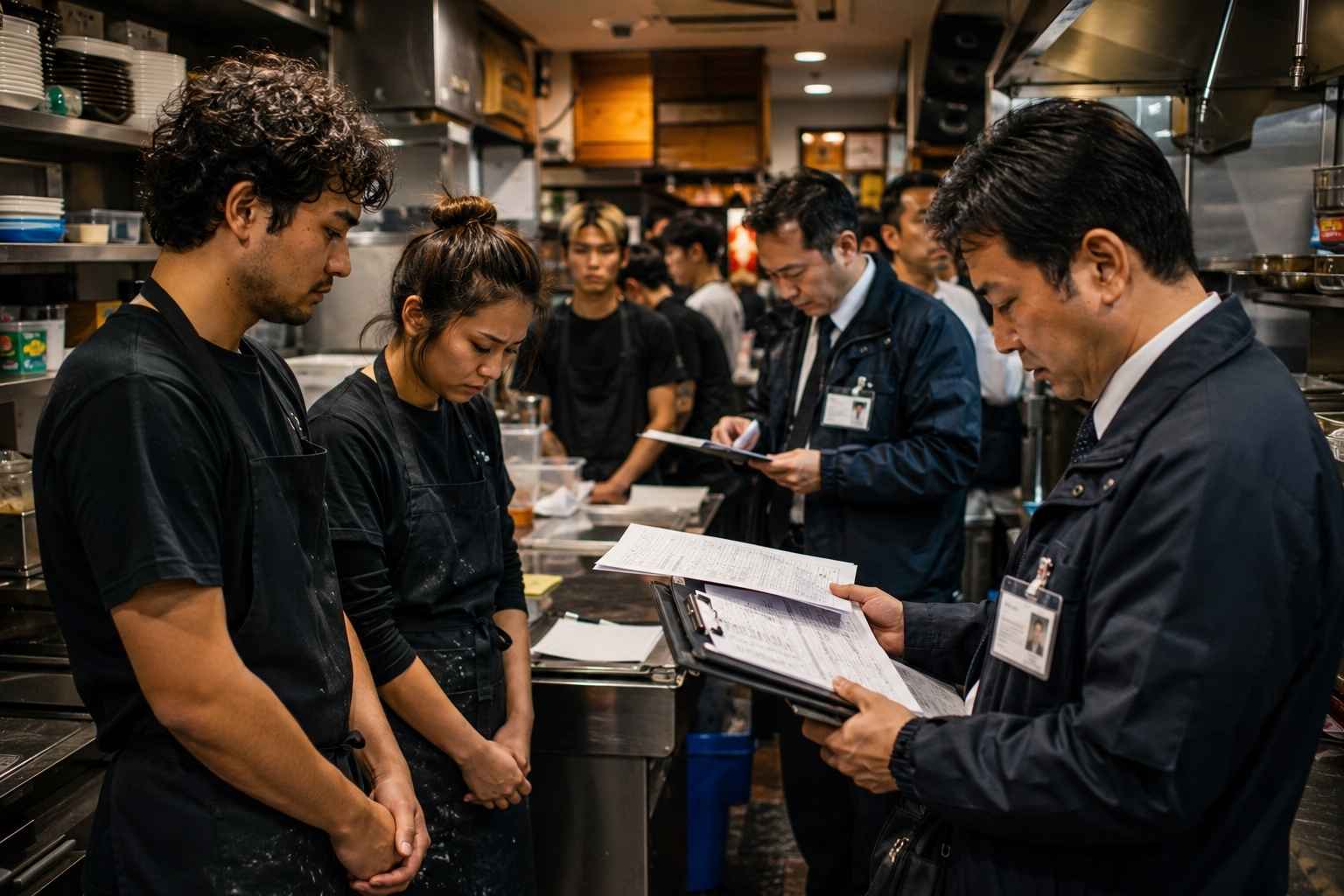
Japan is stepping up enforcement against foreign students who work beyond the legal cap on part-time employment. The crackdown affects student visa holders, language schools, and employers who rely on student labor. It matters now because violations can move beyond a warning and into visa cancellation, deportation procedures, and multi-year re-entry bans.
The Japan student work limit remains 28 hours per week during term time, with longer work allowed only during long school holidays. Immigration guidance says this work is permitted only through a separate permission to engage in activity outside the status of residence.
What Happened
Officials have made clear that student visas are for study, not full-time labor. Immigration materials have long warned that foreign nationals pretending to study while mainly working are a serious problem, and the government is now tightening oversight around student work and school monitoring.
That includes language schools. Japan’s Japanese-language school sector has expanded rapidly, with about 870 registered schools nationwide as of last count, and the government has been raising standards to weed out weak operators and so-called “fake students.”
Who Is Affected
The most immediate risk falls on foreign students who exceed the Japan student work limit or skip classes while working too much. Immigration guidance says that if a foreign national clearly engages mainly in paid work outside permitted activity, that can lead to status cancellation or deportation procedures.
Employers are also exposed. Japan’s immigration law provides penalties for having a foreign national engage in illegal work, including imprisonment of up to three years or fines of up to ¥3 million.
Why This Matters
This is where the pressure is growing. Supporters see overdue enforcement against abuse of student visas, while critics say many foreign students are working long hours because tuition and living costs leave them little choice. The government’s own line, however, is clear: study must remain the primary activity.
And the consequences are real. Immigration guidance says a person deported from Japan is generally barred from re-entering for five years on a first deportation, and longer in repeat cases.
[Japan’s Instant Tax-Free Shopping Is Ending]
What To Know Now
The safest approach is simple: stay within permitted hours, keep attendance strong, and make sure any part-time work is covered by the proper immigration permission. Students should also remember that long-term school absences can become immigration red flags.
Official Note
According to Japan’s Immigration Services Agency, student visa holders with permission for outside activity are generally limited to 28 hours of work per week during school terms. Immigration law and official guidance also make clear that illegal work can trigger cancellation of status, deportation procedures, and re-entry bans, while employers can face criminal penalties.
[Leaving Japan Without This Refund Could Cost You More Than ¥1 Million]
For students already under financial pressure, the line may feel harsh. But Japan is showing it plans to enforce it much more aggressively.
Question for readers: Where should Japan draw the line between stopping visa abuse and protecting students who are struggling to survive?