
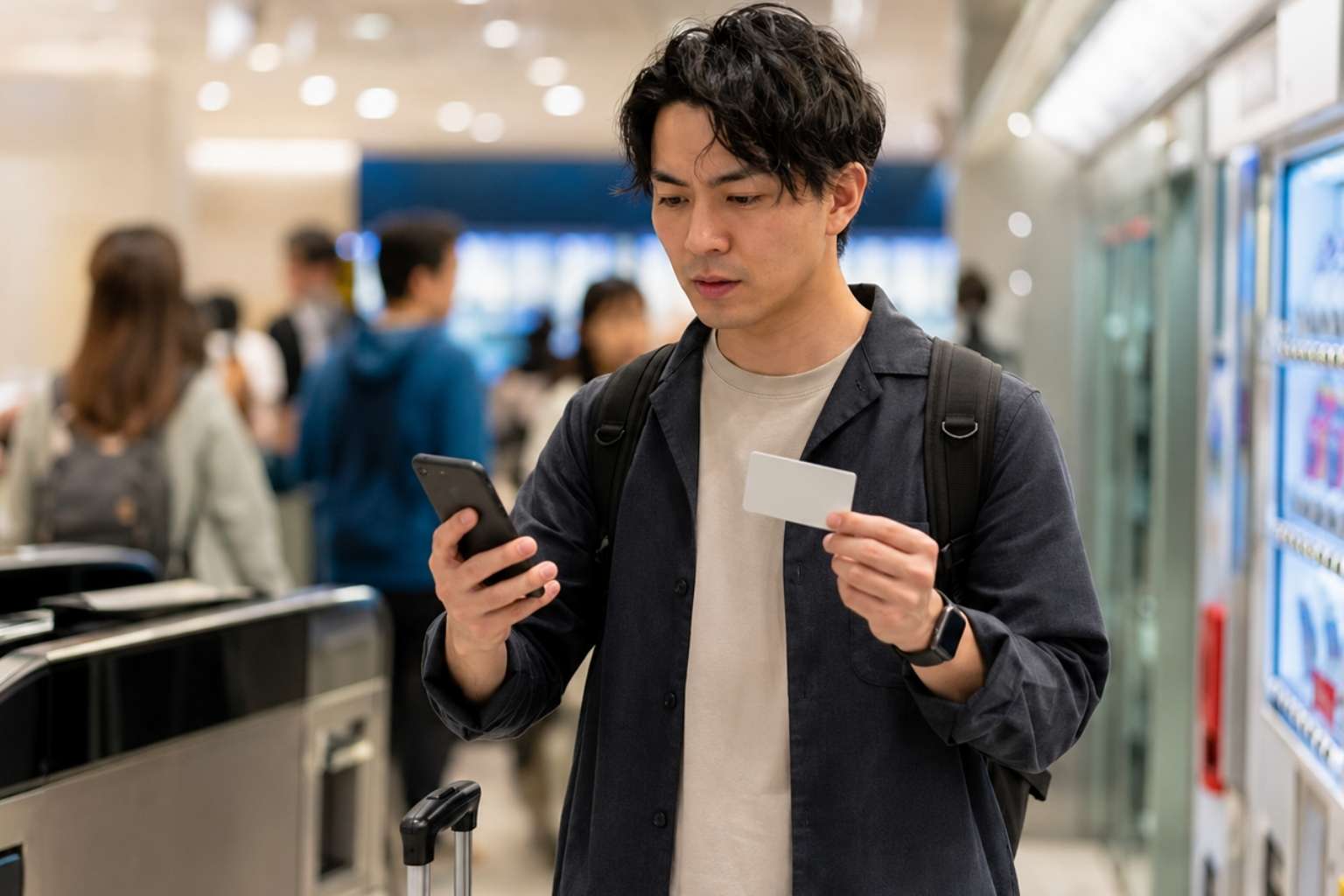
Japan’s tourist IC card situation has changed, and visitors should not arrive assuming every card works the same way.
Welcome Suica, standard Suica, regular PASMO, TOURIST PASMO, and mobile IC options now have different rules, validity periods, purchase points, and refund conditions.
The Welcome Suica Card 2026 question matters because first-time visitors still need an easy way to tap through trains, buses, vending machines, shops, and station services without buying paper tickets each time. It affects short-term tourists arriving through Narita, Haneda, and major Tokyo-area stations, especially those confused by old chip-shortage advice or outdated PASMO PASSPORT posts. It matters now because non-personalized Suica and PASMO sales resumed in 2025, Welcome Suica remains a 28-day tourist option, and PASMO has introduced TOURIST PASMO for international visitors in 2026. (jreast.co.jp)
The most important update is this: do not rely on old advice that says physical Suica and PASMO cards are simply unavailable everywhere. JR East and PASMO announced that non-personalized Suica, Rinkai Suica, and PASMO cards resumed sale from March 1, 2025 after procurement became stable for the foreseeable future. (jreast.co.jp)
Welcome Suica Card 2026: What Happened
Welcome Suica is still a tourist-focused IC card from JR East. It is deposit-free, can be used for trains, buses, shopping, and other payments where supported, and is valid for 28 days. (jreast.co.jp)
JR East’s official Welcome Suica page says sales locations from March 27, 2025 include JR East Travel Service Centers at Narita Airport Terminal 1, Narita Airport Terminal 2・3, Haneda Airport Terminal 3 on the Tokyo Monorail side, Tokyo, Shibuya, Shinjuku, Ikebukuro, Ueno, Yokohama, and Sendai. It also lists Welcome Suica ticket vending machines at Narita Airport Terminal 1, Narita Airport Terminal 2・3, and Haneda Airport Terminal 3, plus JAPAN RAIL CAFÉ TOKYO and the Takanawa Gateway Travel Service Center. (jreast.co.jp)
There is also a purchase limit. JR East says, in principle, only one Welcome Suica can be sold to each individual. (jreast.co.jp)
The price is not a separate card fee. JR East lists purchase amounts of ¥1,000, ¥2,000, ¥3,000, ¥4,000, ¥5,000, and ¥10,000, with no deposit required. The card can be topped up to a maximum balance of ¥20,000 at supported ticket machines, fare adjustment machines, and Seven Bank ATMs, but JR East says only yen cash can be used to top up a physical Welcome Suica. (jreast.co.jp)
One warning matters more than almost anything else: no refunds are available for Welcome Suica, even if the card still has remaining balance or is within the validity period. Travelers should avoid loading too much money near the end of the trip. (jreast.co.jp)
Who This Affects
This affects tourists who want the fastest way through train gates without handling small paper tickets every ride. It also affects visitors comparing old PASMO PASSPORT advice with the newer TOURIST PASMO option. (pasmo.co.jp)
You should pay close attention if you are:
- arriving at Narita or Haneda and want an IC card immediately
- staying in Japan for less than 28 days
- planning to use trains, buses, convenience stores, vending machines, lockers, or station shops
- using an iPhone, Apple Watch, or supported mobile-wallet device
- traveling with children who need child fares
- reading older articles that still mention PASMO PASSPORT as the main tourist option
PASMO PASSPORT is the outdated term many travelers still search for. PASMO’s 2026 announcement says TOURIST PASMO is inspired by the previous PASMO PASSPORT and is for international visitors on short-term stays. TOURIST PASMO is valid for 28 days from the date of issue and refunds are not available, including unused funds. (pasmo.co.jp)
According to PASMO, TOURIST PASMO became available from May 2026 at train stations and other locations near airports with international flights. The announcement lists purchase locations planned for Narita Airport and Haneda Airport, and says it can be bought at ticket windows and ticket machines. (pasmo.co.jp)
Why This Matters for Travelers
The main benefit of an IC card is speed. JNTO says prepaid rechargeable transportation cards can be used across many services and cities, with Suica and PASMO among the most common IC cards in the Kanto area. (japan.travel)
Using one means you can tap at the gate when entering and tap again when leaving. If you use a paper ticket instead, you must insert it into the gate, collect it, and use it again when exiting. If the fare is short, JNTO says fare adjustment machines are located inside the ticket gates. (japan.travel)
IC cards also help outside trains. JNTO says they can be used for many purchases at vending machines, stores, and lockers in train stations, while JR East says Suica can be used at convenience stores, shopping malls, restaurants, and other locations displaying supported IC logos. (japan.travel)
But there are limits. JNTO warns that some areas and some forms of transport, including some highway buses, may not accept IC cards, so travelers should look for the IC logo before assuming the card will work. JR East also says Suica cannot be used to travel between separate applicable areas, such as from the Tokyo metropolitan area into another Suica area, and travelers should buy tickets in advance for those trips. (jreast.co.jp)
That is why the Welcome Suica Card 2026 choice should be seen as a city and short-distance travel tool, not a magic replacement for every rail ticket in Japan. For shinkansen, limited express trains, and area-to-area travel, you may still need separate tickets or reservations. (jreast.co.jp)
[Shinkansen Luggage Rules Can Catch You Off Guard Fast]
What To Know Before You Go
For most short-term visitors, the decision is simple: choose the card or mobile option that fits your phone, arrival airport, refund needs, and trip length.
Use this checklist before buying:
- Welcome Suica is best if you want a deposit-free tourist card in JR East’s area.
- TOURIST PASMO is the PASMO-side short-term visitor option launched in 2026.
- Standard Suica and PASMO resumed sale from March 1, 2025, but purchase locations and operator rules still matter.
- Welcome Suica and TOURIST PASMO both expire after 28 days.
- Welcome Suica and TOURIST PASMO do not refund remaining balance.
- Standard Suica includes a ¥500 deposit and can be refunded at JR East stations, but a handling fee may apply to remaining balance.
- Do not load too much money near the end of a short trip.
- Keep your Welcome Suica reference paper with you, because JR East says validity and pass details are not displayed on the card itself. (jreast.co.jp)
For iPhone users, Welcome Suica Mobile may be the smoothest option. JR East says the Welcome Suica Mobile app for iOS allows users to issue and top up Suica, is valid for 180 days, and can be downloaded before travel; the app page also says setup and top-up features may be restricted by law in some countries until after arrival in Japan. (jreast.co.jp)
JR East’s 2025 release says Welcome Suica Mobile supports iPhone and Apple Watch, does not require a deposit, and allows top-up by credit card registered to Apple Pay or by cash at ticket machines. It also says the physical Welcome Suica card is valid for 28 days from first use, while Welcome Suica Mobile is valid for 180 days from issuance. (jreast.co.jp)
JR East also announced in 2026 that Welcome Suica Mobile for Samsung Galaxy smartphones would support issuing and topping up Suica, with 180-day validity from issuance and no refund of remaining balance. That gives some Android users another path, but travelers should check supported devices and country restrictions before relying on it. (jreast.co.jp)
How To Use Welcome Suica or TOURIST PASMO
Using the card is simple once it is loaded.
Tap the card or mobile IC on the ticket gate reader when entering the station. Tap again when exiting. The fare is calculated automatically if the card is accepted for that route. (japan.travel)
For buses, JNTO says you may tap when boarding and again when getting off depending on the fare system, but not all buses accept IC cards. If the bus does not show IC support, you may need to pay in cash and use the numbered-ticket system. (japan.travel)
To add value to a physical Welcome Suica, use supported automatic ticket machines, fare adjustment machines, or Seven Bank ATMs. JR East says the physical card cannot be topped up by credit card, so travelers should keep yen cash available. (jreast.co.jp)
For TOURIST PASMO, PASMO says the card can be used on trains and buses that accept IC cards in the Tokyo metro area and across the country, and for cashless payments at participating stores. It also says unused funds are not refunded, so the same end-of-trip balance warning applies. (pasmo.co.jp)
Official Note
According to JR East, PASMO, and JNTO, tourist IC card options in 2026 include physical Welcome Suica, Welcome Suica Mobile, standard Suica, regular PASMO, and the new TOURIST PASMO for international visitors. Welcome Suica and TOURIST PASMO are both short-term, deposit-free options with 28-day validity and no refund of unused balance, while mobile options can offer longer validity depending on device and service conditions. Travelers should confirm current sales points and supported devices on official pages before arrival. (jreast.co.jp)
[First-Time Japan Train Guide: Tickets, IC Cards, and Manners]
Japan’s trains get much easier once you have the right IC card. The mistake is not buying one — it is buying the wrong one, loading too much money, or trusting outdated PASMO PASSPORT and chip-shortage advice without checking what is actually available now.
Question for readers: Would you choose a physical Welcome Suica, TOURIST PASMO, or a mobile IC card for your next Japan trip?