
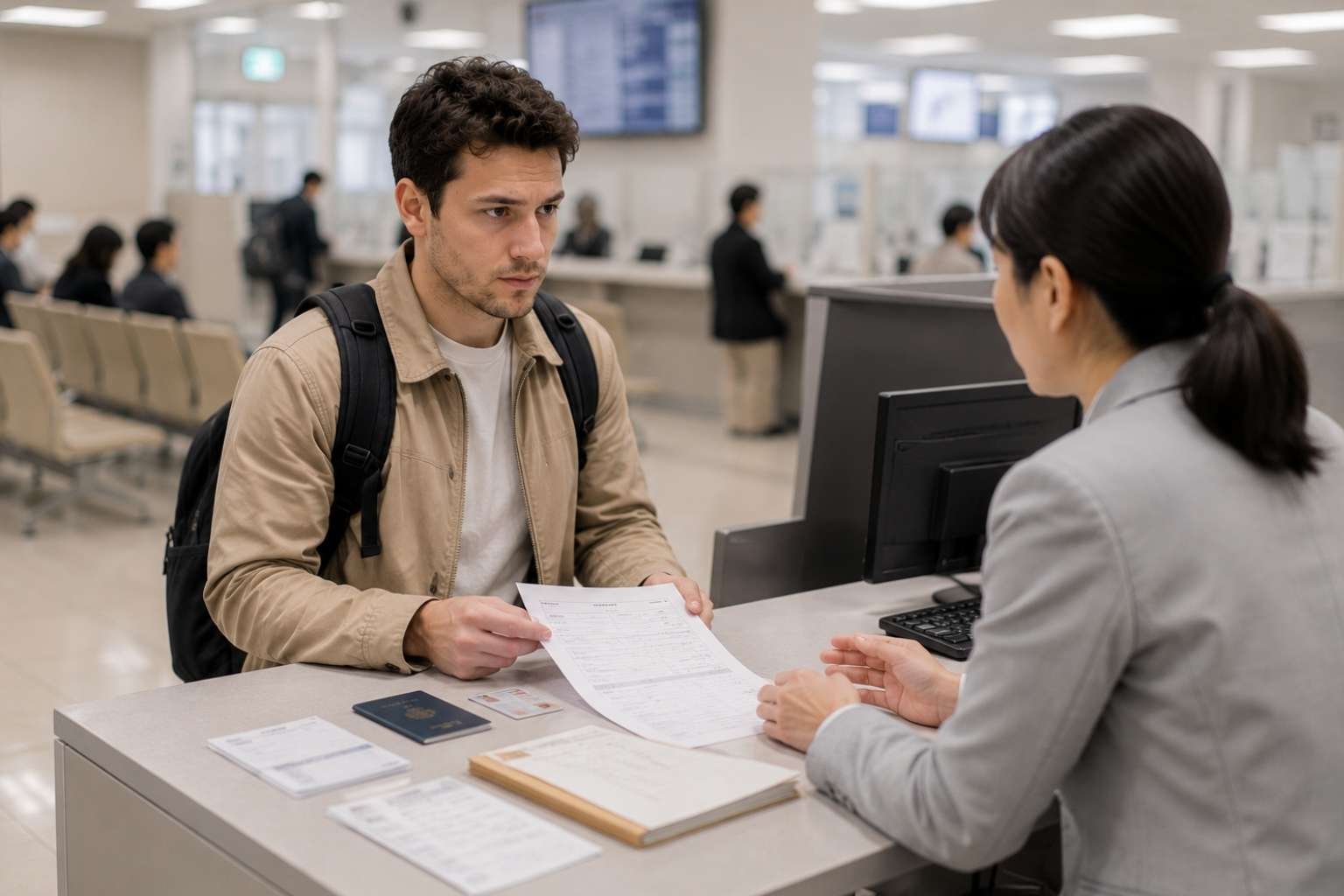
A practical first-week guide for long-term visa holders who need to register a new address in Japan.
Learn the deadline, documents, city office flow, and the common mistakes that slow everything down.
Moving to Japan address registration is one of the first official tasks that matters after you land. This guide covers the deadline, documents, and city office steps for long-term residents who need to register their address correctly. It matters now because once you settle into a real home, the legal clock starts quickly, and delaying the procedure can create avoidable problems in the first days of your new life in Japan.
Arriving on a long-term visa feels like the beginning of everything, but daily life in Japan does not really start until your address is officially registered. That one city office visit is what turns your new apartment into your legal place of residence and creates the resident record that later supports documents and services tied to your life in Japan.
Why This Guide Matters
The most important rule is the 14-day deadline. The Immigration Services Agency says mid-to-long-term residents must notify their address through the municipality within 14 days after deciding on their place of residence, and the Immigration Control and Refugee Recognition Act states the same rule in law.
This is not a soft guideline. It is a real legal obligation. Official Immigration materials also warn that failing to give notice of your place of residence without a justifiable reason, or filing a false notification, can create serious immigration trouble, and the Act separately treats leaving a residence unreported for 90 days as a deportation ground in some cases.
That is why this procedure matters so much for new arrivals. It is easy to think of address registration as routine paperwork, but in Japan it is part of your residency management system, not just a local office form. The address notification connects your residence card to the municipality where you actually live.
There is also a practical reason to do it fast. Once you submit your resident registration, the ward office creates your resident certificate, and everyone with a resident certificate in Japan, including non-Japanese residents, is assigned a My Number. In other words, this city office step is part of the foundation for the rest of your administrative life.
For many foreign residents, this is the first moment when Japan’s systems feel real. You are no longer just a recent arrival with a visa. You become a registered local resident in the municipality where you actually live. That shift matters more than many people realize.
What This Is and Who Needs It
This guide is for mid-to-long-term foreign residents who have just arrived from abroad and now have a fixed address in Japan. If you entered with a long-term status and need to settle into daily life legally and smoothly, this is one of the first procedures that applies to you.
It is especially useful for foreign workers, international students, spouses, and family dependents. It is also useful for people who already arrived, signed a lease, and are now unsure what to do next or what to bring to the city office.
The office itself may be called a city office, ward office, kuyakusho, or shiyakusho depending on where you live. In practice, the procedure is usually handled by the family registry or resident registration section of the office that governs your neighborhood. Yokohama’s English guidance tells non-Japanese residents to register at the ward office of the ward where they live, and Shinjuku directs these procedures to its Resident Registration Section in the Family and Resident Registration Division.
This procedure is also the starting point for later systems that new residents often need quickly. Official local guidance for foreign students in Yokohama says that after moving in, residents need to come to the ward office to register and apply for National Health Insurance, which shows how closely address registration is tied to the rest of your setup in Japan.
That is why this guide matters even if you are tired, jet-lagged, or still unpacking. The visit is not just a formality. It is the point where your legal address, resident record, and local administrative access begin to line up properly.
Costs, Documents, or Setup Steps
The good news is that this is usually more document-heavy than fee-heavy. The key problem is not usually money. It is showing up with the wrong items or going before your address is properly settled.
For a first arrival from abroad, the official core documents are your residence card and your passport. Immigration’s entry and residence guide says a person issued a residence card must register their address within 14 days after their residence has been determined and must bring the residence card or, in the case of later issuance, the passport that states the card will be issued later. Shinjuku’s foreign resident guide also lists the residence card and passport for people moving in from abroad.
If you landed at one of the major airports where residence cards are issued at entry, you should already have the physical card. Immigration says residence cards are issued at Narita, Haneda, Chubu, Kansai, New Chitose, Hiroshima, and Fukuoka airports when a new landing permit is granted there. If you entered through another airport or port, the card may be issued after you file your address notification.
A smart practical addition is to bring a copy of your lease or at least a written memo of your exact address, even if your city does not list the lease as a universal legal requirement. The office will register the address exactly as it should appear in the resident record, so bringing the lease is often the easiest way to avoid copying the building name or room number incorrectly.
If you are moving in with family, there may be one more layer. Shinjuku’s official guide notes that original documentation proving your relationship to the head of household may be required in some cases, and passports for all household members may be needed for re-entry cases. That means families should not assume one person’s documents are always enough.
The city office flow is usually straightforward once you are there. Go to the resident registration or family registry section, say you need to register your address, complete the moving-in notification, and submit your residence card and passport when called. Once the registration is processed, the municipality creates your resident certificate, and local office guidance in Kawasaki and other cities explains that updated address information is added to the residence card.
What makes this step feel slow is rarely the form itself. It is the waiting time, language stress, and uncertainty about whether one missing document will force you to come back. That is why preparation matters more than speed. Going once with the right documents is far better than rushing out and having to repeat the whole trip.
After the address registration is complete, ask whether you can also handle related procedures on the same visit. Some municipalities connect move-in registration closely with National Health Insurance or My Number follow-up, and official Yokohama guidance for foreign students specifically says NHI application follows resident registration.
[Japan’s 2026 Visa Cost Shock: What Staying Really Costs Now]
Common Mistakes and Practical Tips
The most common mistake is waiting too long because you are still “settling in.” The law does not wait for your furniture delivery, your work schedule, or your comfort level with Japanese forms. Once your residence is fixed, the 14-day deadline is already the rule you are living under.
Another common mistake is going to the wrong office. Your address must be registered at the office that governs the place where you actually live now, not just any city office that seems convenient. Yokohama’s English guidance is explicit that residents register at the ward office of the ward in which they live.
People also get tripped up by assuming the residence card alone is always enough. For first arrivals from abroad, the passport still matters, and some municipalities may ask for extra household or relationship documents depending on the case. Showing up with both core documents is the safest move.
A less obvious mistake is treating address registration as separate from everything else. In reality, it is the base record for the resident certificate, My Number assignment, and later insurance and municipal procedures. If you postpone it, you are not delaying only one task. You are delaying several systems that depend on it.
There is also a simple practical mistake that causes avoidable trouble: writing the address incorrectly. Japanese addresses can be long, the building name may include specific characters, and apartment numbers matter. Bring the lease or a clean written copy so the office can register the address accurately the first time.
A stronger first-week routine looks like this:
- confirm your address is truly fixed
- prepare your residence card and passport
- bring an address memo or lease copy
- go to the correct ward or city office early in the day
- ask immediately for resident registration or moving-in notification
- check whether NHI or My Number follow-up should be done on the same visit
That sequence keeps the procedure simple and prevents the most frustrating repeat-trip problems.
What To Do Next
If you just arrived in Japan and have already moved into your long-term address, do not overcomplicate this. Put the city office visit near the top of your first-week checklist, not somewhere at the bottom after mobile service, shopping, or unpacking.
Start by checking your municipality’s website in English or Japanese. Confirm the office location, opening hours, and any local document notes. Some cities are strict about exact counters or extra paperwork for households, and it is much easier to learn that before leaving home than at the service window.
Then prepare a simple folder. Put in your residence card, passport, and your lease or written address. If family members are registering too, collect their documents at the same time.
Once you finish the registration, ask what should happen next. In many cases, that means checking National Health Insurance or My Number-related follow-up. Even if you do not complete everything on the same day, you will at least know which next steps depend on the address registration being finished first.
This is the real value of handling the process early. Instead of letting your arrival in Japan feel bureaucratically blocked, you get the basic resident record in place and start moving forward with everything else more smoothly.
[How to Print Juminhyo at a Convenience Store in Japan]
Official Note
Japan’s Immigration rules require mid-to-long-term residents to notify their address through the municipality within 14 days after deciding on their place of residence, and municipal guidance confirms that resident registration is handled at the ward or city office responsible for the address where you live. Exact counter names and extra documents can vary by municipality, so always check your own local office website before you go.
Address registration is one of the least glamorous parts of moving to Japan, but it is also one of the most important. Once it is done, daily life starts feeling less like arrival and more like actual residence.
Question for readers: What was your experience like during your first visit to a local Japanese city office?