
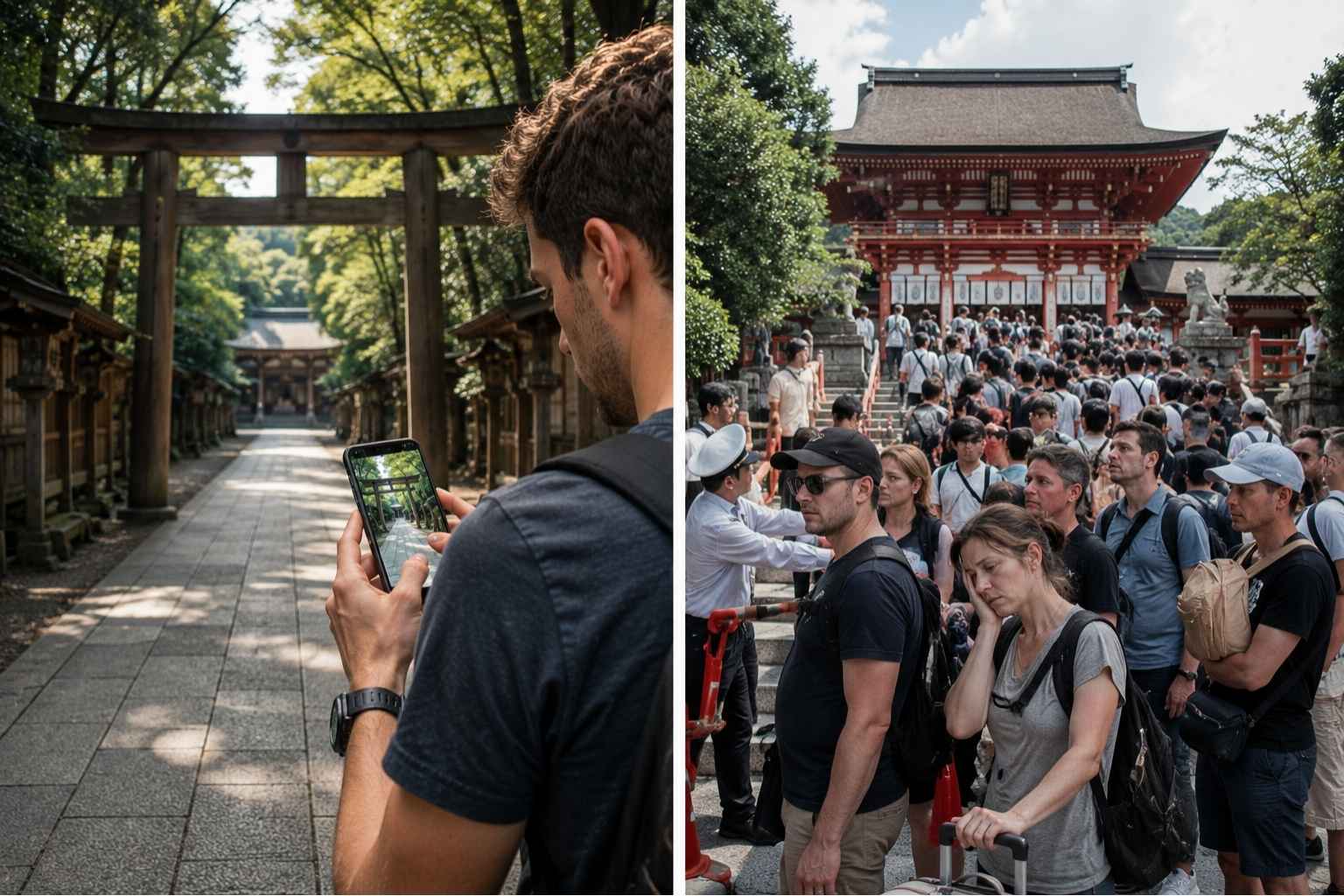
Japan still delivers incredible moments.
But at major tourist spots, the actual day can feel far more crowded, tiring, and rushed than the peaceful reels suggest.
The Japan travel reality in 2026 is that famous stops can mean long walks, packed routes, crowd-control planning, and a sprint to make the last train rather than the quiet, empty calm people see online. This affects first-time visitors most, especially those building their itinerary from viral clips, “hidden gem” posts, and one-day city checklists. It matters now because Japan’s inbound visitor numbers hit record highs in 2024 and 2025, and official tourism bodies are openly publishing congestion tools and behavior guidance to help people manage the pressure.
That does not mean Japan is “bad” or overhyped. It means the cleanest, calmest version of the country is still real, but it is no longer the automatic default at the most famous places, at the most famous times, or on the most copied routes.
Japan Travel Reality: What Happened
Kyoto is one of the clearest examples. The Kyoto City Tourism Association now runs an official congestion forecast with real-time and time-slot crowd information for popular sightseeing areas, which is something destinations build when crowding is no longer occasional noise but part of the daily visitor experience.
The same pattern shows up in Arashiyama. Kyoto’s own official area guide says the Bamboo Forest and Togetsu-kyo Bridge are “always crowded with people trying to take the best possible shots,” which is about as direct as a tourism board gets.
Mount Fuji has become another symbol of the gap between Instagram and reality. Reuters reported that officials in Fujikawaguchiko installed a barrier at the viral Lawson convenience-store photo spot after crowding, littering, illegal parking, and road-safety problems turned the view into a local nuisance.
The seasonal timing makes this worse. Kyoto’s official tourism FAQ says the city sees its biggest tourist numbers in late March to early April for cherry blossoms and in mid-November to early December for autumn leaves, which means the “dream Japan” windows are also the most crowded ones.
Who This Affects
This hits hardest if you are trying to do Japan fast. It is especially rough for travelers stacking five or six famous stops into one day, moving between cities with big luggage, or assuming transit, rest, and meal breaks will somehow take care of themselves.
You should be extra careful if you are:
- following influencer itineraries stop-for-stop
- visiting Kyoto during peak cherry blossom or autumn foliage weeks
- carrying large suitcases through city trains
- planning late-night returns without checking the last train
- expecting easy trash disposal everywhere
- trying to force one “perfect” photo stop into an already crowded day
Even the logistics people assume are simple can get harder faster than expected. JNTO says weekday commuter trains are especially crowded around 7:30 to 9:00 a.m. and 5:30 to 7:00 p.m., making it difficult to board with large luggage, while its transport guidance says most trains run only from around 5:00 a.m. to midnight.
Why This Matters for Travelers
The problem is not just physical tiredness. It is the mental drag that starts when every stop takes longer than expected, every famous path is fuller than the reel suggested, and every calm-looking moment turns out to be wedged between queues, rerouting, and timing pressure.
That is the Japan travel reality many people only learn on day three or four. The trip starts feeling less like a dream and more like crowd management with better scenery.
The quiet, reflective side of Japan still exists, but official guidance increasingly tells travelers to use congestion maps, avoid packed times, and adapt their routes. That is a sign that the experience now depends more on strategy than many visitors realize before arrival.
There is also the late-night problem social media rarely shows. If you misjudge time after dinner or a night photo stop, JNTO says most trains stop around midnight, and public trash bins are limited enough that travelers are often expected to carry rubbish until they find an appropriate place to dispose of it.
[The Empty Seat Next to You in Japan: How to Read It Without Spiraling]
What To Know Before You Go
If you want the trip to feel better than the feed, not worse, the fix is not complicated. You need to plan for friction instead of pretending it will not exist.
Use these practical rules:
- Cut one major sightseeing stop from every packed day.
- Check Kyoto’s official congestion forecast before heading to famous areas.
- Avoid rush-hour commuter trains if you have large luggage.
- Consider luggage forwarding or check baggage rules before boarding long-distance trains.
- Carry a small bag for your trash instead of assuming bins will be everywhere.
- Check your last train before sunset if you are staying out late.
- Treat viral photo spots as potential bottlenecks, not peaceful secrets.
One more adjustment matters: do fewer shrines, temples, or famous streets in one day. Japan usually feels better when you give each area room to breathe instead of trying to “complete” the city.
Official Note
According to official and reported sources, Japan’s major tourist zones are dealing with sustained crowd pressure through congestion forecasting, behavior guidance, luggage advice, limited public-bin realities, and more visible management of viral photo spots. Travelers should verify crowd conditions, operating hours, and transport timing on official pages before building a tight day plan.
[5 Secret Japan Government Discounts for Foreigners to Save Money]
Japan is still worth the trip. But the smartest way to enjoy it now is to stop chasing the edited version and plan for the real one.
Question for readers: What ruins a Japan trip faster now: the crowds, the queues, or the last-train stress?