
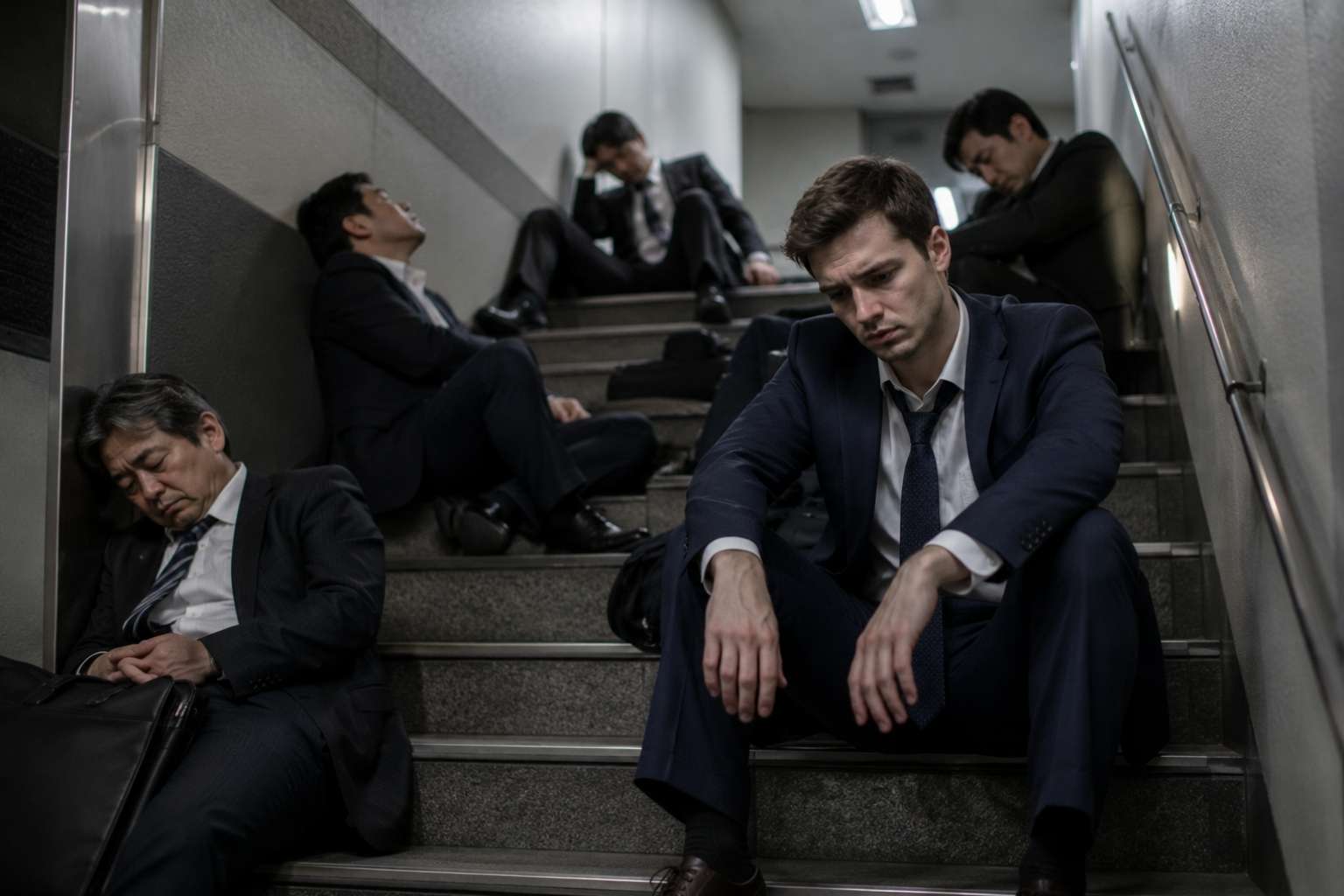
A first-person reflection on how a “dream” career in Japan became a daily fight against burnout.
What looked like success from the outside slowly started costing me my health, identity, and peace.
This article is about how my dream job in Japan turned into a mental health crisis. It will resonate with foreign workers who came here full of hope and slowly found themselves trapped by overtime, invisible rules, and emotional isolation. It matters because what gets sold as discipline and loyalty can become burnout long before anyone admits something is wrong.
Japan can feel like paradise when you are visiting.
Everything works. Everything looks clean. Everything seems efficient, calm, and precise. But working inside that system is completely different from admiring it from the outside.
That was the shock for me.
Why This Story Hits Hard
I did not move here looking for an easy life.
I came for the dream job, the chance to build something serious, and the feeling that I was stepping into a country people around the world admire. At first, that felt exciting.
Then the job became my entire life.
The hardest part was not one dramatic event. It was the slow grind of service overtime, the unpaid extra hours you are expected to give just to prove loyalty. The workday ended on paper, but not in real life.
And leaving before my boss felt impossible.
It was not written as a rule. That made it worse. You were supposed to understand it without being told. You were supposed to read the atmosphere, follow the room, and know exactly how much of yourself to sacrifice without making anyone uncomfortable.
That kind of pressure changes you.
The Expectation vs Reality Shift
I thought working hard would help me belong.
Instead, it made me disappear.
The more I adjusted, the more I felt like I was becoming a corporate ghost. I was there all the time, doing everything right, trying not to stand out in the wrong way, trying not to break the flow, trying not to look weak.
But I was not living.
I was performing.
That was the real gap between the dream and the reality. From the outside, Japan looked like a place where discipline leads to respect. From the inside, it often felt like discipline meant learning how to erase yourself without complaint.
Tourists get the polished version.
Workers get the cost of maintaining it.
What Changed Mentally
The pressure was not only about overtime.
It was the constant emotional labor of being “correct” all the time. Not just in what I did, but in how I spoke, how I reacted, how much of my real self I allowed to show. After a while, the language barrier felt like only a small part of the problem.
The cultural barrier was much bigger.
A few things became brutally clear:
- Service overtime is not dedication when it is slowly breaking you
- Reading the atmosphere all day makes it hard to know who you really are
- Perfection at work can create total isolation at home
- A visa can start feeling like a leash when your sanity is on the line
[Japan Permanent Residency Language Requirements 2026]
The Hardest Lesson
The hardest lesson was that I had to choose.
Not in one dramatic moment, but little by little.
Do I keep protecting the image of success, or do I protect my mind? Do I keep proving I can survive here, or do I admit survival is no longer enough? Do I keep the visa at any cost, or do I stop pretending that cost is reasonable?
That is where the dream job became a nightmare.
Because once you realize your health is declining and your home life is empty, the prestige stops meaning much. A respected title does not help if you feel dead by the time you get home.
What Living in Japan Revealed
Living here revealed that work culture can consume more than time.
It can consume identity.
It can turn your evenings into recovery time, your weekends into dread, and your personality into something flat and managed. It can make you feel like being human is the one thing you are not allowed to be.
That was the most painful part for me.
Not the hours themselves, but the way those hours hollowed out everything around them.
What I Understand Now
I do not think the answer is to romanticize suffering.
I do not think losing yourself to fit a Japanese workplace makes you stronger. I think it makes you easier to use. And I think too many foreign workers confuse endurance with success because they are afraid of what happens if they finally admit they are not okay.
I understand now that keeping my sanity is not weakness.
It is the only reason I still feel like myself at all.
Final Thought
Japan can still be an amazing place.
But a dream country can still become a nightmare workplace. That is the truth many people learn too late. When your job asks for your time, your silence, your energy, and eventually your soul, the real question is no longer whether you can adapt.
It is whether adapting is worth what it is taking from you.
Question for readers: Have you ever felt like you had to lose your soul just to fit into a Japanese workplace?