
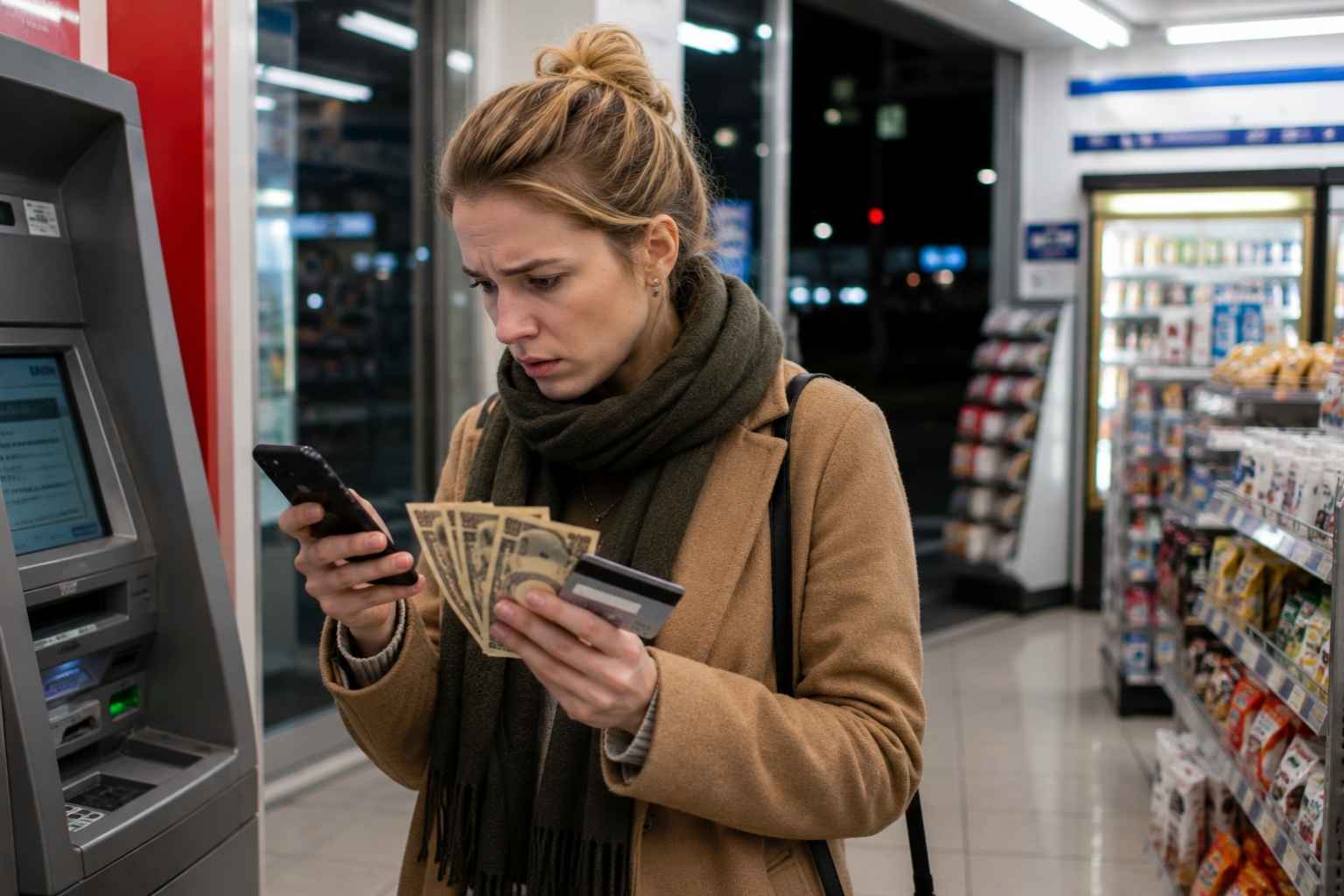
A practical guide to the ATM, transfer, and remittance fees that quietly drain your money in Japan.
For foreign workers, English teachers, students, and anyone living on a tight monthly budget.
This guide covers how to avoid bank fees in Japan, where the biggest money leaks happen, and which simple changes can stop them fast. It is for foreign workers, English teachers, students, and residents who feel like small banking charges keep eating into their monthly cash. It matters now because these fees are easy to ignore one by one, but repeated ATM use, transfer charges, and remittance costs can quietly steal thousands of yen over time.
This is the part that makes people angry. You get paid, you go to withdraw your own money, and then the bank takes another cut just for letting you touch it. Then it happens again on a weekend, after work, or through the wrong ATM.
That is why this topic gets saved. Bank fees in Japan do not usually arrive as one giant bill. They leak out in small amounts, and that is exactly what makes them dangerous.
Why This Guide Matters
Most people living in Japan track the obvious expenses first. They watch rent, groceries, transport, and phone bills. But banking fees often hide in the background because each charge looks too small to be serious on its own.
That is the trap. A few hundred yen feels minor when you are in a rush. But once it repeats across ATM withdrawals, bank transfers, and international remittances, the total stops being minor.
The raw details in this guide point to the biggest problem areas. These include after-hours ATM charges, bank-to-bank transfer fees, convenience store ATM fees, and high remittance costs when sending money home.
This matters because the fees often hit the people who can least afford to ignore them. If you are already living paycheck to paycheck, repeated charges for basic banking tasks do more damage than people realize.
It also matters because many of these fees are avoidable. That is the important part. The problem is not only that the fees exist. The problem is that many people keep paying them long after they could have changed the habit.
The fastest way to stop the leak is not earning more. It is using the system more carefully.
What This Is and Who Needs It
This is a practical bank-fee survival guide for daily life in Japan. It is not a full banking comparison article. It is a plain-English guide to the specific charges in your raw details that keep draining money from residents week after week.
This guide is especially useful for:
- foreign workers paid monthly who keep using ATMs for daily cash
- English teachers and students managing a tight budget
- people sending money between Japanese banks
- residents using convenience store ATMs without thinking about the extra cost
- anyone sending money overseas and getting hit by poor bank rates
The bigger issue is not that one bank fee exists. It is that Japan’s fee structure can punish ordinary habits.
Withdraw cash at the wrong time, and the charge jumps. Use the wrong ATM, and the fee appears again. Transfer money the old way, and the cost keeps stacking up.
That is why this guide matters for everyday life, not just finance nerds. If you live in Japan long enough, banking becomes part of your routine. A bad routine becomes an expensive one.
Costs, Documents, or Setup Steps
The smartest way to stop losing money is to fix the largest leaks first. In your raw details, there are five major ones.
1) The After-Hours ATM Trap
This is one of the most common mistakes. According to your raw details, withdrawing cash on weekends or after 6 PM can cost double.
That means the same action gets more expensive simply because of timing. The easiest fix is to treat ATM use like a timed task, not a random habit.
A better routine is:
- withdraw during normal hours when possible
- avoid weekend withdrawals unless necessary
- stop treating late-night ATM use as harmless convenience
2) Bank-to-Bank Transfer Fees
The next leak is Furikomi, or bank-to-bank transfer fees. These charges feel routine because transfers are so normal, but that is exactly why they add up.
Your raw details point to the smarter move: use smartphone apps to send money for free. The practical lesson is simple. If the app-based option avoids the fee, the old paid transfer habit becomes a waste.
3) Net Banks and Free ATM Withdrawals
This is where your raw details offer one of the clearest fixes. Net banks such as Sony, Rakuten, and Shinsei can give you 5+ free ATM withdrawals every month.
That matters because free withdrawals change the whole cost structure. If you are paying repeated ATM fees now, moving part of your routine to a bank with built-in free withdrawals can immediately reduce the leak.
The practical setup here is to compare your current habit against the net-bank model. If you are withdrawing cash often, free withdrawals matter more than many people think.
4) Convenience Store ATM Fees
This is the daily-life trap that feels the most normal. You are already in the store, the ATM is right there, and it feels faster than going elsewhere.
But your raw details make the problem clear: using 7-Eleven or FamilyMart ATMs can eat your salary. The fee may not look shocking in one moment, but the repetition is what causes the damage.
That means the convenience is not really cheap. It is just easy.
5) International Remittance Costs
The last major leak is overseas transfer cost. If you are sending money home through a bank, the problem is not only the visible fee. It is also the rate.
Your raw details point to the practical alternatives: Wise or Revolut for home transfers. The main lesson is not brand loyalty. It is cost awareness. If the bank route is expensive, a better remittance tool can protect more of your money.
[Japan Two-Tier Pricing: What Foreign Residents Need to Know]
Common Mistakes and Practical Tips
The biggest mistake is treating small bank fees like background noise. That mindset is exactly what keeps the leak going.
Another common mistake is prioritizing convenience over pattern. One late-night ATM stop does not feel serious. But once that becomes a weekly habit, the cost becomes part of your lifestyle.
A third mistake is assuming all banks and all transfer methods are basically the same. Your raw details clearly show they are not.
These practical tips help:
- stop using ATMs randomly
- avoid withdrawing cash after 6 PM or on weekends
- check whether your current bank charges for transfers you could do for free by app
- look at net banks like Sony, Rakuten, and Shinsei if free ATM withdrawals matter to your budget
- stop treating convenience store ATMs as neutral
- compare bank remittance costs against Wise or Revolut
A stronger banking routine looks like this:
- withdraw cash less often, but more strategically
- use free withdrawal limits properly
- transfer money in the cheapest available way
- keep convenience store ATM use for real emergencies, not habit
That is how you stop the leak without changing your whole life.
What To Do Next
If you want instant savings, start with the habits that repeat most often. The fastest win is usually ATM timing.
Then move to the next biggest leak: transfers. If you are paying for routine bank-to-bank movement that could be done free through a smartphone app, fix that next.
A simple action checklist:
- stop withdrawing on weekends or after 6 PM when possible
- check how often you use convenience store ATMs
- look at net banks such as Sony, Rakuten, and Shinsei for 5+ free ATM withdrawals
- switch everyday transfers to a free app-based method where possible
- compare overseas bank remittance costs with Wise or Revolut
The goal is not to become obsessed with tiny fees. The goal is to stop losing money for no reason.
Because once you notice the pattern, the frustration becomes obvious. You were not overspending on something fun. You were paying extra just to access, move, or send your own money.
[Japan’s Hidden Residents Tax Shock: Why Year Two Wrecks Your Budget]
Official Note
This guide is based on the fee points listed above: higher ATM charges on weekends or after 6 PM, Furikomi bank transfer fees, net banks such as Sony, Rakuten, and Shinsei offering 5+ free ATM withdrawals, convenience store ATM usage at 7-Eleven and FamilyMart, and lower-cost international remittance options like Wise and Revolut.
[5 Secret Japan Government Discounts for Foreigners to Save Money]
The worst bank fee in Japan is usually not the one that shocks you. It is the one that feels so normal you keep paying it every week.
Question for readers: Which fee in Japan annoyed you most: after-hours ATM charges, convenience store ATM fees, furikomi transfer costs, or the money lost on overseas remittance?**