
A quiet look at Japan’s growing human rental industry and what it says about modern isolation.
For people who feel constantly connected online but emotionally empty in real life.
This article is about Japan’s human rental industry and why more people are paying strangers just to sit beside them for an hour. It will resonate with anyone who has felt digitally surrounded but emotionally abandoned, especially in cities where daily life runs smoothly but closeness keeps disappearing. It matters because when a person pays for borrowed companionship instead of asking a real friend to come over, something deeper is breaking.
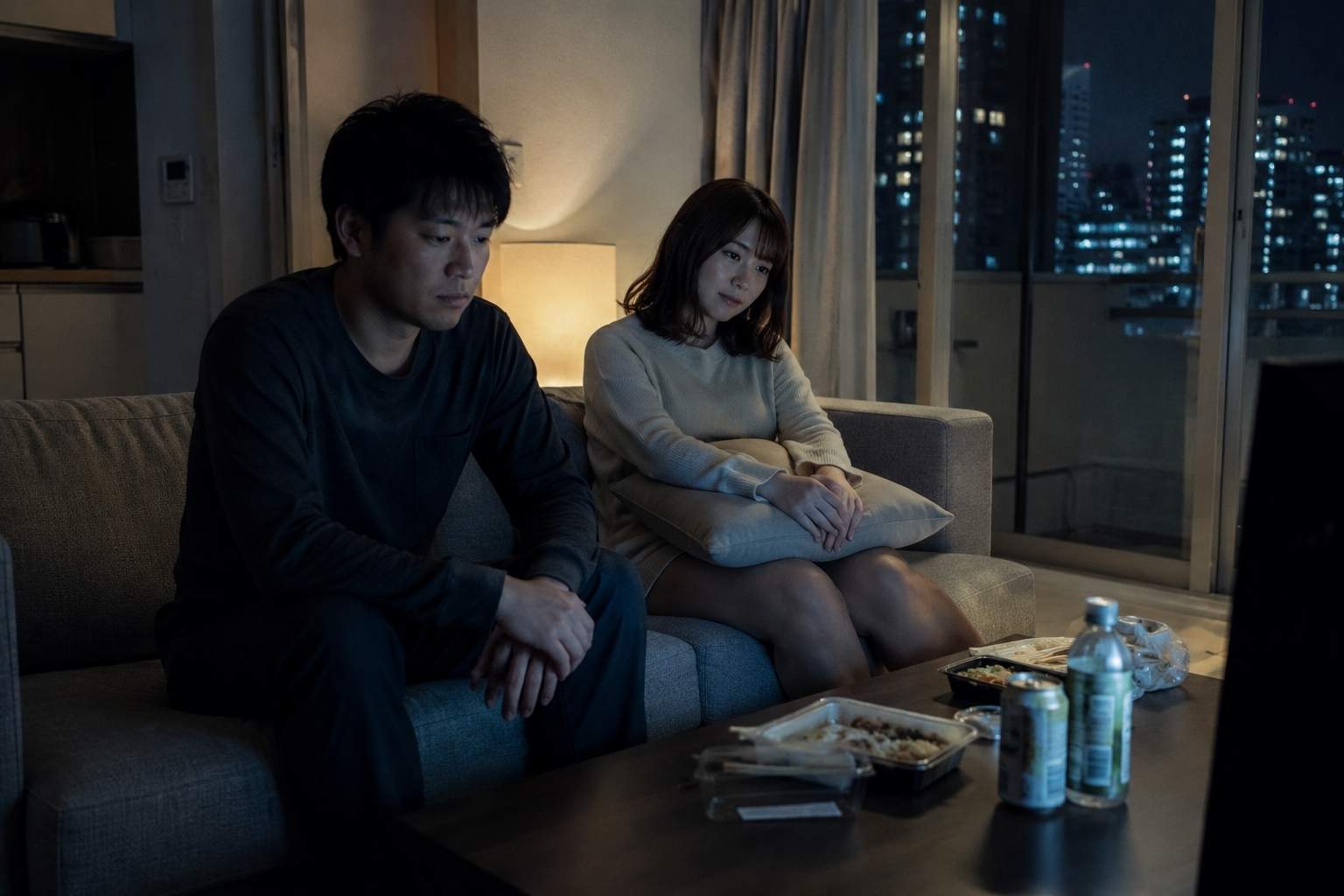
The 34-year-old man in Tokyo paid $150 to rent a “sister” for the evening.
Not for sex. Not for romance. He just wanted another person to sit beside him in silence while they watched television together.
“She called me by my name,” he said. “For one hour, the apartment didn’t feel empty anymore.”
That sentence is harder to forget than people want to admit.
Why This Story Hits Hard
Japan’s “human rental” industry is exploding.
You can now hire a parent, a spouse, a friend, or even an entire fake family by the hour. Last month, one agency reported a massive surge in bookings from people under forty.
That is what makes this story hit so hard. This is not only about eccentric services or urban loneliness turned into a curiosity piece. It is about a society reaching the point where emotional needs are being outsourced because ordinary connection feels too far away, too awkward, or simply gone.
Japan is one of the safest and most polite societies on earth. But many people now describe it as a “touch desert.”
No hugs. No closeness. No one reaching for your hand when life falls apart.
That kind of absence changes a person.
The Expectation vs Reality Shift
For years, digital life promised the opposite.
It promised that no one would ever be truly alone again. Messages, notifications, video calls, social feeds, dating apps, and endless contact points were supposed to make human distance smaller.
Instead, for many people, physical closeness has started disappearing from ordinary life.
That is the expectation-versus-reality shift underneath this story. We became more reachable, but not more held. We became more visible, but not more known. A person can now scroll through hundreds of faces in a day and still go home to an apartment that feels emotionally vacant.
That is why a rented “sister” for one evening no longer sounds bizarre. It sounds like the market stepping into a gap real life failed to fill.
And this is not only Japan.
New York. Paris. Melbourne. Seoul. Different cities, same quiet pattern: millions of people surrounded by movement, messages, and platforms, yet emotionally starving in silence.
What Changed Mentally
The details of this story make the deeper problem harder to ignore.
A man did not ask for smarter AI. He did not ask for another social media app. He did not ask for some futuristic fix.
He just wanted to remember what it feels like to matter to someone who is not being paid to stay.
That is the real fracture point.
A few truths sit underneath it:
- Digital connection does not replace physical presence
- Safety and politeness do not automatically create closeness
- A society can be efficient and still emotionally starved
- Loneliness becomes more dangerous when it starts feeling normal
[Japan’s Young Workers Are Too Exhausted to Build a Life]
The Hardest Lesson
The hardest lesson here is that loneliness has become practical.
It no longer always looks like heartbreak, crying, or obvious isolation. Sometimes it looks like booking an hour with a stranger because asking a real person feels impossible. Sometimes it looks like paying for temporary warmth because permanent closeness feels out of reach.
That is what gives this story its weight.
The industry is growing because the emotional need is real. And once loneliness becomes something people solve with a payment screen, it stops being a private sadness and starts looking like a wider social failure.
What Living in Japan Revealed
What this reveals about living in Japan is not only that people feel alone.
It is that loneliness can deepen even inside a society built on courtesy, order, and public calm. A place can be peaceful, clean, and socially controlled while still leaving people desperate for the simplest form of human presence.
That is what the phrase “touch desert” captures so well.
Not chaos. Not violence. Just the slow disappearance of everyday closeness.
What I Understand Now
I understand now that this story is not really about a strange service.
It is about what happens when people stop expecting real connection to arrive naturally. It is about the point where calling someone by their name for one hour starts feeling like luxury.
That should disturb more people than it does.
Because once paid companionship feels easier than real companionship, something essential has been pushed out of daily life.
Final Thought
Japan’s human rental boom is not just a business trend. It is a warning.
A society can stay orderly, polite, and technologically advanced while people inside it become starved for simple human presence. And once that happens, the market will always find a way to sell back what real life stopped giving freely.
That is the part that lingers.
Not the price. Not the service menu. Just one man saying the apartment did not feel empty for an hour.
Question for readers: Is your connection with people actually real anymore, or are we all just scrolling through strangers together?