
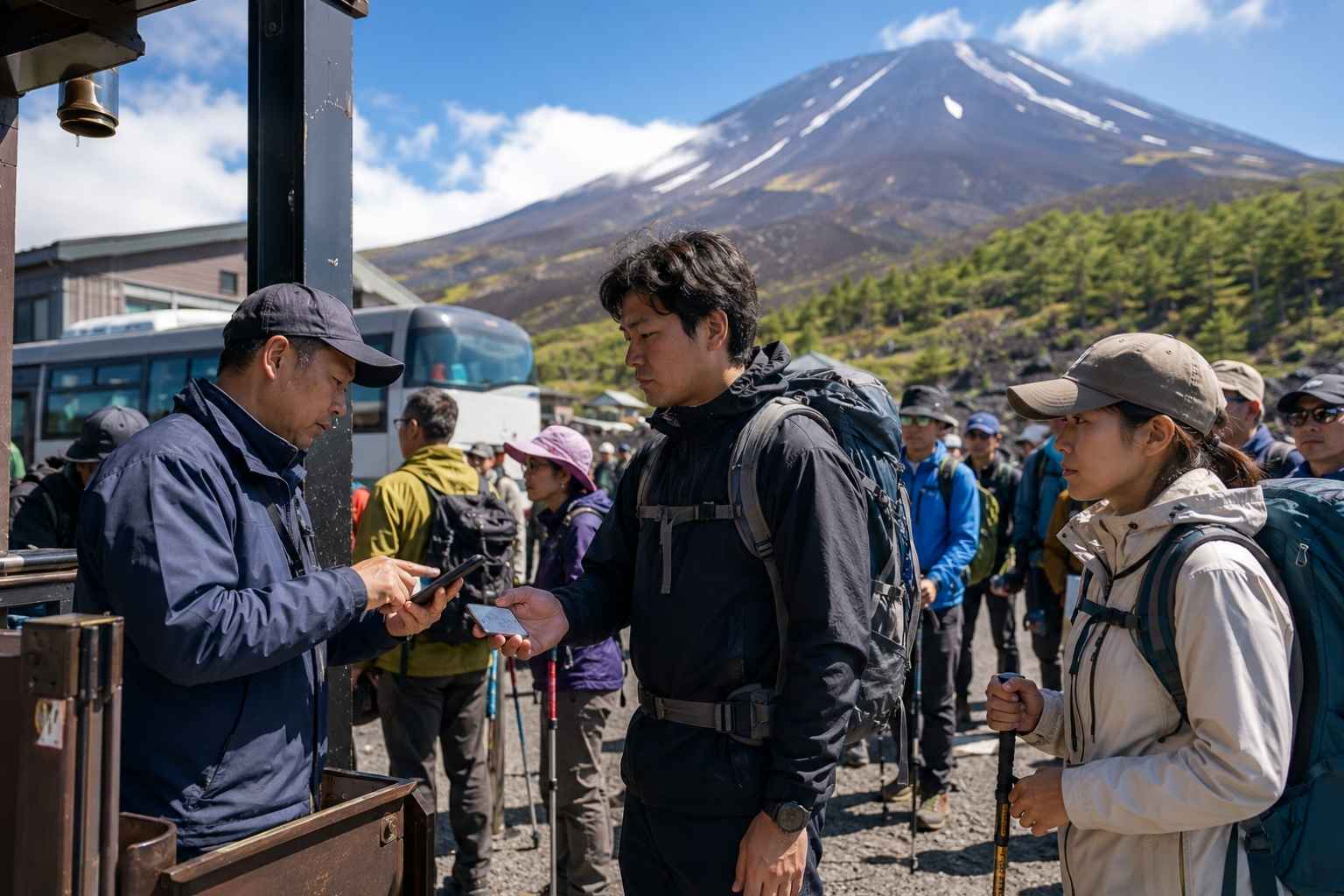
Climbing Mount Fuji in 2026 is no longer something visitors can treat as a casual last-minute plan. The new restrictions affect tourists, foreign residents, students, tour groups, and anyone hoping to reach the summit during the summer season. It matters now because the mount fuji climbing rules 2026 include mandatory fees, registration systems, gate hours, and strict crowd controls aimed at safety and overtourism.
Mount Fuji remains one of Japan’s most searched and symbolic travel goals. But the official system is now designed to control who enters, when they enter, and whether they are prepared enough to climb safely.
What Happened
For the 2026 climbing season, Mount Fuji’s official climbing website lists common rules across the trails. These include mountain entry restriction hours from 2 p.m. to 3 a.m. the following day, a required ¥4,000 hiking fee, and web-based reservation or registration procedures.
The Yoshida Trail on the Yamanashi side has its own major crowd limit. Official guidance says the 2026 Yoshida Trail season runs from July 1 to September 10, with a ¥4,000 hiking fee, gate closures from 2 p.m. to 3 a.m., and a maximum of 4,000 climbers per day, excluding those staying at mountain lodges.
This is not only about collecting money. Authorities are trying to reduce trail congestion, stop dangerous overnight climbing, and protect the mountain as both a national symbol and a World Heritage site.
The Shizuoka-side routes are also under tighter control. The official climbing website says 2026 restrictions will apply to the Fujinomiya, Gotemba, and Subashiri routes, and that Subashiri is scheduled to open from July 1 in line with Yamanashi.
Who Is Affected
The mount fuji climbing rules 2026 affect anyone entering the official trails during the climbing season. That includes first-time foreign tourists, independent hikers, guided tour customers, foreign residents hosting visitors, and people trying to climb at night for the sunrise.
The biggest practical change is that every climber needs to think ahead. The official site says reservations and registrations can be made through the web system, but it also warns that this is not a mountain hut reservation.
That distinction matters. Paying the hiking fee and registering for trail entry does not mean you have a place to sleep. Anyone planning a sunrise climb still needs to secure a mountain hut separately if they want to pass during restricted hours.
The rules also affect budget travelers. A Mount Fuji climb now requires more than transport money and a flexible schedule. Hikers must budget for the ¥4,000 fee, hut costs if staying overnight, weather gear, food, water, toilets, and transport to and from the trailhead.
Why This Matters
Mount Fuji’s popularity has created a safety problem. Crowds, sudden weather changes, poor gear, and “bullet climbing” have all added pressure to the mountain.
The official website warns that Mount Fuji presents risks including crowded trails, getting lost, accidents, and severe weather changes. It also says the summit area can drop near 0 degrees Celsius before sunrise, even in summer, increasing the risk of hypothermia for people waiting too long without proper clothing.
That is why the gate system matters. The 2 p.m. to 3 a.m. restriction directly targets people who try to climb straight through the night without resting at a hut.
This style of climbing is risky because many people underestimate altitude, fatigue, cold, and the bottlenecks near the summit. The new system makes it harder to simply show up late, start climbing, and push through the night without preparation.
[Japan Departure Tax 2026: What Travelers Will Pay]
What To Know Now
The core rules are straightforward, but missing one detail can ruin a climb.
For 2026, climbers should know:
- A ¥4,000 hiking fee is required.
- Mountain entry is restricted from 2 p.m. to 3 a.m.
- Mountain hut guests are treated differently during restricted hours.
- Yoshida Trail has a 4,000-person daily cap, excluding mountain lodge guests.
- Reservations or registrations should be handled through official digital systems.
- Entry registration does not reserve a mountain hut.
The official site also says hikers may have their equipment checked before entering the mountain area. It lists hiking boots, rain gear, and cold-weather clothing as essential, along with headlamps, water, food, cash, garbage bags, and other safety items.
This means casual clothing is no longer a small mistake. It can become a serious safety issue, especially for visitors who assume summer temperatures at the base will match conditions near the summit.
Rainwear also matters. The official guidance lists separate top-and-bottom rain gear as essential, not a thin disposable poncho. Sudden storms, strong wind, and cold rain can quickly turn a climb dangerous.
The mountain’s environmental rules are also strict. The official site reminds climbers not to stray from designated trails, not to remove lava or rocks, not to pitch tents or start campfires, and to carry trash back down. Violations in protected areas can lead to penalties under relevant laws.
Official Note
According to the Official Website for Mt. Fuji Climbing, the 2026 system requires a ¥4,000 hiking fee, web-based reservation or registration, and mountain entry restrictions from 2 p.m. to 3 a.m. across the trails, with mountain hut guests excluded from the restricted-hour entry ban.
According to the Yoshida Trail notice, Yamanashi’s route runs from July 1 to September 10, charges ¥4,000 per climber per trip, closes the gate from 2 p.m. to 3 a.m., and keeps a 4,000-person daily cap, excluding those staying at mountain lodges.
[Japan Digital Nomad Visa Requirements: Rules and Hurdles]
Mount Fuji is still open to climbers, but the experience is now more controlled, more expensive, and less forgiving of poor planning.
Question for readers: Have these new Mount Fuji rules made you feel safer about climbing, or are the fees and caps making you reconsider the hike?