
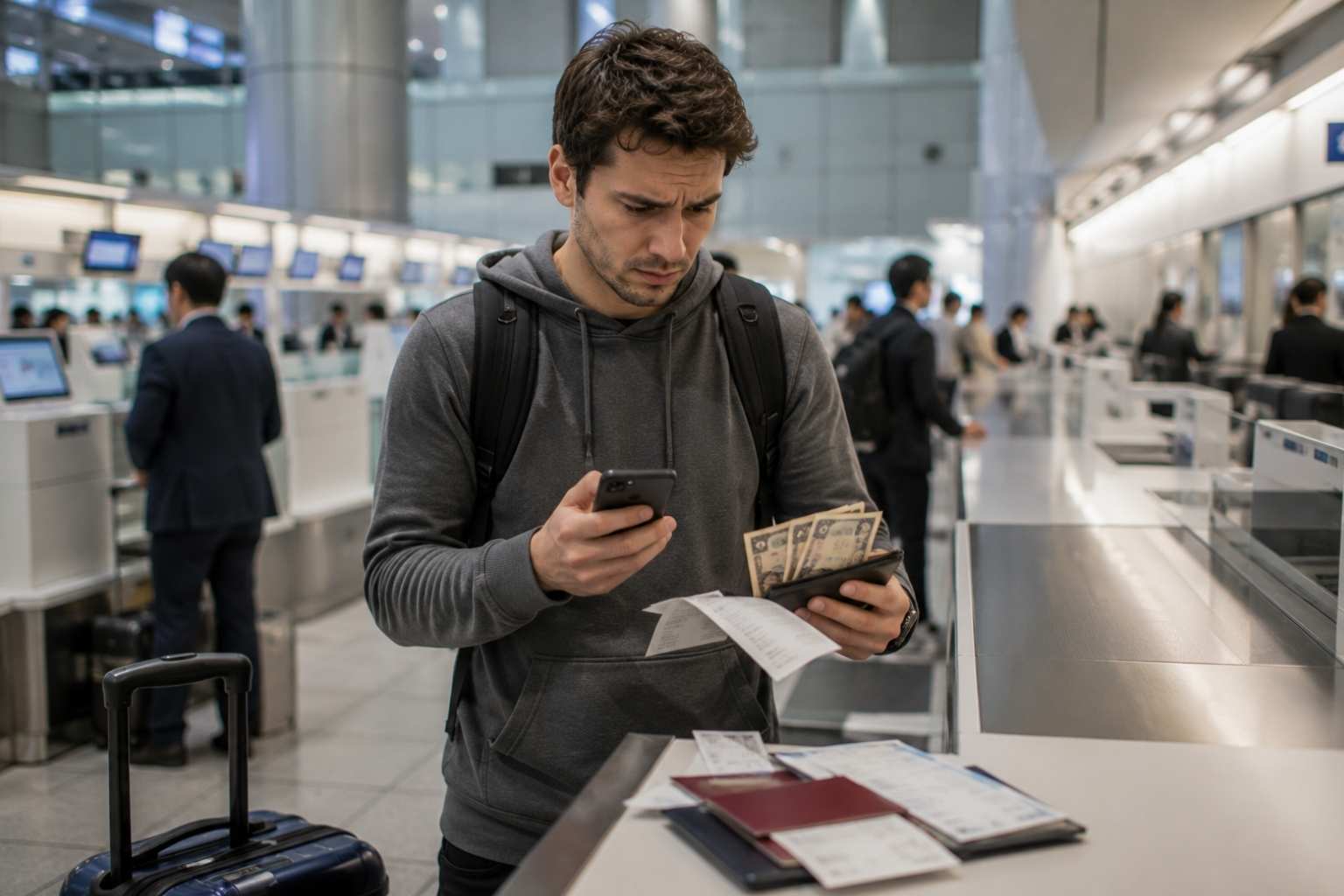
The weak yen is no longer the whole story.
For many travelers, Japan now comes with more fees, more planning friction, and fewer easy budget shortcuts.
Japan travel costs 2026 are rising through a stack of changes that now include a tripled departure tax, revised accommodation taxes, new tax-free refund rules later this year, and tighter carry-on battery limits on flights. This hits budget and mid-range travelers hardest, especially anyone planning a trip using old “Japan is cheap now” advice from 2023 or 2024. It matters now because several of these changes are already live in 2026, while others begin later this year and can affect what you pay, how early you need to arrive, and how smoothly your itinerary works.
The problem is not one giant new charge. It is the pile-up. A trip that still looks affordable at the headline exchange rate can get more expensive once you add departure tax, local stay taxes, changed shopping procedures, and transport costs that no longer feel like the old bargain version of Japan.
Japan Travel Costs 2026: What Happened
The most direct change is Japan’s International Tourist Tax. Official materials say the departure tax rises from ¥1,000 to ¥3,000 per person for departures from July 1, 2026, with air and sea carriers generally collecting it through the ticket price. There is a transitional measure for some eligible tickets issued on or before June 30, 2026, but for many travelers leaving after July begins, the headline number is now three times higher than before.
Accommodation costs are also getting more layered. Kyoto revised its accommodation tax from March 1, 2026, with per-person, per-night charges now set at ¥200 for stays under ¥6,000, ¥400 for ¥6,000 to ¥19,999, ¥1,000 for ¥20,000 to ¥49,999, ¥4,000 for ¥50,000 to ¥99,999, and ¥10,000 for stays of ¥100,000 or more. That means the tax now reaches well into ordinary and mid-range room bands, not just luxury stays.
Hokkaido also introduced a prefectural accommodation tax from April 1, 2026. Official Hokkaido materials say the base tax is ¥100 for stays up to ¥19,999, ¥200 for ¥20,000 to ¥49,999, and ¥500 for ¥50,000 and above, while warning that some municipalities apply their own accommodation taxes on top depending on where you stay. In places such as Sapporo and Hakodate, Hokkaido’s materials explicitly say both prefectural and municipal taxes apply.
The shopping side is changing too. Japan’s official tax-free shopping page says purchases made on or after November 1, 2026 will move from the current instant tax-free method to a refund method, meaning eligible travelers will buy goods at tax-inclusive prices first and then receive the consumption-tax-equivalent refund after customs inspection at the airport or seaport on departure. The same guidance says the inspection must be completed before baggage check-in is finalized and warns travelers to arrive with enough time, because neither airlines nor Customs will compensate people who miss departure because they ran out of time for the procedure.
Who This Affects
This hits hardest if your trip depends on old budget assumptions. It is especially relevant for travelers doing multi-city routes, shopping heavily, climbing Mt. Fuji, or staying in cities now layering local taxes into the room bill.
The travelers most likely to feel the squeeze are:
- anyone departing Japan on or after July 1, 2026
- travelers staying in Kyoto or in Hokkaido locations with added local lodging taxes
- shoppers expecting the usual instant tax-free checkout after November 1
- passengers carrying multiple power banks or using them casually on flights
- visitors planning pricey landmark stops or major rail travel without checking current fees first
There is also a growing gap between what tourists expect and what famous destinations are now willing to allow. Reuters reported that Fujikawaguchiko erected a large barrier to block the viral Mt. Fuji Lawson view after crowding, littering, and road-safety problems, while AP reported that Fujiyoshida canceled its annual cherry blossom festival this year after overtourism pressures around the Mount Fuji pagoda view. That matters because some of the old “free” viral experiences now come with restrictions, rerouting, or full event cancellation.
Why This Matters for Travelers
The bigger shift is psychological as much as financial. Japan is still not uniformly expensive, but the easy version of budget travel is getting harder to count on when the cost stack keeps growing in small but concrete ways.
Take transport alone. The official Japan Rail Pass site lists the ordinary 7-day nationwide pass at ¥50,000, and JNTO says passes bought through overseas agencies will rise to ¥53,000 from October 1, 2026, while official online bookings keep the pre-October price for a limited period. That is not the old rail-pass math many travelers still have in their heads.
Then add site-based fees. Himeji Castle’s official English site says adult non-residents now pay ¥2,500 from March 1, 2026, while Himeji residents pay ¥1,000. On Mount Fuji, the official climbing site says the Yoshida Trail’s 2026 hiking fee is ¥4,000 per person per trip, with daily limits and gate restrictions also in place.
Even flights need more attention now. JNTO says new measures effective April 24, 2026 cap power banks at two units of up to 160Wh in carry-on, ban charging power banks onboard, and ban using power banks to charge other devices during the flight. That is not a cost in yen, but it is another rule that can wreck a trip if you arrive unprepared.
[Cheap Japan Is Getting Harder to Find]
What To Know Before You Go
Before booking, recalculate your trip as if the old Japan budget advice is wrong by default.
Use this checklist:
- add the ¥3,000 departure tax into your outbound flight math
- check the exact accommodation tax for each city, not just the room rate
- if you plan major shopping after November 1, budget to pay tax-inclusive prices first
- leave extra airport time for customs inspection if you need tax-free refunds
- check power banks before you fly and keep them in carry-on only
- do not assume viral Mt. Fuji or festival stops still work the way old reels suggest
- compare current rail-pass prices against your actual route before buying
That is the real budget move in 2026. Not panic, and not blind trust in old hacks — just checking the live rules before you commit money.
Official Note
According to official government, tourism, airline, and site sources, Japan’s departure tax rises to ¥3,000 from July 1, Kyoto and Hokkaido accommodation taxes are already in effect, tax-free shopping shifts to a refund method from November 1, 2026, and tighter power bank rules took effect on April 24, 2026. Travelers should verify fees and procedures directly on official pages before booking or departure, especially for shopping, flights, rail passes, and high-demand sightseeing areas.
[5 Japan Tourist Etiquette Mistakes That Backfire Fast]
Japan can still reward careful budget travelers. But the version where the weak yen automatically made everything feel cheap is fading fast.
Question for readers: Which new Japan travel cost would change your trip most — the higher departure tax, the new hotel taxes, or paying tax first and claiming it later at the airport?