
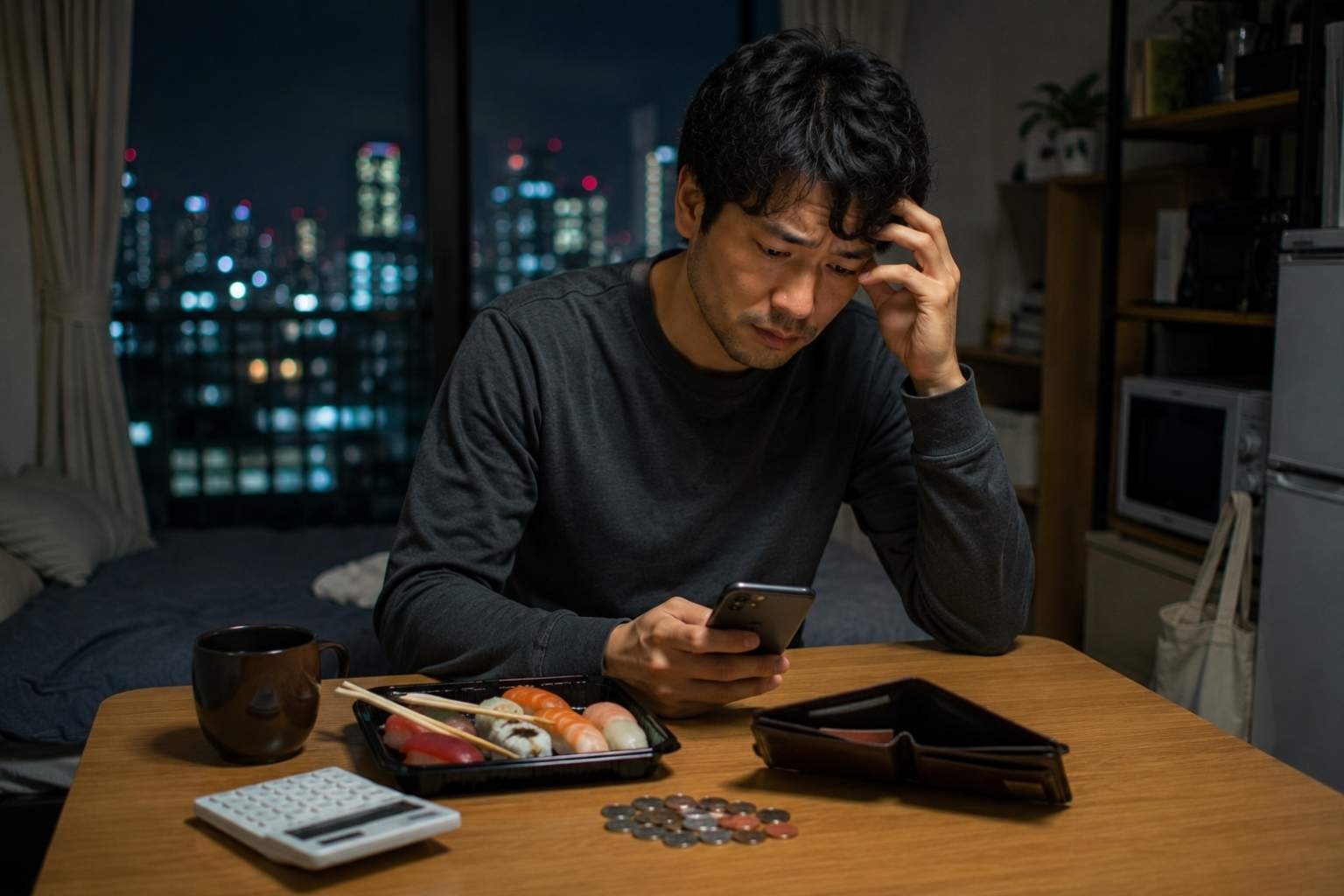
A first-person reflection on what the weak yen has done to daily life for people who actually live in Japan.
The same “cheap Japan” story that thrills tourists can feel like slow financial damage for residents.
This is about the weak yen and what it has done to the reality of living in Japan. It will resonate with foreign residents, long-term workers, and anyone who has watched Japan get marketed as a budget paradise while life inside it feels less secure. It matters because a country can look affordable from the outside while becoming harder to survive in from the inside.
Japan still gets sold online as a dream deal.
Cheap sushi. Cheap hotels. Cheap shopping. A whole country framed like a smart purchase.
But living here under a weak yen does not feel cheap in the way tourists mean it. It feels like watching your salary stay in place while the outside world moves further away.
That is the divide people do not talk about enough.
Why This Story Hits Hard
For visitors, a weak yen can feel like a win.
For residents, it can feel like a trap.
That is the real split between tourist Japan and resident Japan. One side sees value. The other side sees shrinking savings, shrinking mobility, and a future that looks smaller every year.
That is why the phrase “cheap Japan” lands so badly for people living here.
Cheap for whom?
Cheap sushi is not automatically good news if salaries have not moved while global inflation keeps rising. A lower price tag for outsiders can reflect a deeper weakness for the people being paid and saving in yen. What looks like affordability from abroad can feel like slow financial erosion at home.
The hardest part is that this erosion is quiet.
There is no single collapse. No dramatic break. Just a constant narrowing of options. Trips home get harder to justify. Global mobility weakens. Future security starts feeling less solid even when daily life still looks neat and functional.
That is the emotional core of this story.
The Expectation vs Reality Shift
The outside image says Japan is suddenly more accessible than ever.
The inside reality says many residents are becoming less free.
That is the expectation-versus-reality shift. Tourists arrive excited by favorable exchange rates, while the people living here are forced to measure every long-term consequence in a currency that buys less abroad and offers less protection against a more expensive world.
This is where the romantic version of “cheap Japan” starts breaking down.
It is not just about dinner prices or hotel deals. It is about what happens when salaries do not keep pace and global inflation keeps rising. It is about what it means to earn in a weak currency while trying to maintain a life connected to a much more expensive outside world.
For foreign workers, that gap can be brutal.
The hidden poverty here is not always visible in the street. Sometimes it looks like someone working full time in Japan who can no longer afford to visit home without financial damage. Sometimes it looks like living in one of the world’s most admired countries while feeling less and less able to move, plan, or breathe economically.
What Changed Mentally
The weak yen changed the emotional meaning of life here for me.
It made me see how dangerous the tourist lens can be when it becomes the dominant story. When a country starts getting sold too hard as a discount experience, the people living inside that economy begin to feel like background figures in someone else’s bargain.
That creates a bitterness that is hard to admit out loud.
A few truths become impossible to ignore:
- “Cheap Japan” can mean residents are getting weaker, not luckier
- Stagnant salaries hit harder when the outside world gets more expensive
- A good vacation exchange rate is not the same thing as a healthy local economy
- Financial pressure becomes emotional pressure when people feel stuck
The Hardest Lesson
The hardest lesson is that convenience can hide instability.
Japan still works beautifully in many ways. The trains run. The stores stay open. Daily life can still look orderly, safe, and efficient. But smooth systems can make financial decline feel less urgent than it really is.
That is part of why this issue is so easy to miss.
You can still buy a meal. Still get through the month. Still move through a city that feels functional. And yet underneath that surface, your savings weaken, your exit options narrow, and your ability to imagine a secure future starts wearing down.
That is not comfort.
That is containment.
The resentment comes from this contradiction. Japan keeps getting promoted as a discount theme park while the people who live and work here are asked to absorb the long-term cost of being priced as “cheap.”
What Living in Japan Revealed
Living here through a weak yen reveals the difference between appearance and leverage.
A country can still feel polished while the people inside it lose economic power.
A life can still look stable while becoming more fragile underneath.
That is why the “cheap Japan” narrative feels so incomplete. It treats affordability like a universal benefit when it is often experienced as a resident loss. The local economy does not become healthier just because outsiders can consume it more easily. In some cases, that is exactly the sign that something deeper is weakening.
The pain is not only financial.
It is psychological.
It is the feeling of being stuck in a place you may still love while knowing your earnings carry less weight, your future feels narrower, and the world beyond Japan is becoming harder to reach.
What I Understand Now
I understand now that the weak yen is not just an exchange-rate story.
It is a life story.
It changes how people think about staying, saving, visiting family, building security, and imagining what comes next. It changes how foreign residents measure whether living here is still sustainable. It changes how workers interpret the endless celebration of “cheap Japan” when they are the ones trying to build an actual life in it.
And maybe that is the sharpest irony of all.
Japan can still be a dream destination while becoming a more difficult place to anchor a future.
That contradiction is real.
And it is getting harder to ignore.
Final Thought
The weak yen does not just make Japan cheaper for visitors.
It can make life thinner for the people living here.
That is the part that gets lost when this country is packaged as a bargain. A cheap vacation is not the same thing as a healthy life. A great deal for outsiders can mean shrinking power for everyone paid in yen.
That is why the conversation has to change.
Because if Japan keeps being sold as affordable while the people inside it feel poorer, smaller, and more economically trapped, then the real cost is already being paid.
Question for readers: Is Japan still a dream destination if the people living there cannot afford to leave it?