
Tokyo has moved from watching to participating.
That change is now drawing regional attention.
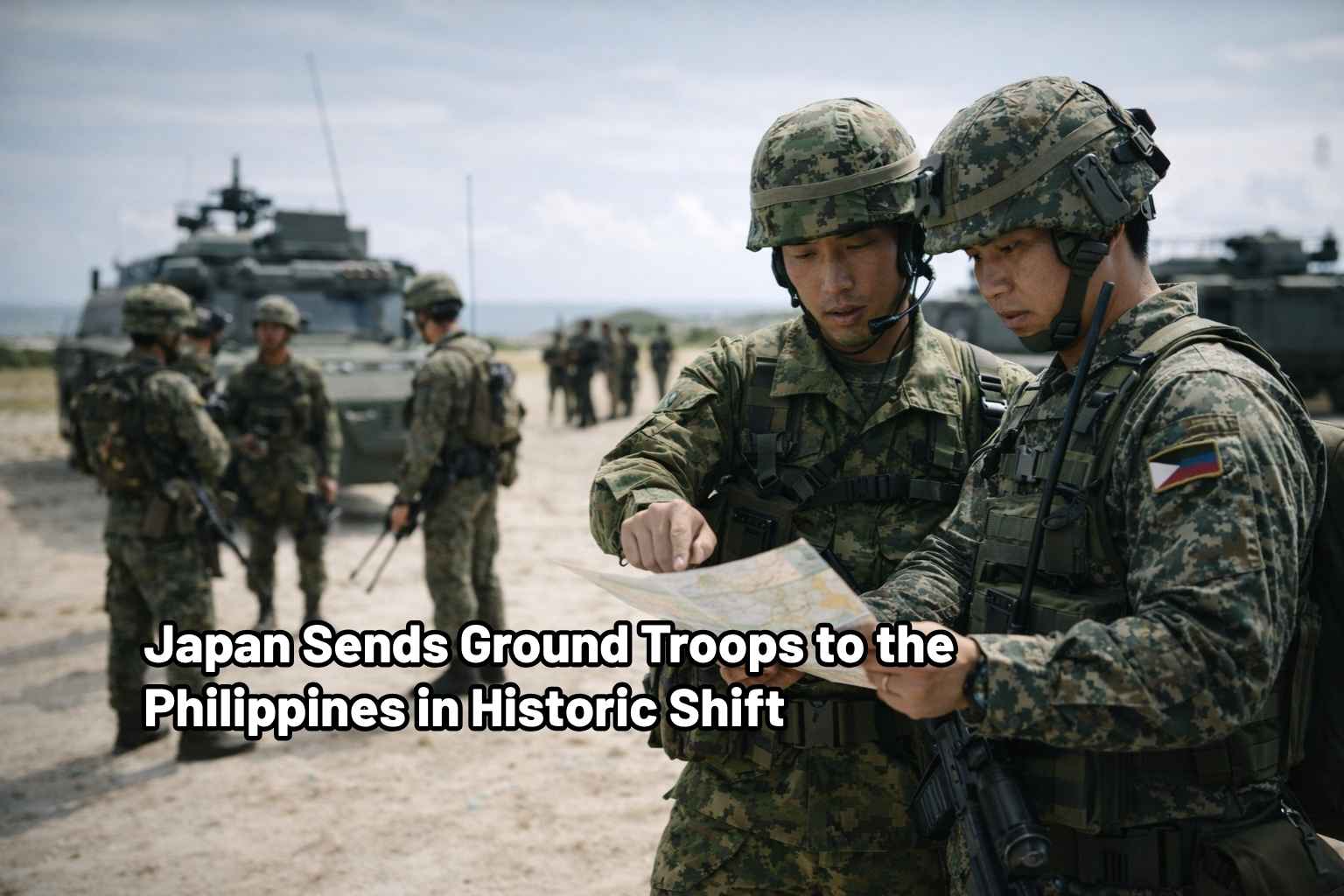
Japan troops in the Philippines are drawing close scrutiny after Tokyo reportedly sent ground forces there for the first time since World War II. The move affects regional security watchers, Japan’s neighbors, and anyone following rising tensions in East Asian waters. It matters now because Japan is no longer just observing from the sidelines in a rapidly shifting security environment.
For decades, Japan largely avoided overseas military deployment. Now, according to the reported exercise details, it is taking part on the ground.
What Happened
Reportedly, Japanese troops deployed under a new Reciprocal Access Agreement and joined the record 17,000-troop Balikatan military exercises. The broader drills include forces from the United States, the Philippines, Australia, Japan, Canada, France, and New Zealand.
That marks a visible change in Japan’s role. The country has reportedly moved from observer status to active participant.
The history also adds weight. The last time Japanese troops were in the Philippines, according to the details provided, it was during wartime occupation.
Who Is Affected
This shift matters to several groups across the region:
- Japan, as it takes on a more active security posture
- The Philippines, as it deepens defense cooperation with partners
- Regional governments monitoring military activity and deterrence signals
- Civilians and analysts concerned about rising maritime tensions
Why Japan Troops in the Philippines Matter Now
This deployment is being viewed through two very different lenses. For some, it strengthens stability and deterrence at a time of growing concern over recent incidents at sea.
For others, it risks pushing tensions even higher. That is why the Japan troops in the Philippines move is getting so much attention.
It is not being treated as a symbolic step. It is being read as evidence that the regional balance is shifting faster than before.
What To Know Now
The mission described here is cooperation, not wartime occupation. Still, the historical memory surrounding any Japanese troop presence in the Philippines makes the development especially sensitive.
That is also why reactions are split. Supporters see deterrence, while critics see escalation.
Official Note
According to the reported exercise details, Japan’s deployment is tied to a new Reciprocal Access Agreement and participation in the 2026 Balikatan drills. The move is widely being interpreted as a significant step in Japan’s evolving regional security role.
The region is changing quickly, and this deployment shows that Japan is changing with it.
Question for readers: Do you think this move strengthens regional security, or does it risk raising tensions even further?