
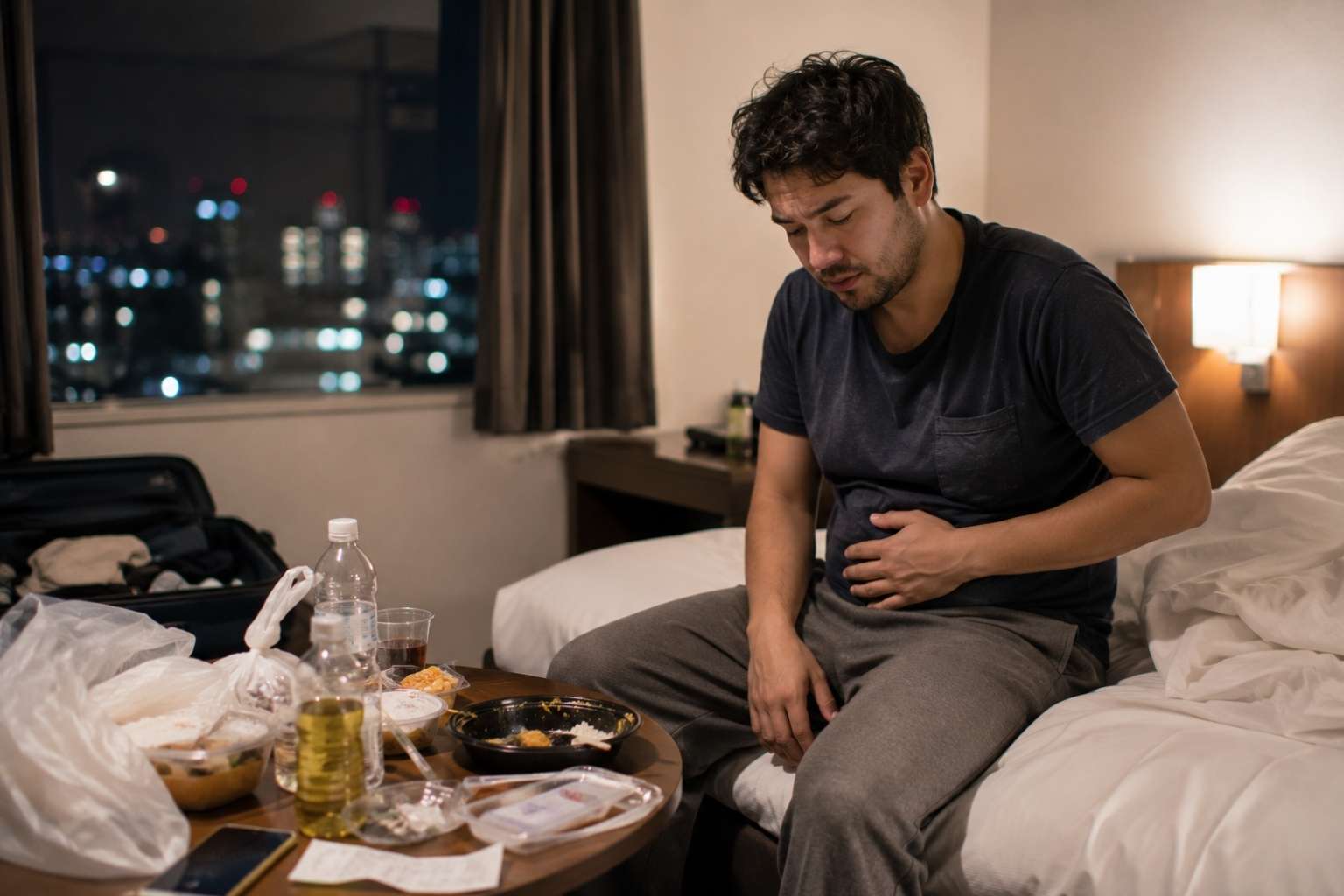
Japan’s convenience stores are still useful, but konbini food in Japan can stop feeling like a budget hack when it becomes every meal. This hits first-time visitors and budget travelers hardest, especially people building their entire food plan around convenience stores instead of mixing in proper sit-down meals. It matters now because official product pages show that even single ready-made items can carry around 2 grams or more of salt equivalent, while Japan’s own tourism guidance says public bins are limited and trash separation is mandatory.
That does not mean konbini food is “bad” or that travelers should avoid it completely. JNTO itself presents convenience stores as useful for travelers, but usefulness is not the same thing as building breakfast, lunch, dinner, snacks, and drinks around packaged food for a full week.
Konbini Food in Japan: What Happened
Social media has pushed the idea that convenience stores are the perfect all-day Japan food strategy. The reality is more mixed: official Lawson and FamilyMart pages show how quickly a “cheap snack” mindset can become a steady stream of individually packaged items, with common rice-ball prices ranging from around ¥138 to nearly ¥300, while a packaged bento can already sit around the ¥500 range before drinks or extra snacks.
The nutrition side matters too. Lawson lists a large tuna-mayo rice ball at 2.13 grams of salt equivalent, FamilyMart lists one large rice ball example at 2.40 grams, and Lawson’s onigiri bento is listed at 2.94 grams. That does not automatically make these foods unhealthy in isolation, but it does show why living on packaged meals can get sodium-heavy faster than many travelers expect.
Who This Affects
This mostly affects travelers doing Japan on the move: early train departures, late hotel check-ins, and long sightseeing days where convenience starts replacing planning. It is especially easy to fall into if you are trying to save money, avoid language barriers, or eat quickly between stops.
It can hit you fastest if you are:
- eating packaged meals three times a day
- adding extra snacks and drinks from the shelf without tracking total cost
- expecting to throw wrappers away immediately after eating
- eating outside or while walking without checking the local setting
- skipping low-cost local lunch spots because the store feels easier
The last point is the part many people regret later. A konbini-heavy trip is usually convenient, but it can also flatten the food experience into repetition when Japan has so many simple noodle shops, lunch counters, and neighborhood spots that are part of the trip itself.
Why This Matters for Travelers
The biggest problem is not just nutrition. It is that convenience-store eating creates its own etiquette and cleanup problems once you leave the register.
JNTO says there are few public rubbish bins in Japan, that travelers often need to hold on to their trash, and that trash separation is mandatory even though the rules vary by place. Japan’s official FAQ also says eating while walking is discouraged in some areas, and Kyoto’s 2025 manners campaign specifically told visitors to avoid eating while walking in crowded tourist areas.
That means the “quick bite outside the store” habit does not always land smoothly. Even when nobody says anything, you can end up holding wrappers, drinks, and plastic containers much longer than you expected, while also trying not to look like the person turning a narrow street into a snack zone.
There is also a money illusion here. One item can look cheap, but a rice ball, a fried snack, a drink, and a dessert can stack up faster than travelers expect, especially when repeated several times a day. A proper hot lunch is not always the more expensive choice just because it is not sold in plastic.
[Japan’s New Power Bank Rule Could Leave Travelers Stranded]
What To Know Before You Go
The best move is to treat konbini as backup, not as your full meal identity.
A practical way to use it:
- use convenience stores for breakfast, emergencies, or late-night gaps
- mix in local lunch sets, noodle shops, curry shops, and cafés during the day
- check nutrition labels if you are eating packaged food multiple times daily
- carry a small bag for wrappers because bins may not be nearby
- do not assume eating while walking is acceptable in every area
- look for a proper place to stop before opening food
- remember that store bins are not the same as unlimited public bins everywhere
This does not mean being overly strict. It means avoiding the version of Japan travel where the easiest option slowly makes you feel more tired, more thirsty, more waste-conscious, and less connected to the places you came to experience.
Official Note
According to JNTO and official store pages, convenience stores remain a useful part of travel in Japan, but travelers should expect limited public bins, mandatory waste separation, and etiquette rules that can discourage eating while walking in some areas. Official product pages also show that ready-made store meals can carry meaningful salt-equivalent totals, so anyone relying on them heavily may want to watch both balance and frequency.
[Japan’s Cheap Visa Renewals Could Soon Be Over]
Konbini food can save a day in Japan. It just should not quietly become the thing that defines the whole trip.
Question for readers: Could you eat convenience-store food every day in Japan, or would that ruin the trip for you?