
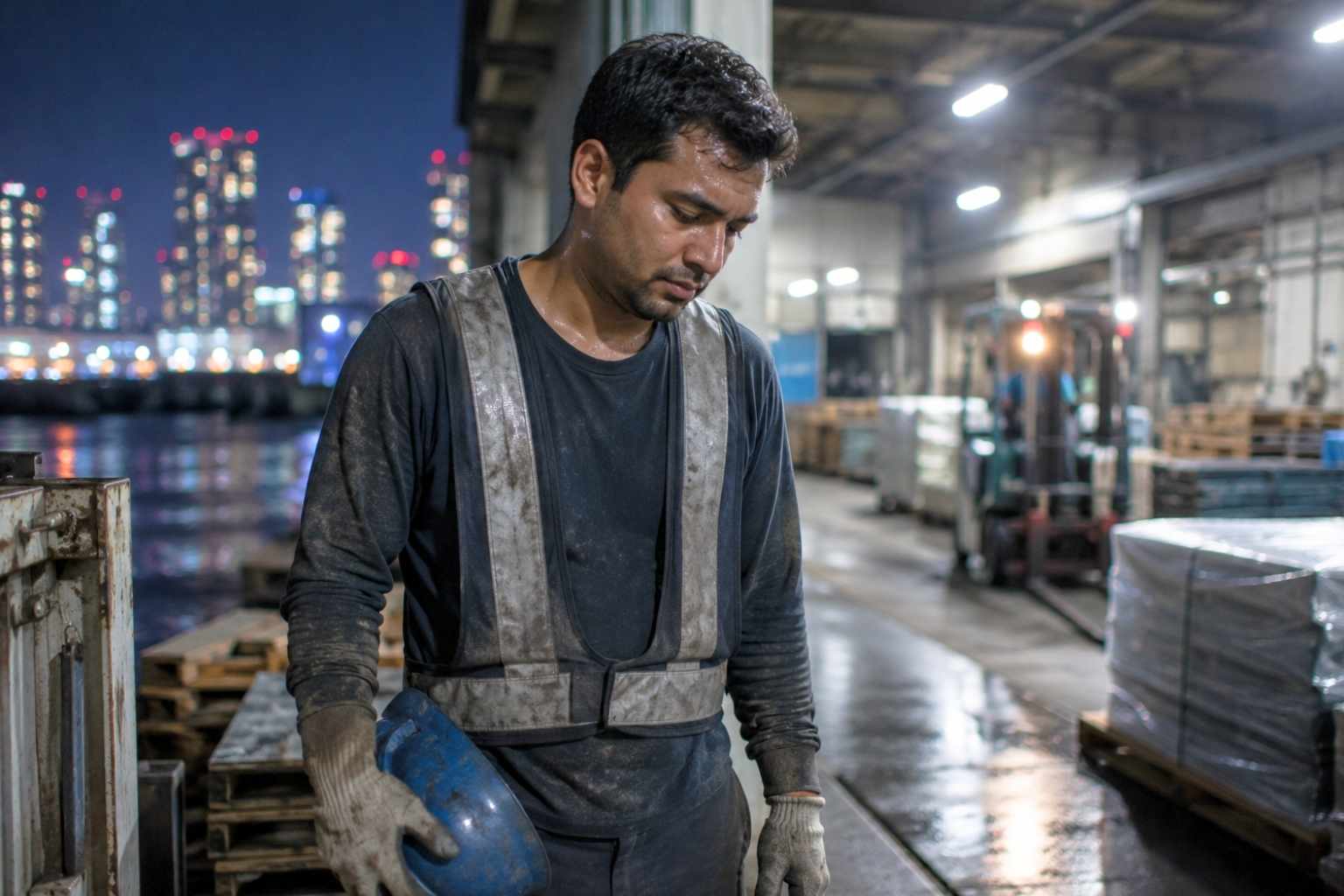
Japan has crossed 4 million foreign residents, but the milestone carries a darker question about who is paying for the country’s labor shortages.
For anyone who admires Japan’s order and convenience, this matters because the smooth surface may depend on workers living under pressure most people never see.
This article is about the hidden cost behind Japan’s foreign worker boom. It will resonate with readers who care about labor, migration, and the gap between Japan’s polished global image and the harder reality of how essential work gets done. It matters because a country can celebrate growth, convenience, and staffing solutions while ignoring the human damage underneath them.
Japan has crossed a historic milestone of more than 4 million foreign residents.
That should sound like a success story.
Instead, it raises a harder question: what kind of system is expanding when underground labor abuse keeps shadowing the same sectors that say they are desperate for help?
Why This Story Hits Hard
The emotional core of this story is simple.
Japan needs workers.
Nursing care, construction, and hospitality all face deep staffing shortages. Foreign labor has become essential to keeping those industries running. But the raw details behind that growth are much harder to celebrate.
The Technical Intern Training Program has long been described as a system that can trap migrants in debt, dependency, and fear. In the worst cases, it starts to resemble modern indentured servitude more than training.
That is why this story hits so hard.
The country wants more workers. The economy depends on them. But too many of the people helping hold the system together seem to be entering jobs where the power balance is already tilted against them.
The Expectation vs Reality Shift
From the outside, the narrative sounds positive.
Japan is opening up. Businesses are hiring. A shrinking workforce is being reinforced by global labor. On paper, it looks like adaptation.
The reality is darker.
The same labor shortages that create opportunity also create vulnerability. When industries are desperate, illegal hours become easier to hide. When visas are tied to employers or unstable work arrangements, leaving abuse can mean losing legal status, income, or both.
That is where the promise starts collapsing.
A worker who runs from exploitation is no longer just escaping a bad employer. In many cases, that person becomes an illegal fugitive the moment they disappear from the system. That is how thousands of desperate workers end up going missing every year.
They are not vanishing because life is going well.
They are vanishing because staying can become unbearable.
What Changed Mentally
This is where the moral problem becomes impossible to ignore.
Japan’s convenience feels effortless on the consumer side. The hotels stay clean. The buildings rise. The care homes stay staffed. The service remains calm and precise.
But that convenience may be resting on a labor force carrying far more fear and pressure than the public ever sees.
A few truths sit underneath this boom:
- Labor shortages can quickly turn into labor vulnerability
- A “training” system can become a trap when workers cannot safely leave
- Illegal, exhausting hours become easier to normalize when staffing is thin
- A country can depend on foreign workers while still treating them as disposable
[My Dream Job in Japan Turned Me Into a Corporate Ghost]
The Hardest Lesson
The hardest lesson is that growth alone proves nothing.
More foreign residents does not automatically mean better inclusion, stronger rights, or safer working conditions. It can also mean a larger pool of people entering a system that already knows how to use their labor without fully protecting their dignity.
That is the ethical dilemma at the center of this story.
Can people keep selling Japan as a utopian dream country while ignoring the labor underneath it? Can a society praise order and service while looking away from the workers absorbing the ugliest part of making that order possible?
Those are not comfortable questions.
That is exactly why they matter.
What Living in Japan Revealed
What this reveals about living in Japan is not only that labor shortages are real.
It reveals how easily a clean national image can coexist with a dirty labor reality.
Japan’s beauty, safety, and efficiency are real. So is the pressure placed on the workers at the bottom of the system. That is the contradiction. A country can look immaculate while still relying on people whose conditions remain unstable, exhausting, or exploitative.
That contradiction should disturb more people than it does.
What I Understand Now
The deeper issue is not whether Japan needs foreign workers.
It clearly does.
The real issue is whether Japan is willing to build a system worthy of depending on them. A labor shortage does not justify abuse. A demographic crisis does not excuse structures that trap workers in debt, overwork, or fear.
If foreign labor is now essential to Japan’s future, then protection cannot remain optional.
Neither can honesty.
[The Polite Rejection of Friendship in Japan]
Final Thought
Japan’s foreign worker boom should have been a story about adaptation and shared opportunity.
Instead, it is also becoming a story about exploitation scandals, missing workers, and an economy asking desperate people to hold it together quietly. That is the darker side of the 4 million milestone.
And the longer that contradiction stays hidden, the more dishonest the dream becomes.
Question for readers: Should people stop promoting Japan as a dream country if its essential foreign workforce is still being treated like disposable labor?