
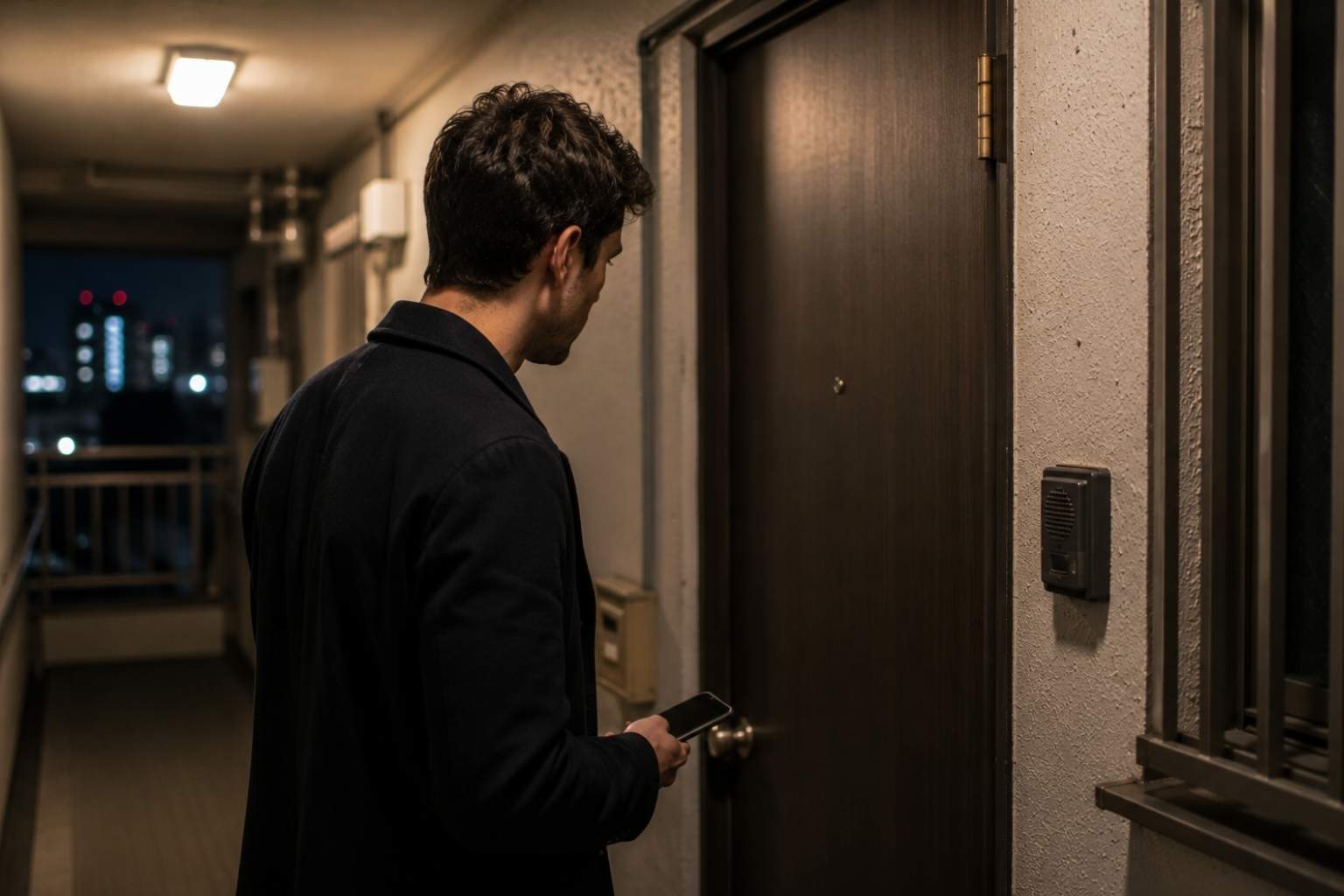
A first-person reflection on why friendship in Japan can feel warm on the surface and unreachable underneath.
For many foreign residents, the hardest part is not open rejection, but never fully getting past the door.
This is about the loneliness of trying to build real friendship in Japan and realizing that politeness does not always lead to closeness. It will resonate with foreign residents who have spent years being friendly, respectful, and present, only to feel they are still standing outside something private and sealed. It matters because being treated kindly is not the same as being truly let in.
For a long time, I thought I was getting closer.
We went out after work. We drank together. We laughed. We exchanged messages. On the surface, everything looked like friendship.
But years passed, and I still never saw where they lived.
That detail started bothering me more than I wanted to admit.
Why This Story Hits Hard
The pain is not in dramatic rejection.
It is in the slow realization that you are always welcome in public, but almost never invited into private life.
That is what makes this kind of loneliness so hard to explain. Nothing looks wrong from the outside. People are friendly. Conversations are smooth. Nobody is rude. Nobody tells you that you do not belong.
And yet, something never opens.
That is where the difference between tatemae and honne starts to hurt. Surface-level friendliness can make daily life easier, but it can also hide how far away real personal connection still is. You can be surrounded by polite people every day and still feel emotionally locked out.
That is a colder feeling than outright rejection.
At least rejection is clear.
The Expectation vs Reality Shift
I used to believe that consistency would eventually turn politeness into intimacy.
If I showed up enough, learned enough, respected enough, and kept reaching out, the distance would shrink. I thought time would do the work.
Instead, I found myself stuck in the same loop. I was often the one initiating texts. I was often the one trying to turn vague promises into real plans. “Let’s do it sometime” kept dissolving into nothing.
That was the shift.
I stopped seeing this as a simple language problem or a temporary phase. The barrier felt deeper than vocabulary. It felt cultural. It felt structural. It felt like I had been allowed into the outer room, but never any further.
That is when friendship in Japan started feeling less like connection and more like access with limits.
What Changed Mentally
The hardest part was how exhausting it became.
Not because people were openly cruel, but because I was constantly trying to interpret warmth that rarely became intimacy. I was always measuring tone, timing, and silence. I was always wondering whether I was actually close to anyone, or just standing inside a very polished version of distance.
A few things became painfully clear:
- Surface friendliness does not always become real friendship
- Tatemae can make rejection feel softer, but also harder to name
- Constantly initiating contact becomes emotionally draining
- Being a permanent guest can start to feel like being permanently outside
[My Dream Job in Japan Turned Me Into a Corporate Ghost]
The Hardest Lesson
The hardest lesson was accepting that I may never fully cross that line.
Not because I failed. Not because I did not care. But because some walls are not meant to be broken by effort alone. Some people will always keep home, family, and true private life inside a circle that I can stand near, but not enter.
That realization hurt more than I expected.
It made me rethink every “good” social moment I had been using as proof that I was getting somewhere. I was not always being rejected. But I was often being contained.
And there is a loneliness in that which builds slowly.
What Living in Japan Revealed
Living in Japan revealed that privacy and rejection can feel almost identical when you are the one left outside.
I understand that homes are private. I understand that boundaries are real. But when years go by and the pattern never changes, it starts to feel less like individual preference and more like a social wall.
That is what made this so heavy for me.
I was not alone because nobody was nice. I was alone because niceness stopped at the exact point where something real might begin.
What I Understand Now
I understand now that wanting to fit in completely was part of what was hurting me.
I kept treating friendship like a test I could eventually pass. Now I see it differently. Some relationships here may always stay in the safe zone. Some doors may stay closed. Some warmth may never turn into the kind of closeness I was hoping for.
That truth still hurts.
But at least it is honest.
[Japan’s Loneliness Industry Is Replacing Real Life]
Final Thought
The loneliest part of life in Japan was never being ignored.
It was being treated well enough to keep hoping, but not deeply enough to feel known. That is the polite rejection that stayed with me. Not a slammed door, but a door that never fully opened in the first place.
And once you feel that enough times, kindness alone stops feeling like comfort.
Question for readers: Have you ever felt completely alone in a crowded room full of polite people?