
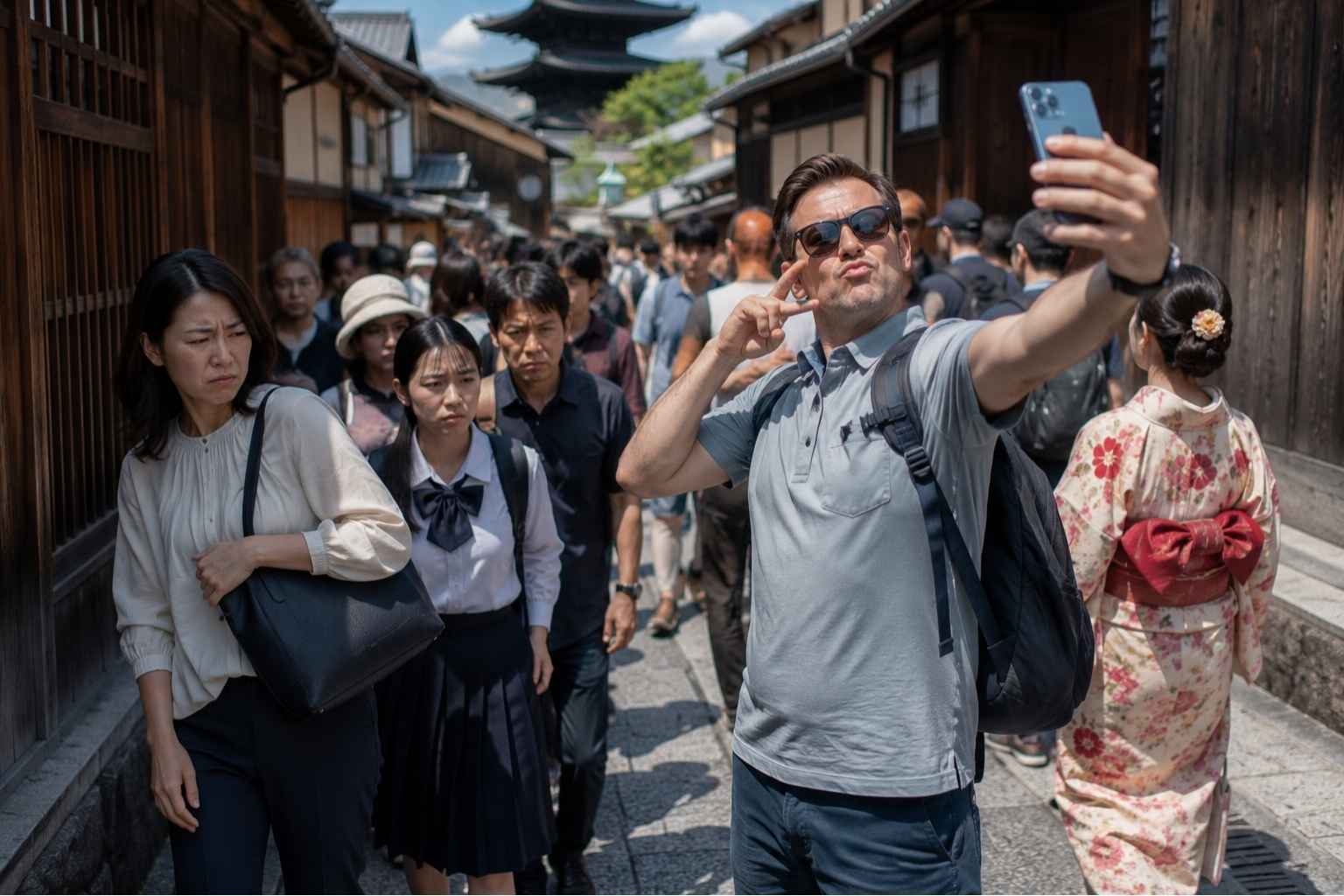
The old idea that Japan will quietly absorb any tourist behavior is breaking down.
In Kyoto and other high-pressure spots, the response now looks more direct, more expensive, and harder to ignore.
The Japan travel warning here is not about storms or safety alerts. It is about overtourism pressure turning into stricter rules, higher taxes, crowd-control tools, and more visible pushback against behavior that locals and operators say is disrupting daily life. It affects first-time visitors most, especially anyone arriving with “content first, manners later” energy. It matters now because Japan recorded 36.87 million foreign visitors in 2024 and 42.68 million in 2025, both record highs, while local destinations are openly adjusting how they manage crowds and visitor conduct.
This does not mean Japan has stopped welcoming tourists. It means the gap between what visitors think is harmless and what local communities will tolerate is getting smaller, especially where residents are already dealing with blocked streets, trespassing, noise, littering, and nonstop photo culture.
What Happened
The clearest symbol is Gion. Kyoto’s official 2026 sightseeing guidance now explicitly tells visitors not to chase or photograph geiko and maiko without permission, not to enter private property, and not to block streets or move in large groups that obstruct traffic.
That tougher message did not appear in a vacuum. Associated Press reported that Gion moved to close off some private-property alleys after complaints about misbehaving visitors, with keep-out signs and a stated ¥10,000 fine, while public streets remained open.
Kyoto is also treating crowding as a live management issue, not just a seasonal inconvenience. Its official congestion forecast tool now gives real-time and predictive crowd data for major areas including Gion, Kiyomizu, Kyoto Station, Nishiki Market, Arashiyama, and Fushimi Inari, specifically so travelers can shift time and place to avoid pressure points.
The money side is changing too. Kyoto’s accommodation tax rose on March 1, 2026, with rates now running from ¥200 to as high as ¥10,000 per person per night depending on the room price.
And what some travelers call a “foreigner tax” is no longer just online talk. Himeji Castle moved to ¥2,500 for adult admission from March 1, 2026, while Himeji residents pay ¥1,000, and the Tourism Agency has confirmed it is studying guidance on resident/non-resident pricing as part of broader tourism pricing discussions.
Who This Affects
This shift hits hardest if your Japan plan depends on famous districts behaving like open-air sets.
It especially affects:
- first-time Kyoto visitors who assume every historic lane is public content space
- travelers who want geisha-district photos without understanding local privacy rules
- budget-conscious visitors who are not factoring in higher stay taxes and location-based pricing gaps
- tourists who mistake quiet reactions for approval
- anyone still planning peak-hour Kyoto sightseeing without checking crowd tools first
The practical consequence is usually not a dramatic confrontation. More often, it is restricted access, colder service, warnings, or a trip that suddenly feels harder and more expensive than expected.
Why This Matters for Travelers
The bigger story is that Japan’s tourism policy is now openly talking about residents, not just visitors. In its 2026 Tourism Nation Promotion Basic Plan, the government says some areas are seeing illegal acts and manners violations such as littering and illegal parking, that resident life is being disrupted, and that without countermeasures it becomes difficult to keep local understanding and cooperation for tourism. The same plan says regions need to balance inbound growth with residents’ quality of life and help residents feel tourism’s value so they can continue to welcome visitors with omotenashi.
That is why the “polite Japan” myth is becoming less useful for travelers. Politeness does not mean unlimited tolerance. It means the system may stay quiet while the rules, fees, restrictions, and social expectations get tighter around you.
Japan Travel Warning: What To Know Before You Go
The rules are not all brand new, but the way they are being spelled out is more direct than many visitors remember before the rebound.
Before your trip, treat these as non-optional:
- Do not chase, touch, or photograph geiko or maiko without permission.
- Do not enter private property, even if it looks quiet, photogenic, or “basically public.”
- Do not block roads, gather side-by-side in large groups, or turn narrow streets into shooting locations.
- Use Kyoto’s official congestion map before heading to major hotspots.
- Budget for Kyoto’s higher accommodation tax.
- Be prepared for more places to discuss resident/non-resident pricing openly.
One more point matters: if a rule is posted, assume it is there because too many people already ignored the softer version. That is usually the signal that a destination has moved from polite expectation to active enforcement.
Official Note
According to Kyoto’s official tourism guidance, visitors are being asked to respect Gion’s residents, avoid photographing geiko and maiko without permission, stay out of private property, and avoid blocking streets. Kyoto also now operates an official congestion forecast for major sightseeing zones, while its revised accommodation tax took effect in March 2026. Separately, Himeji Castle’s resident/non-resident price gap is already live, and the Tourism Agency says broader pricing guidance is under consideration.
Japan is still one of the easiest countries in the world to love as a traveler. But in 2026, loving it back increasingly means moving like a guest, not like the place was built for your feed.
Question for readers: Are locals right to push back harder on tourists now, or is Japan starting to overcorrect?