
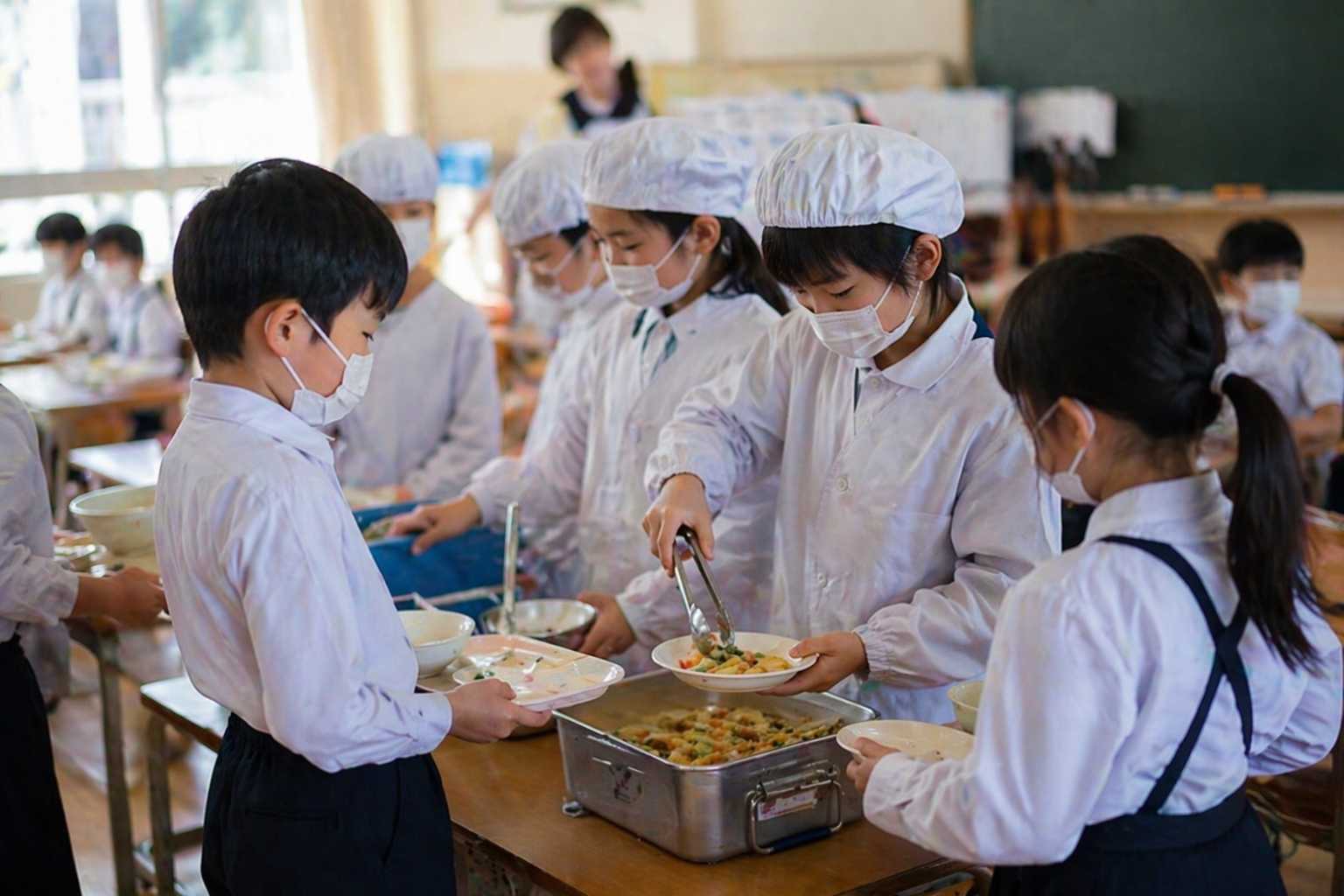
Children in many Japanese schools do more than eat lunch.
They help serve it, clean shared spaces, and learn responsibility as part of ordinary school life.
The Japan school lunch system stands out because students are expected to help keep daily routines moving. It affects children, teachers, and families by making responsibility part of school from an early age. It matters now because people around the world keep pointing to Japanese schools as an example of how discipline can be built into everyday life.
According to the details provided, this is not treated as punishment. It is presented as a normal part of growing up.
What Happened
In many Japanese schools, children help serve lunch to one another. Students are also often expected to clean shared spaces themselves.
That daily pattern shapes how school life works. Rather than treating children like guests inside the system, schools teach them to help carry it.
The result is a routine built around respect, self-sufficiency, and care for others. Those lessons begin early and are repeated often.
Who Is Affected
The Japan school lunch system directly affects students first. It gives children repeated chances to practice cooperation, order, and shared responsibility.
It also affects teachers and school culture. A classroom runs differently when children are expected to take part in daily tasks instead of only receiving services.
Parents and outside observers notice it too. For many people, this approach helps explain why Japanese school discipline often gets international attention.
Why This Matters
This model stands out because responsibility is not only discussed. It is turned into a visible, repeated habit.
That is why the idea resonates beyond education policy. It raises a larger question about whether schools should prepare children only for exams, or also for everyday adult behavior.
According to the details provided, the goal is not just manners. It is to build discipline, respect, and practical self-sufficiency before adulthood.
What To Know Now
Not every country approaches school life this way. In Japan, however, shared duties are often treated as a normal part of community life.
That is what makes the system memorable. Children are taught early that keeping a space running is part of belonging to it.
Official Note
According to the reported details provided for this article, many Japanese schools have students serve lunch and clean shared spaces as part of daily routine. The stated aim is to reinforce respect, self-sufficiency, and consideration for others.
For many readers, this is less about lunch itself and more about the kind of adults a school system is trying to shape.
Question for readers: Should more countries teach children this kind of responsibility from an early age?