
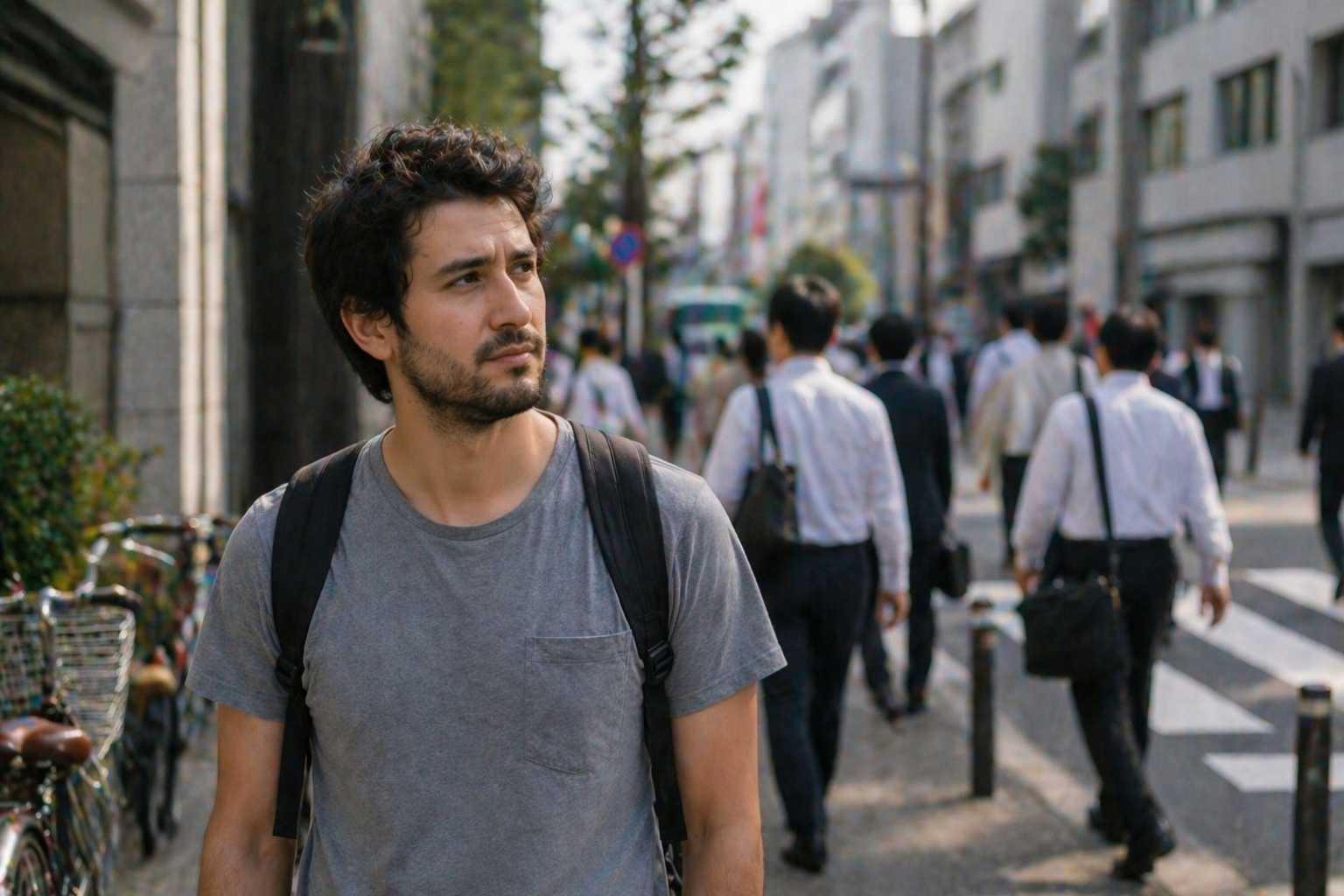
Japan can look calm, clean, and beautifully put together from the outside.
Daily life here often feels much quieter, stricter, and more demanding than people expect.
This article is about the gap between Japan as an online dream and Japan as daily life. It will resonate with people thinking about moving here, people already living here, and anyone who has felt the shock of discovering that beauty and comfort are not the same thing. It matters because that gap is often where people either adapt or struggle hard.
Japan looks perfect online.
Clean. Calm. Beautiful.
But living here is different.
That does not mean it is bad. It means the real daily version of Japan asks more from you than the internet version ever shows. The image is polished. The routine behind it is not always easy.
Why This Story Hits Hard
A lot of what people fall in love with online is surface-level Japan.
The quiet streets. The order. The cleanliness. The feeling that everything is somehow calmer, safer, and more refined than wherever they came from.
That image is not fake. But it is incomplete.
What gets missed is the emotional and social texture of living inside that system every day. What looks peaceful from the outside can feel demanding from the inside. What looks clean and simple can come with constant awareness.
That is where the real adjustment begins.
The dream is often visual. The reality is behavioral.
Japan does not just ask where you live. It asks how you move, how loudly you exist, how well you read the room, and how much friction you create around other people. For some people, that feels natural. For others, it feels like living under a low but constant pressure.
That difference is what many newcomers underestimate.
The Expectation vs Reality Shift
The hardest part is not that Japan breaks the dream completely.
It is that the dream and the reality exist at the same time.
Japan can still be amazing while also feeling restrictive. It can still be beautiful while also feeling emotionally demanding. That contradiction is what makes the adjustment difficult to explain.
The gap often looks like this:
- Not freedom — constant awareness
- Not “just be yourself” — do not stand out too much
- Not loud — almost silent everywhere
- Not flexible — rules for everything
None of that automatically makes life here worse.
But it does mean daily life runs on a different logic than many people expect. A person who comes here wanting looseness, spontaneity, and visible self-expression may feel boxed in very quickly. A person who values order, restraint, and predictability may feel relieved.
That is why the same country can feel liberating to one person and suffocating to another.
What Changed Mentally
The biggest mental shift is realizing that Japan is not built around your comfort.
It is built around smoothness.
That changes how daily life feels.
You notice how much energy goes into not disturbing other people. You notice how much value is placed on quiet, rhythm, and keeping things moving without disruption. You notice that standing out is not always rewarded, even when you do not mean any harm.
Once that becomes clear, the question is no longer “Is Japan good or bad?”
The real question becomes: what does this system ask from me, and can I live with that honestly?
That is where people begin to separate fantasy from reality.
Because Japan is not just asking you to admire it. It is asking you to adjust.
The Hardest Lesson
The hardest lesson is that beauty does not cancel pressure.
A place can be calm and still make you tense. A place can be organized and still make you tired. A place can be impressive and still feel difficult to live in if your instincts fight its rhythm every day.
That is not a criticism of Japan.
It is just the truth about daily life here.
Many people arrive expecting the beauty to carry them. They expect the atmosphere to do more emotional work than it actually can. Then the real routine shows up: the silence, the rules, the awareness, the small adjustments that never fully turn off.
That is often the moment when people either adapt or struggle hard.
Not because Japan “changed,” but because the fantasy ran out and the actual structure became visible.
What Living in Japan Revealed
What living in Japan reveals very quickly is that order always has a cost.
That cost is not always dramatic. Often it is subtle.
It can feel like this:
- Calm can come with emotional distance
- Cleanliness can come with constant social discipline
- Quiet can feel peaceful until it starts feeling restrictive
- Stability can depend on everyone accepting limits on how freely they behave
That is why daily life here feels so different from the online version.
Online, Japan looks like a destination.
In real life, it is a system.
And systems do not ask whether you like the aesthetic. They ask whether you can live inside the rules long enough for the rhythm to stop feeling foreign.
What I Understand Now
The more honest way to describe Japan is not “perfect.”
It is “specific.”
It works the way it works because people are constantly adjusting themselves to it. That is what many outsiders miss when they see only the surface. They see the result, but not always the discipline underneath it.
That is also why some people thrive here.
If you value order, quiet, routine, and social awareness, Japan can feel deeply supportive. If you need flexibility, loudness, improvisation, and easy self-expression, it can feel like you are being compressed day after day.
Neither reaction is fake.
Both are real responses to the same place.
That is why living here is never just about liking Japan. It is about understanding what Japan really asks from you before deciding whether that trade-off works for your life.
Final Thought
Japan is amazing.
But it is not amazing in the simple, dreamlike way people often imagine before they get here. The beauty is real. The calm is real. The appeal is real. So are the silence, the rules, and the constant awareness built into daily life.
That gap between the dream and the reality is where the real experience begins.
And whether someone thrives or feels trapped often depends on how honestly they are willing to face that.
Question for readers: Would you thrive in a place this structured, or would daily life in Japan start to feel restrictive after a few months?