
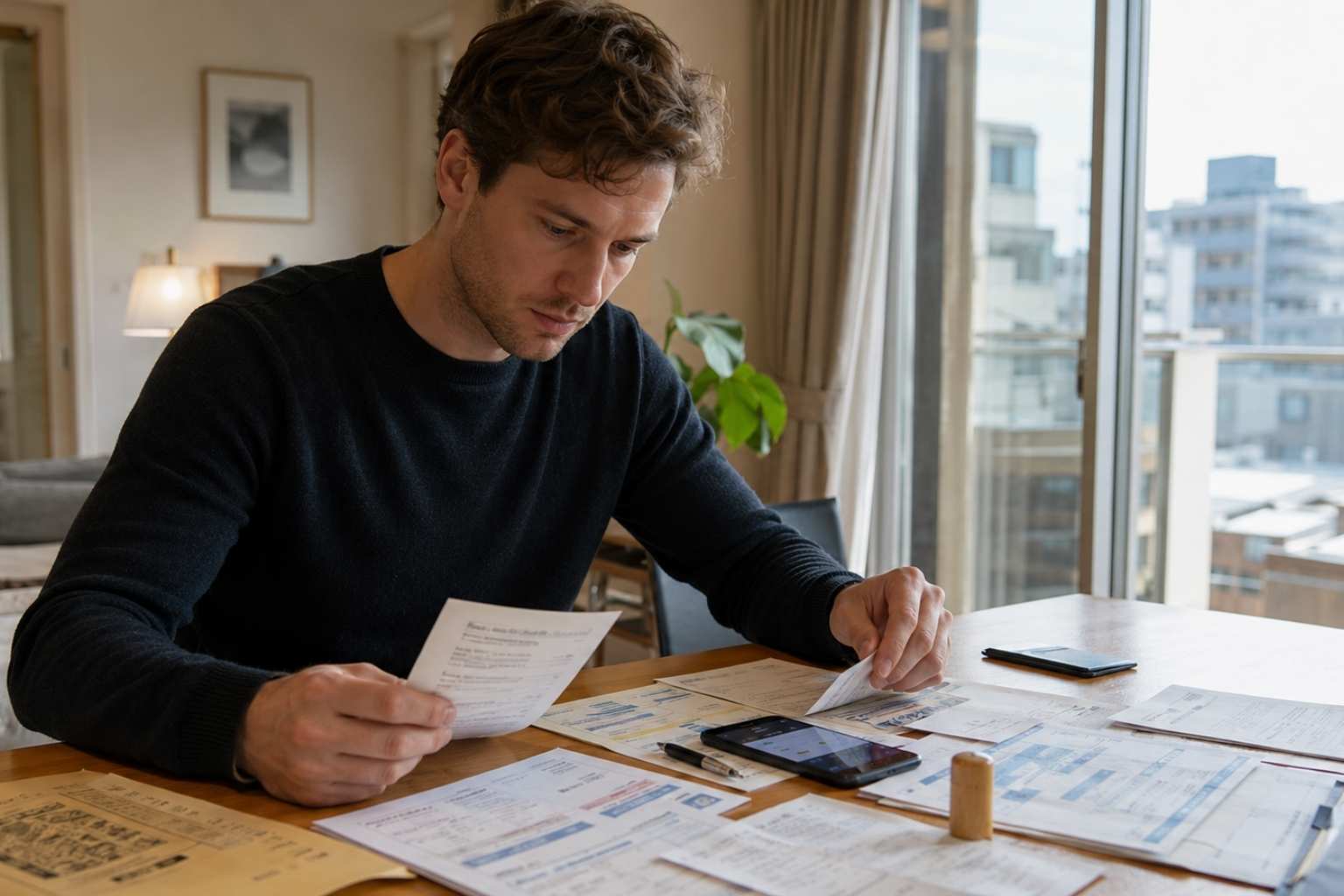
A practical guide to switching from paper utility bills to automatic bank withdrawal in Japan.
Built for foreign residents who want fewer errands, fewer missed payments, and a cleaner monthly routine.
The most annoying utility bill in Japan is often not the expensive one. It is the one that lands in your mailbox when you are busy, traveling, or already juggling too many small admin tasks. This guide explains automatic bank transfer utilities japan, how the kouza furikae system works, who can use it, and what to expect before the first deduction actually starts. It matters now because major utilities in Japan already support direct debit, but setup still takes planning, and many residents keep paying by paper slip far longer than they need to.
For many long-term residents, the default habit is simple but exhausting: wait for the paper bill, carry it to the convenience store, pay in cash, and keep the receipt somewhere safe. That method still works, but Tokyo Gas, TEPCO, and the Tokyo Metropolitan Waterworks Bureau all now support non-cash options such as direct debit, and some providers are clearly nudging customers away from paper billing.
Why This Guide Matters
Automatic bank transfer matters because Japanese billing systems reward consistency. TEPCO’s current English FAQ says electricity and gas bills can be paid by automatic withdrawal, while Tokyo Gas’s official English payment page explains direct debit as a standard option alongside paper billing and digital billing. In other words, this is not a niche workaround. It is a normal payment route built into the system.
It also matters because paper billing is becoming less attractive. Tokyo Gas currently charges a 220 yen monthly service fee for each account receiving a paper bill, unless the customer qualifies for a combined gas-and-electricity billing exception under its set discount structure. That means staying on paper can cost more than simply automating.
The biggest practical benefit is not just convenience. It is risk reduction. Once the deduction is set up properly, you no longer need to remember every billing date, carry cash to a convenience store, or worry that a missed envelope will turn into a late-payment problem while you are away from home. Tokyo Gas’s payment guidance shows that overdue bills can trigger late payment interest, and TEPCO warns that overdue accounts can face late fees or even contract problems if not handled.
This is especially useful for foreigners building a stable life in Japan. Learning how kouza furikae works is one of those quiet milestones that makes daily life feel less temporary. It shifts your household finances from reactive to automatic, which is exactly what most people want once the move-in chaos is over.
What This Is and Who Needs It
Kouza furikae is the standard Japanese term for account transfer or direct debit. In practical terms, it is the authorization that lets a utility company collect your monthly charges directly from your designated bank account instead of sending a bill you pay manually. Tokyo Gas uses this exact term for new or modified direct-debit registration, and the Tokyo Metropolitan Waterworks Bureau app also offers direct debit as a payment procedure.
This guide is especially useful for:
- foreign workers who are tired of monthly convenience store bill runs
- long-term residents trying to reduce admin stress
- people who travel often and do not want to miss a payment
- newcomers setting up electricity, gas, water, internet, and mobile bills
- anyone switching apartments and rebuilding household payments from scratch
It is also useful for people who assume all automatic payment setups in Japan are instant. They are not. Tokyo Gas says paper applications for direct debit take around one to two months before payments start from the designated account, while its online direct-debit applications are much faster, generally taking two to five business days after receipt once the contract is eligible.
That gap is important. Many residents fill out one form, assume everything is done, and then ignore the paper bills that still arrive during the transition period. Tokyo Gas explicitly says bills issued before the direct-debit setup is fully processed must still be paid using the previous method.
Costs, Documents, or Setup Steps
The first thing to know is that there are usually two setup routes: paper registration and digital registration. Which one you can use depends on the provider, the service area, and the bank compatibility behind the form or online gateway.
The Paper Slip Method
The traditional setup route is still very common. Tokyo Gas says customers can request a paper application form, fill it out, and mail it back. The provider notes that the form takes about seven to ten days to arrive, and that once submitted, the payment start date can still take around one to two months.
On many paper kouza furikae forms, you will need to enter the same basic bank details exactly as registered:
- bank name
- branch name or branch code
- account type and account number
- account holder name
- customer number or contract number from your utility bill
- the same seal or signature style used for the bank account, where required
The most important practical rule is accuracy. Tokyo Gas says applications can take longer if the form cannot be processed because of missing or insufficient information. That is exactly why sloppy handwriting, wrong branch details, or a mismatched signature can turn a simple setup into a repeat process.
This is why it helps to lay everything out first before you start writing:
- your latest utility bill
- your bank passbook or banking app details
- your cash card
- your registered seal if your bank account still uses one
- your contract or customer number
If the provider includes a return envelope, use that exact envelope and follow the instructions carefully. The real time-waster is not the form itself. It is having the form rejected and starting again weeks later.
The Online Registration Route
This is the faster option when available. Tokyo Gas says online direct-debit applications are handled through NTT DATA and participating financial institutions, and once received they are generally processed in two to five business days, though some cases take longer if clarification is needed.
That makes a real difference if you are trying to stop paper bills fast. But it also comes with a limitation: compatibility varies. Tokyo Gas itself notes that some service areas still require paper applications, and the Tokyo Metropolitan Waterworks Bureau app shows that digital utility procedures can exist while English-language functionality remains limited. The Tokyo Water app supports direct debit and credit card procedures from a smartphone, but its English mode is limited to moving procedures, not the full billing functions.
The safest mindset is this: check your provider first, not your assumptions. Some providers offer a clean web route. Some still push you toward paper. Some support app-based registration but only partly in English.
How Long the Setup Takes
This is the part people underestimate. Paper setup is not immediate. Tokyo Gas’s official English page says one to two months is normal before the first direct debit begins. That is longer than many people expect, which is why transition-month mistakes are so common.
Even faster routes are not always same-day. Tokyo Gas’s online route still requires the contract to be active in the system, and it tells customers to wait about three days after service begins before applying online.
So the practical timeline looks like this:
- request or access the registration method
- complete the form or online bank confirmation
- keep paying existing paper bills while setup is pending
- wait for the provider’s confirmation or the first successful deduction
- only stop manual payments once the new deduction is clearly active
That last step matters. Do not assume silence means success.
What Happens If the Account Balance Is Too Low
Automation only works if the money is there. This is the trade-off many people forget. A manual bill demands time. Automatic debit demands balance discipline.
Tokyo Gas’s payment FAQ says that if a direct debit cannot be completed because of insufficient funds, follow-up payment handling begins later, and its late-payment page says overdue accounts can accrue late payment interest at 0.0274% per day until paid. TEPCO also says late fees may apply and contract cancellation is possible in non-payment cases.
That means automation is not permission to ignore your account. It is a system that only feels hands-off if your balance management is solid.
[How to Enroll Your Child in Public School in Japan]
Common Mistakes and Practical Tips
The first big mistake is assuming the provider will switch you instantly. It usually will not. If you apply by paper and then ignore the next paper invoice, you can create a late-payment problem for no reason. Tokyo Gas explicitly says charges billed before the direct-debit setup is completed must still be paid by the old method.
The second mistake is using the wrong banking identity details. If your bank account was opened with a certain account-holder spelling, seal, or signature style, match that carefully. The faster the form is processed, the faster your monthly routine becomes easier.
The third mistake is forgetting that paper billing may cost money. If you stay on paper simply because you never got around to changing it, you may be paying for that delay. Tokyo Gas’s 220 yen monthly paper-billing fee makes this especially clear.
A few practical tips make the whole system smoother:
- keep one recent utility bill until the new method is active
- apply early, especially right after move-in
- do not assume English support means full digital support for every step
- keep extra money in the payment account before the first few withdrawal dates
- watch for the first successful deduction and confirm it
Another common mistake is assuming utilities all behave the same way. They do not. Tokyo Gas gives a fairly strong web and paper process. Tokyo Water now has an app with direct-debit and credit-card procedures, but English support inside the app remains limited. TEPCO accepts automatic withdrawal, but payment methods can still vary by contract type. That means the best strategy is provider-by-provider confirmation, not one universal assumption.
What To Do Next
If you want to stop taking paper bills to the convenience store, start with the biggest repeating bill first. For most households, that means electricity or gas. Those providers usually make the payment pattern obvious, and once one direct debit works, the rest of the system feels much less intimidating.
Use this step-by-step order:
- pick the first utility you want to automate
- check whether the provider supports online registration or paper only
- prepare your bank details and latest bill
- submit the application carefully
- keep paying paper bills until the provider confirms the switch
- monitor the first scheduled deduction
- repeat the process for your next provider
If you live in Tokyo and water is one of your problem bills, it is worth knowing that the Tokyo Metropolitan Waterworks Bureau app supports direct debit and credit card payment procedures from a smartphone, but you should not expect full payment setup guidance in English mode.
If you rely on a busy salary account, consider using a small buffer rule. Keep more than the expected bill amount in the account at all times so a badly timed grocery trip or another debit does not cause the utility payment to fail.
The real win here is not just saving time. It is removing one recurring stress point from your life in Japan. Once kouza furikae is working properly, utility payments stop being a monthly task and start becoming background infrastructure.
[Moving to Japan Address Registration: City Office Guide]
Official Note
Automatic utility payment in Japan is widely supported, but the setup route, timeline, fees tied to paper billing, and English-language support vary by provider and service area. Tokyo Gas currently supports both online and paper direct-debit registration, TEPCO accepts automatic withdrawal for electricity and gas, and the Tokyo Metropolitan Waterworks Bureau app supports direct-debit procedures, though some digital functions remain limited in English. Always check your provider’s latest official page before assuming the setup is instant or fully online.
The easiest way to stop losing time to Japanese utility bills is not becoming more disciplined every month. It is building a payment system that works even when life gets busy.
Question for readers: Have you encountered any issues trying to match your handwritten signature or hanko stamp when setting up automated payments at a Japanese bank?