
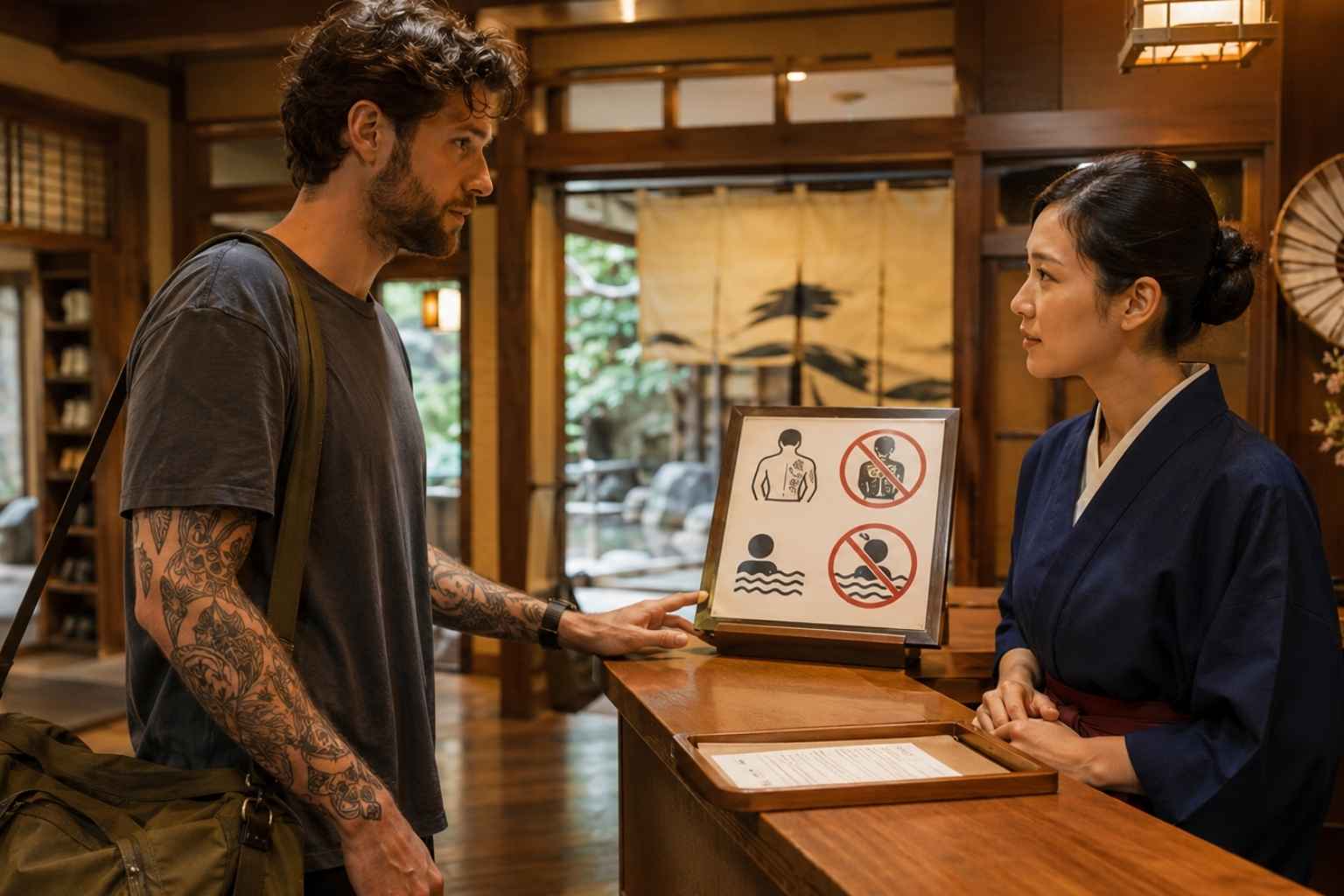
Several Tokyo and Hakone bath facilities now publish tattoo-friendly or conditional tattoo-access rules.
But visitors still need to check the exact policy before showing up with visible ink.
A tattoo friendly onsen near Tokyo is no longer impossible to find, with verified options now available in central Tokyo and in Hakone, one of the easiest hot spring day-trip areas from the capital. This affects travelers with visible tattoos who could otherwise arrive at a bathhouse and be denied entry or restricted to specific areas. It matters now because facility policies are changing in different directions: one Hakone resort removed tattoo bathing restrictions in 2025, while another still allows tattooed visitors only under cover-up conditions.
Japan’s official tourism guidance says tattoo rules remain case-by-case at public onsen. Some facilities allow tattoos, some accept covered tattoos or private-bath use, and others continue to refuse entry, which means researching the facility before traveling is still the safest move.
What Happened
Tattoos have long created difficulty for visitors hoping to try Japan’s hot spring culture. JNTO explains that tattoos have historically been associated with criminality in Japan, which helped create the basis for tattooed guests being refused entry at shared public baths, even though perceptions are changing.
The important change for travelers is that there are now clearly published alternatives around Tokyo. GO TOKYO identifies Mannenyu in Shin-Okubo as tattoo friendly, Hakone Yuryo states that it lifted restrictions on bathing due to tattoos from April 1, 2025, and Tenzan Tojikyo publishes a policy accepting a solo tattooed visitor under specific conditions.
At the same time, “tattoo friendly” does not mean one universal rule. Hakone Kowakien Yunessun says tattooed guests are generally not permitted entry unless tattoos are covered according to the rules of the specific area being used.
Verified Tattoo Friendly Onsen Near Tokyo Options
Mannenyu, Shin-Okubo — Easy Central Tokyo Choice
Mannenyu is one of the clearest options inside Tokyo itself. GO TOKYO, the city’s official travel guide, describes the traditional public bath less than five minutes from Shin-Okubo Station as tattoo friendly and says visitors with inked skin need not worry about being turned away.
The same official listing gives general admission as ¥550, payable in cash, with opening hours from 3:00 p.m. to midnight on Sunday through Friday, last entry 30 minutes before closing, and closure on Saturdays. It also says shampoo and soap are available and towels can be rented.
This makes Mannenyu practical for travelers who do not want to spend a full day leaving Tokyo just to bathe. It is a sento-style urban bath experience rather than a mountain resort escape, but it offers a low-stress introduction to Japanese bathing culture for tattooed visitors.
Hakone Yuryo — Tattoo Restrictions Lifted
Hakone Yuryo is one of the most important recent updates for tattooed travelers. Its official English page says the facility lifted restrictions on bathing due to tattoos from April 1, 2025 as part of an initiative focused on diversity of values and cultures.
The facility is also straightforward to reach as a Tokyo-area day trip. Hakone Yuryo says the trip from Shinjuku Station to Hakone-Yumoto Station takes about 85 minutes by Odakyu Limited Express Romancecar, followed by about three minutes on its free shuttle bus.
There are still firm rules. Hakone Yuryo states that gang-related visitors and intoxicated guests are not allowed, swimsuits are not permitted in the baths, and cameras or mobile phones cannot be used in changing rooms or bath areas.
Tenzan Tojikyo, Hakone — Allowed, But Only Under Strict Conditions
Tenzan Tojikyo offers a more traditional Hakone bathing option, but tattooed travelers must understand its rule before going. Its official English page says a tattooed visitor may enter as a solitary visitor, but if two or more people with tattoos are together, they are not allowed in, even if they are of different genders or entered separately.
Tenzan also asks tattooed visitors to wear a jacket to cover their tattoos while spending time outside the bath, as consideration for other guests. The facility says it does not accept reservations in advance, has no private bath, requires guests to bathe nude, and asks visitors to bring a small towel or buy one at the front desk for ¥200.
That makes Tenzan suitable for one tattooed traveler seeking a communal, traditional hot spring experience. It is not a workable choice for a couple or group when more than one person has tattoos.
Hakone Kowakien Yunessun — Conditional Access Only
Yunessun is useful for travelers who are comfortable with covering their tattoos, but it should not be mistaken for a fully open tattoo policy. Its official website says guests with tattoos, including small one-point tattoos, are generally not permitted entry.
The facility then provides two limited routes to entry. In the swimsuit area called Yunessun, tattoos must be covered by a rash guard or similar clothing. In the day-trip hot spring area called Mori no Yu, tattoos are allowed only if they can be completely covered by two designated tattoo-cover seals sold by the facility.
This is most practical for visitors with small tattoos or tattoos that can easily be covered. Travelers with large sleeves, back pieces, or multiple large tattoos should choose a facility with a clearer open-access policy instead of hoping covers will be accepted.
Who This Affects
This matters most for travelers who want an onsen experience but are unsure whether their tattoos will block entry. It is especially relevant for:
- visitors with visible arm, shoulder, leg, chest, or back tattoos
- couples or friends traveling together when more than one person has tattoos
- travelers trying to choose between central Tokyo bathing and a Hakone day trip
- visitors with small tattoos who may be able to use approved covers
- first-time bathers who do not yet understand communal-bath etiquette
Tokyo sento can also be worth checking. The Tokyo Sento Association’s official inbound guide says tattoos are generally permitted at sento, although some facilities refuse entry, and its guide identifies several baths as tattoo friendly, including Oshiage Onsen Daikoku-yu, Hasunuma Onsen, Togoshi Ginza Onsen, Mikoku-yu, Kairyo-yu, Mannen-yu, and Akebono-yu. Because individual rules can change, confirm directly before visiting.
Why This Matters for Travelers
The biggest mistake is assuming that one accepted tattoo means every bathhouse will accept the same tattoo. A small design that works with two cover seals at one facility may still be refused somewhere else, while a large tattoo may be fully accepted at a place with an open policy.
A second mistake is assuming that booking a private bath always removes the problem. JNTO says private kashikiri onsen can be an option for tattooed visitors, but travelers should still ask the specific facility in advance rather than assume the private setting automatically overrides its house rules.
[Why Some Japan Restaurants Quietly Turn Tourists Away]
What To Know Before You Go
Once you find a welcoming facility, normal bath etiquette still matters. JNTO says most traditional hot springs require guests to bathe nude, thoroughly wash their bodies before entering the water, keep small towels out of the bath, and keep long hair from touching the water.
Use this checklist before visiting:
- Check the tattoo policy on the facility’s official site on the day you plan to go.
- Confirm whether tattoos are fully accepted, must be covered, or are allowed only under specific conditions.
- Do not assume private baths automatically permit tattoos.
- Wash thoroughly before entering any shared bath.
- Keep towels, hair, swimwear, phones, and cameras out of traditional bath water and bathing areas.
- If staff explain a rule at entry, follow it immediately and politely.
- For Tenzan, do not visit as a group if two or more people have tattoos.
- For Yunessun, confirm whether your tattoos can actually be covered under its stated rule before traveling to Hakone.
The best planning choice depends on your tattoo size and the experience you want. Mannenyu is convenient in central Tokyo, Hakone Yuryo publishes a broad tattoo-access policy, Tenzan offers a traditional setting with a strict solo-tattooed-visitor condition, and Yunessun is a conditional option for tattoos that can be covered.
Official Note
According to official facility and tourism pages, tattoo access near Tokyo is no longer limited to guesswork: Mannenyu is listed as tattoo friendly by GO TOKYO; Hakone Yuryo says it removed tattoo bathing restrictions from April 2025; Tenzan accepts a solo tattooed visitor under published conditions; and Hakone Kowakien Yunessun permits entry only when tattoos are covered according to the rules of the relevant bathing area. Policies, hours, admission prices, and closure dates can change, so visitors should confirm directly before traveling.
[Kyoto Gion Photography Ban: What Tourists Must Know Before Taking Photos]
Finding a tattoo friendly onsen near Tokyo is now realistic, but showing up without checking the rule is still a fast way to lose time and money. Plan around verified access, respect the bathhouse etiquette, and the hot spring experience does not have to be the part of your Japan trip you miss.
Question for readers: Should more Japanese onsen fully welcome tattooed visitors, or is it fair for each bathhouse to keep its own rules?