
A sharp look at how loneliness in Japan is turning into a paid service economy.
For anyone living in a crowded city, always online, and still feeling emotionally cut off from real people.
This article is about Japan’s loneliness industry and why more people are paying for substitutes for connection instead of finding it in ordinary life. It will resonate with readers who live in big cities, spend all day connected to screens, and still end the night feeling emotionally untouched. It matters because when people start buying closeness through avatars and rented companionship, the problem is no longer personal. It is structural.
The detail I cannot get past is simple.
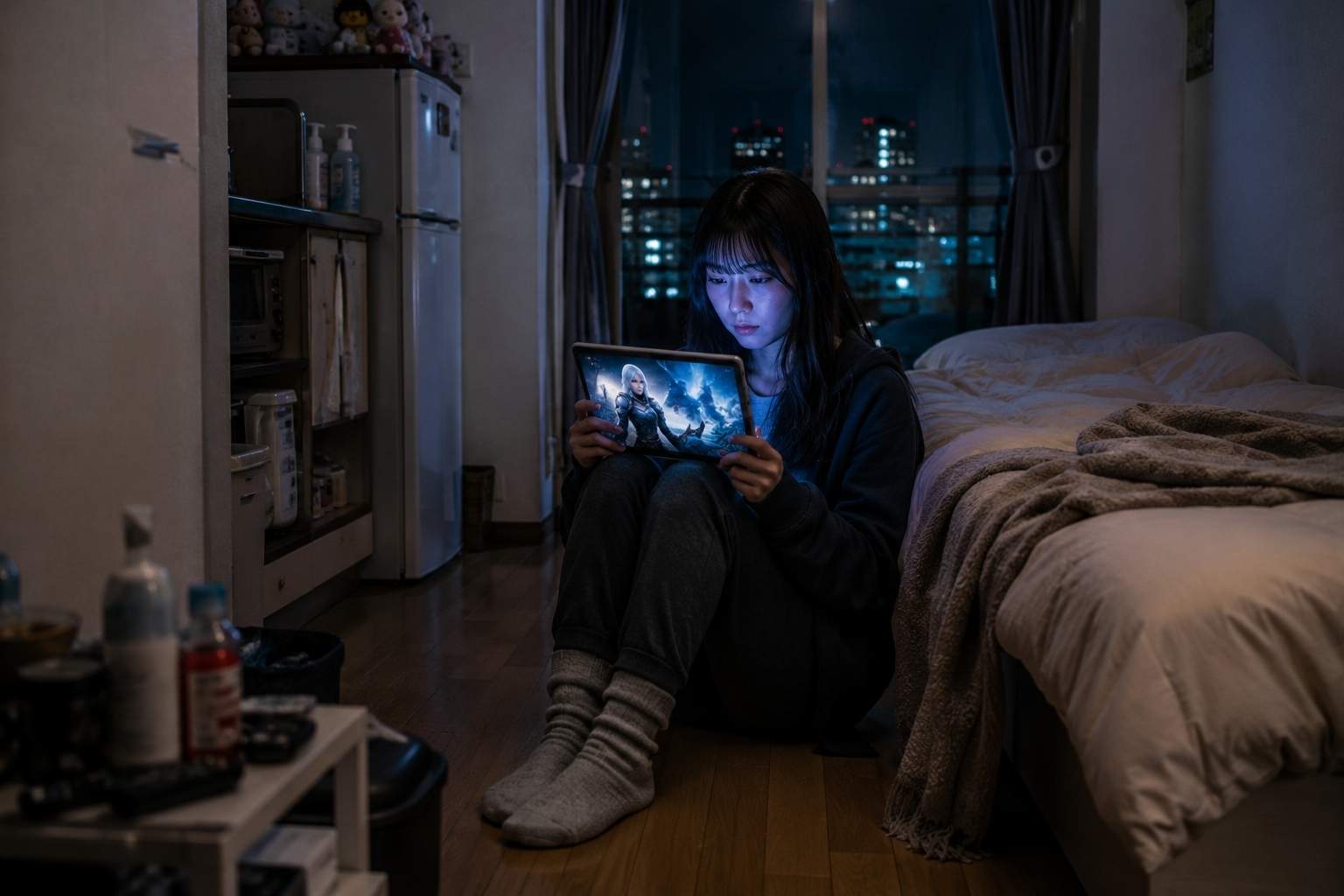
A 31-year-old teacher in Yokohama spent her entire bonus on a digital avatar. Inside the game, she has a beautiful house, a garden, and a partner who asks how her day was.
In real life, she lives in a 15-square-meter apartment where the fridge is close enough to touch from her bed.
She says she has not been touched by another human being in fourteen months.
Why This Story Hits Hard
That sentence feels heavier than people want to admit.
Japan’s loneliness industry is now worth billions. You can rent a sister, a dinner companion, even someone to mourn at your funeral. The government even appointed a Minister of Loneliness.
But that title cannot solve the core problem.
You cannot legislate human connection.
That is what makes this story hit so hard. The system can respond with services, programs, and new labels, but none of that changes the most painful part: millions of people no longer feel known by anyone in real life.
And when that feeling becomes normal, the market moves in.
The Expectation vs Reality Shift
We were told constant connection would make loneliness smaller.
Instead, for many people, it has become easier to avoid real intimacy than to build it. Online, you can mute people, block people, disappear, and log off before rejection lands too hard.
Real life does not work like that.
That is the expectation-versus-reality shift underneath this story. We became the most connected generation in history while slowly forgetting how to be close to another person without a screen, a role, or a payment involved.
Japan is not alone in this.
London. Seoul. Toronto. New York. Different cities, same pattern: people living side by side while emotionally disappearing behind screens and apartment walls.
What Changed Mentally
What makes the teacher’s story so unsettling is not only the avatar.
It is what the avatar replaced.
She did not say she wanted better AI or faster internet. She said she wanted to remember what it feels like to matter to someone.
That changes the whole story.
This is not about technology as entertainment. It is about emotional survival. It is about how digital life and paid companionship are filling a space that used to belong to ordinary relationships.
A few truths sit underneath it:
- Digital access is not the same as emotional closeness
- Paid companionship exists because unpaid connection is failing
- Safety and convenience do not automatically create intimacy
- Loneliness becomes more dangerous when it starts feeling routine
[5 Secret Japan Government Discounts for Foreigners to Save Money]
The Hardest Lesson
The hardest lesson here is that loneliness has become organized.
It has business models now. Service menus. Professional substitutes. A language of support without actual belonging.
That is what gives this story its force.
A person can now buy a version of being seen, heard, or accompanied for an hour, then return to the same emotional emptiness once the service ends. The transaction may ease the silence for a moment, but it cannot turn rented presence into real attachment.
That is the gap people are living inside.
What Living in Japan Revealed
What this reveals about living in Japan is how neatly isolation can hide inside order.
A place can be safe, polite, efficient, and still leave people starved for touch, warmth, and unscripted closeness. It can give you peace in public and emptiness in private.
That is why the idea of a “touch desert” lands so hard.
Not because it sounds dramatic, but because it feels accurate.
[The Apartment Trap in Japan: Hidden Fees That Can Double Your Rent]
What I Understand Now
I do not think this is just a Japan story anymore.
It is a modern city story. A screen story. A late-night apartment story. A story about people who can reach anyone instantly but struggle to feel real to anyone at all.
That is why this matters beyond one country.
If loneliness keeps becoming a product, then we are not just watching a trend. We are watching ordinary human closeness become something people can no longer expect for free.
Final Thought
Japan’s loneliness industry is not growing because people suddenly became strange.
It is growing because too many people no longer know where real closeness is supposed to come from. The services are only the symptom. The deeper problem is that millions now seem more comfortable managing connection than actually living inside it.
That should scare more people than it does.
Question for readers: Are we actually connected anymore, or just permanently online?