
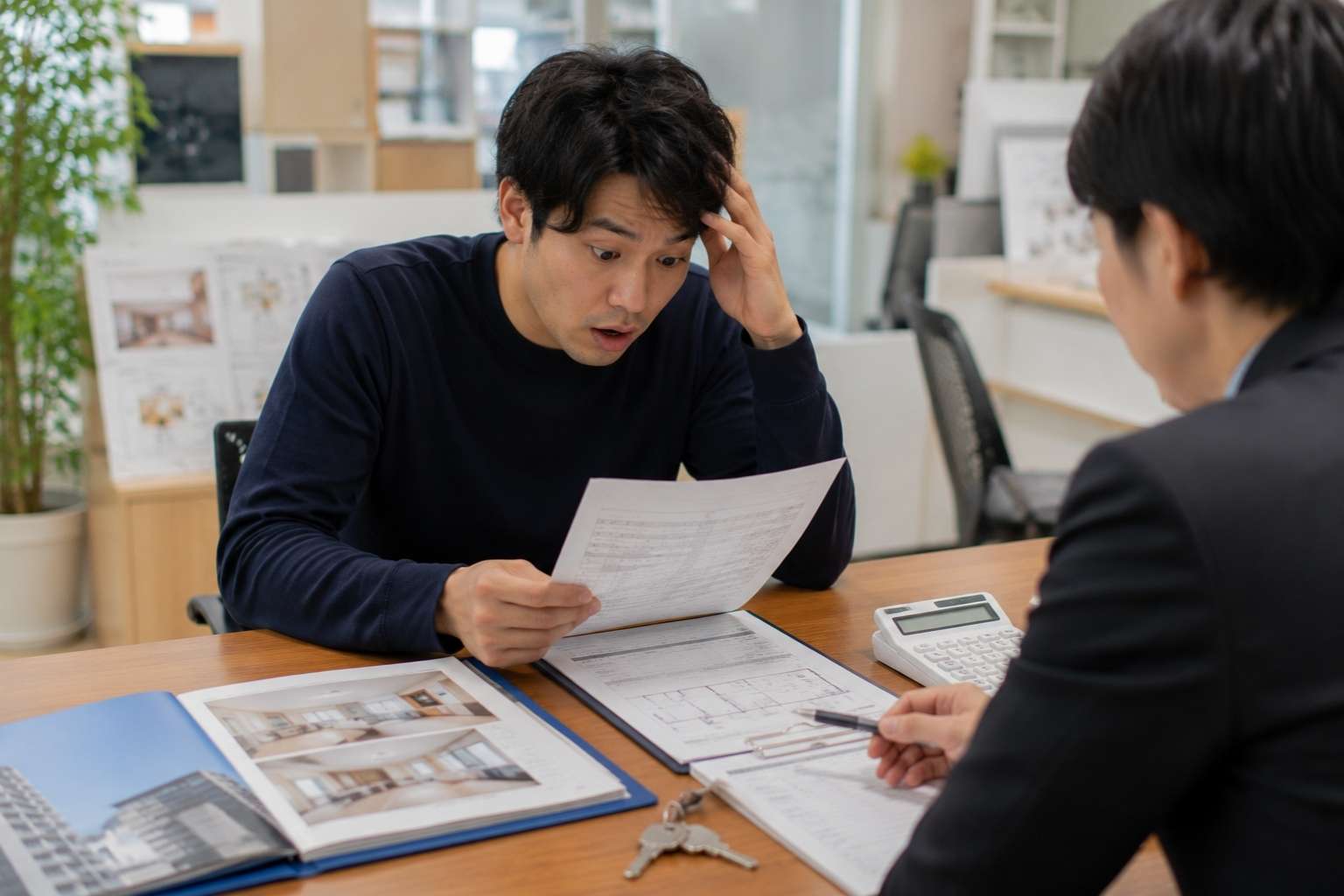
A practical guide to the extra apartment charges that catch renters off guard in Japan.
Built for foreign workers, students, and anyone trying to avoid losing money before move-in day.
This guide covers the hidden apartment fees in Japan that can make your move-in costs feel far higher than the rent you saw in the listing. It is for foreign workers, students, and anyone searching for a new apartment in Japan who wants to avoid getting hit by charges they did not fully expect. It matters now because housing is usually the biggest monthly expense, and the real damage often starts before you even move in.
This is the apartment trap. You find a place that looks affordable, the monthly rent seems possible, and for a moment you think you finally found something within budget. Then the extra fees show up, and suddenly the number in your head no longer matches the number on the contract.
That is why this topic gets saved so often. People do not only want a cheaper apartment. They want to avoid paying for things that feel like ghost fees, forced add-ons, or silent penalties for simply trying to rent a normal place.
The hardest part is that many of these charges do not sound dramatic when mentioned one by one. But once key money, guarantor fees, lock exchange, disinfecting fees, and renewal costs are stacked together, the whole deal can look very different from the listing price that pulled you in.
Why This Guide Matters
Apartment hunting in Japan is stressful enough before the hidden charges appear. You are already thinking about location, commute, move-in timing, and whether the place is even possible for your situation. Then the fee structure shows up and turns one rent number into a much bigger commitment.
That is why this guide matters. The trap is not only expensive. It is confusing.
Many renters look at the rent first and assume that is the real cost they need to build around. In reality, the listed rent is often only the first layer. What hurts is everything attached to it.
This matters especially for foreigners because housing pressure is already high. The more uncertain the search feels, the easier it becomes to accept bad terms just to secure a place. That is exactly where hidden fees do their worst damage.
The raw details make the biggest problem clear: these are not always optional upgrades or small extras. Some charges are built into the system, some are pushed as mandatory, and some come back later even after you thought the contract pain was over.
That is what makes the apartment trap feel so unfair. You are not only paying for a place to live. You are paying a series of charges that can make the rent feel like only part of the real story.
Another reason this matters is timing. Most people discover these fees when they are already emotionally committed to the apartment. They already imagined living there. They already compared routes, commute time, and neighborhood convenience. That makes it much harder to walk away when the contract starts filling up with painful numbers.
This guide helps because it shifts the question. Instead of asking only “Can I afford this rent?” you start asking “What is this apartment really going to cost me to secure, keep, and renew?”
That is a much better housing question in Japan.
What This Is and Who Needs It
This is a practical guide to the apartment fees that make renting in Japan more expensive than many people expect. It is not a full housing law guide or a city-by-city contract manual. It is a survival guide for the most common fee traps listed in your raw details.
This guide is especially useful for:
- Foreign workers renting their first apartment in Japan
- Students trying to keep upfront costs under control
- Couples or families moving to a new place
- Renters comparing listings and assuming the cheapest rent is the best deal
- Anyone who has heard terms like reikin or guarantor company fees but never had them explained clearly
It is also for people who already found an apartment and are now staring at the quote in disbelief. If the listing looked manageable but the contract suddenly feels inflated, this guide is exactly for that moment.
The core idea is simple: apartment rent in Japan is not always just rent. The number on the listing can be only the entry point into a larger cost structure.
Your raw details point to five major problem areas:
- Reikin, or key money
- Guarantor company fees
- Lock exchange fees
- Disinfecting fees
- Renewal fees
That list matters because each one hits a different stage of the rental process. Some hurt at move-in. Some hurt during contract renewal. Some feel especially painful because they do not seem to leave you with anything meaningful in return.
This guide is useful because once you know where the pain points are, you stop treating the monthly rent as the whole deal. That alone can save a renter from choosing the wrong apartment for the wrong reason.
Costs, Documents, or Setup Steps
The smartest way to approach apartment hunting in Japan is to think in layers. First there is the advertised rent. Then there is the fee structure attached to it. If you ignore the second layer, the first layer can mislead you badly.
Reikin: The Fee That Feels the Most Brutal
The raw details describe Reikin, or key money, in the clearest possible way: it is literally a gift you never get back.
That is the part renters need to understand first. This is not a deposit you are hoping to recover later. It is money that leaves you and stays gone.
That is why key money feels so ugly. At least some housing costs feel connected to a service, a repair, or a physical asset. Reikin does not feel like that. It feels like an extra payment attached to the privilege of getting the apartment.
A practical way to handle Reikin is to treat it as a full loss from the start. Do not mentally classify it as money that might return. If a listing includes key money, you should count it as gone the moment you sign.
Guarantor Company Fees: The Hidden Hit That Can Be Huge
This is one of the biggest practical shocks in the raw details. Mandatory guarantor company fees can cost 50% to 100% of one month’s rent.
That is not a minor side fee. It is a charge big enough to change how attractive the apartment really is.
This is also why renters get fooled by lower monthly rent. A place may look cheaper than another option until the guarantor company requirement is added on top. Once that happens, the “good deal” can stop looking good very quickly.
Lock Exchange and Disinfecting Fees
These two charges hurt in a different way. The raw details say the hidden lock exchange and disinfecting fee are often forced upon new tenants.
That word matters: forced. These are the charges people often assume they can reject, only to find that they are presented as part of the package.
The frustration here is not only cost. It is control. The renter is already paying major housing expenses, and now more items are being added that may not feel negotiable in the moment.
Renewal Fees: The Rent Pain That Comes Back Later
This is the fee many renters forget to plan for because it does not always hit at move-in. Your raw details describe renewal fees as paying an extra month of rent every two years.
That means the apartment does not only cost more at the start. It can cost more again later in a way that still feels sharp.
This matters because people often build their housing budget around monthly life, not two-year contract pain. Then renewal time arrives, and a cost they knew existed in theory suddenly becomes very real in practice.
Zero-Zero Deals: The Phrase Worth Asking About
One of the most useful practical phrases in your raw details is “Zero-Zero.” This means no deposit, no key money.
That is why it matters so much in apartment searches. Even if every fee does not disappear, reducing those two major move-in barriers can make a huge difference.
A better setup for apartment searching looks like this:
- Check the listed rent
- Ask what extra fees are attached
- Treat Reikin as non-returnable money
- Check whether a guarantor company fee is mandatory
- Ask directly about lock exchange and disinfecting costs
- Check whether the apartment has a renewal fee after two years
- Ask whether there is a Zero-Zero option or similar deal available
That is the kind of checklist that prevents blind signing.
Common Mistakes and Practical Tips
The biggest mistake is judging an apartment only by the monthly rent. This is the oldest trap in the whole process, and it is exactly why so many renters feel blindsided later.
A second common mistake is assuming every fee is small enough to ignore individually. That logic fails fast. One ugly fee is painful. Five stacked together are what turn a manageable listing into an apartment trap.
Another major mistake is failing to ask direct questions early. By the time you are deep in the process, it becomes emotionally harder to push back or walk away.
These practical tips help:
- Do not compare apartments by rent alone
- Do not treat Reikin like a recoverable cost
- Do not ignore a guarantor company fee just because it is not part of the monthly rent
- Do not forget to factor in renewal costs two years later
- Do ask about Zero-Zero deals before assuming the fee structure is fixed
It also helps to separate fees into two categories:
Fees that are clearly painful because the money is gone
- Reikin
- Guarantor company fees
- Disinfecting fees
- Lock exchange fees
Fees that are painful because they come back later
- Renewal fees
That distinction matters because it changes how you budget. Some charges hit your upfront cash. Others hit your future stability.
A useful mindset shift is this: the cheapest apartment is not always the apartment with the lowest rent. The cheapest apartment is the one with the fee structure you can actually survive.
That sounds obvious, but many renters forget it in the middle of a stressful search. They see a low number, they panic about availability, and they start optimizing for “getting accepted” instead of “not getting trapped.”
Another strong tip is to ask about fee structure before you get emotionally attached. The later you ask, the harder it becomes to stay objective. Early clarity saves money.
The final practical mistake is assuming the system is transparent by default. It often is not. That is why blunt questions are useful. If you do not ask, the quote can do the explaining later, and by then the damage is already emotional as well as financial.
What To Do Next
If you are apartment hunting right now, stop treating rent as the only number that matters. Start treating the contract as the real product.
That change in mindset alone can save you from the worst version of the trap. Once you understand that the fee structure is part of the apartment, not a separate issue, your whole search becomes smarter.
Use this practical checklist before moving forward on any apartment:
- What is the monthly rent?
- Is there Reikin, and how much?
- Is a guarantor company mandatory?
- How much is the guarantor fee if required?
- Are there lock exchange or disinfecting fees?
- Is there a renewal fee after two years?
- Can I ask for a Zero-Zero deal?
If the answers start inflating the total far beyond what the rent first suggested, treat that as the real apartment price. Do not keep telling yourself the listing was affordable if the contract says otherwise.
This is also where negotiation matters. Your raw details specifically point to asking for Zero-Zero deals. That means renters should not assume every painful fee setup is the only possible setup.
The practical goal is not perfection. The practical goal is fewer ghost fees, fewer surprises, and a housing choice you can actually live with.
Because once you sign, these fees stop being theory. They become the reason your savings suddenly feel thinner than expected.
Official Note
This guide is based on the fee structure listed above: Reikin as non-returnable key money, mandatory guarantor company fees costing 50% to 100% of one month’s rent, forced lock exchange and disinfecting fees, renewal fees equal to one extra month of rent every two years, and the possibility of asking for Zero-Zero deals with no deposit and no key money.
The biggest apartment mistake in Japan is not always choosing the wrong neighborhood. It is choosing the wrong fee structure and discovering it too late.
Question for readers: Which apartment fee in Japan shocked you the most: key money, guarantor company costs, renewal fees, or the forced lock and disinfecting charges?