
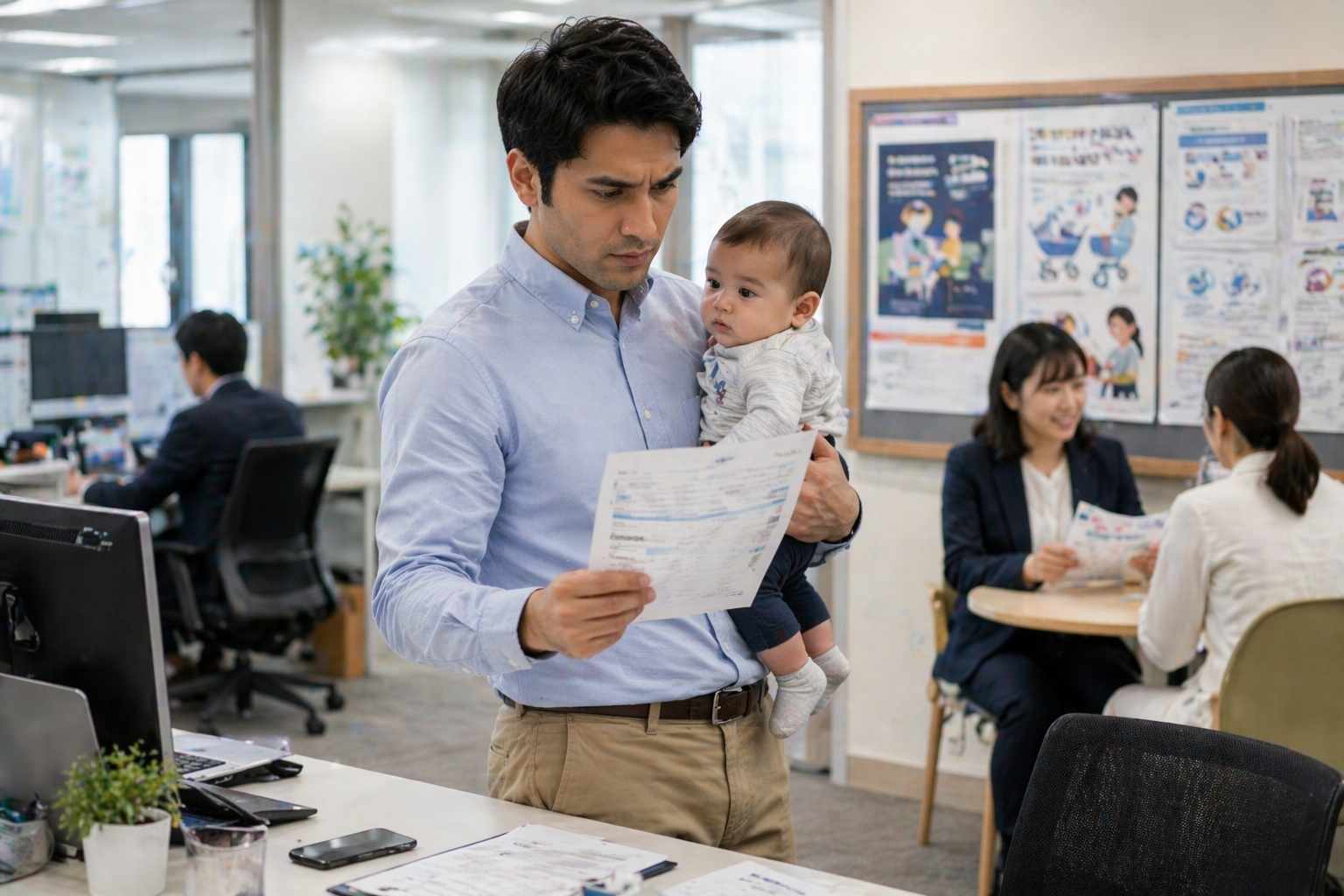
The right already exists, but employer pressure is rising in 2026.
For foreign fathers in Japan, that matters more than many workplaces still admit.
The Japan paternity leave law 2026 is not creating a completely new right for foreign fathers, but it is making employer compliance harder to ignore. That affects fathers working in Japan, including foreign employees, as well as the companies that hire them. It matters now because the revised childcare-leave framework is already in force, larger employers must now disclose male childcare-leave take-up rates, and Labour Bureaus continue to offer consultation and dispute-resolution support when workplace conflicts happen.
According to official Ministry of Health, Labour and Welfare materials, Japan’s labor protections apply equally regardless of nationality, and workers are entitled to the same treatment as Japanese workers. Official childcare-leave guidance also shows that eligible workers can take “childcare leave at birth” within the first eight weeks after a child is born, separate from ordinary childcare leave.
Japan Paternity Leave Law 2026: What Changed
The biggest practical change is transparency, not the basic existence of the right. Since April 1, 2025, the obligation to publish male childcare-leave acquisition rates was expanded from companies with more than 1,000 regularly employed workers to companies with more than 300. That means many more employers now face public visibility around whether fathers actually take leave.
That does not mean every company in Japan must publish the numbers. Smaller firms still have to follow the leave rules, but the legal publication duty applies to employers with more than 300 regularly employed workers. For foreign fathers, that distinction matters because the right itself is broader than the disclosure rule.
The other key point is that “childcare leave at birth,” often referred to as paternity leave, is not just a company perk. Official guidance says eligible workers can generally take up to four weeks within the first eight weeks after birth, and the leave can be split into two periods.
Who Is Affected
This matters first for fathers employed in Japan who are expecting a child or have just had one. It also matters for foreign workers on fixed-term contracts, because official guidance says some fixed-term workers can still qualify as long as it is not clear their contract will end within the statutory window.
In practical terms, the people who should watch this most closely are:
- foreign fathers employed by Japanese companies
- workers whose spouse is about to give birth
- fixed-term employees checking whether they meet the leave conditions
- HR teams at companies with more than 300 workers
- fathers whose company culture discourages men from taking leave
For many foreign fathers, the most important point is simple: nationality does not cancel the basic labor right. If you are covered as a worker under the law and meet the eligibility conditions, the official framework does not create one leave standard for Japanese men and another for foreign men.
Japan Can Revoke PR Status Over Malicious Unpaid Taxes
Old Rule vs New Rule
Old rule:
- fathers already had access to childcare leave and childcare leave at birth under the legal framework
- companies with more than 1,000 regularly employed workers had to publish male leave acquisition rates annually
New reality:
- the leave right still exists, but public scrutiny has widened
- companies with more than 300 regularly employed workers must now publish male leave acquisition rates
- more employers are under pressure to show whether fathers are actually using the system
There is another important continuity point. Official MHLW materials state that employers are prohibited from dismissing or otherwise treating workers disadvantageously for applying for or using childcare leave or parental leave. Separate worker guidance also warns against demotion or dismissal after childcare leave.
[Japan Moves Closer to a Sharp Residency Fee Hike]
What Applicants Should Know Now
The safest move is to treat paternity leave as a legal process, not an informal favor from your boss. Official guidance says the worker needs to apply in writing, and for childcare leave at birth the application is generally required at least two weeks before the planned start date, though labor-management agreements can affect some timing details.
A practical checklist for fathers in Japan now looks like this:
- confirm your employment status and contract length
- check whether your child’s expected birth date fits the leave window
- submit the request in writing
- keep copies of company responses and internal messages
- contact the Prefectural Labour Bureau if the company blocks, pressures, demotes, or retaliates against you
This is also where the dispute side matters. The MHLW says Prefectural Labour Bureau Employment Environment and Equal Employment divisions handle consultations, explain legal options, and can provide dispute-resolution assistance or conciliation under the Child Care and Family Care Leave Act.
Official Note
According to official Ministry of Health, Labour and Welfare materials, labor protections in Japan apply equally regardless of nationality, eligible workers can take childcare leave at birth, companies with more than 300 regularly employed workers must now publish male childcare-leave acquisition rates, and employers are prohibited from dismissing or disadvantaging workers for using childcare leave. Official support and dispute-resolution channels are also available through Prefectural Labour Bureaus.
That could change workplace culture faster than many companies expect. Once take-up rates are visible and fathers know the right is enforceable, family support stops being just branding and starts becoming something workers can measure.
Information in this article is based on reports and official guidelines available at the time of publication and is for general informational purposes only. Japanese policies, prices, and event details change frequently. Always verify directly with official sources or licensed professionals before making travel, financial, or legal decisions.
Question for readers: If your company tried to punish you for taking paternity leave in Japan, would you challenge it — or stay quiet to protect your job?