
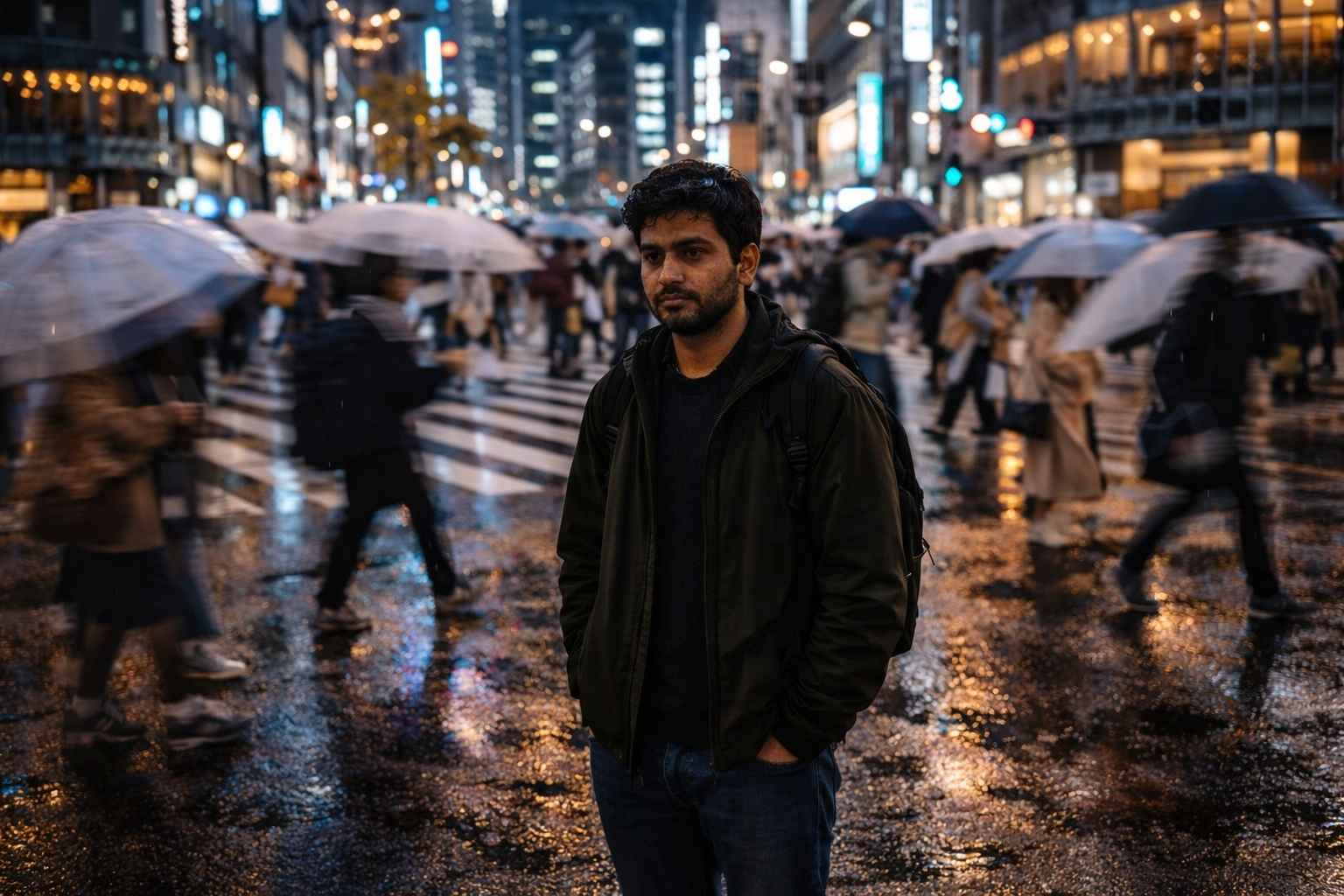
A first-person reflection on the pressure of living in Japan like every mistake was being judged.
And the moment I realized most of that pressure was coming from me.
This article is about what it felt like to live in Japan believing I was constantly being watched. It will resonate with anyone who has moved abroad, felt hyper-aware of every mistake, and slowly made themselves smaller trying to get everything right. It matters because a lot of the pressure people feel in a new country does not only come from the culture around them. Sometimes it comes from the fear they build inside themselves.
For my first two years in Tokyo, I lived like I was on stage.
Every move felt loaded. Every word felt risky. Every mistake felt like proof that I did not belong.
I was always asking myself the same kinds of questions. Was my trash sorted perfectly? Was I speaking too loudly? Did I bow correctly? Was I taking up too much space without realizing it?
I was not just trying to adapt. I was trying to avoid failing in public.
That mindset followed me everywhere. It changed how I spoke, how I moved, and how much of myself I allowed to show. I thought I was being respectful. In reality, I was becoming rigid.
Why This Story Hits Hard
What made it exhausting was not one specific rule or one specific person.
It was the belief that everyone was paying attention.
I carried around this idea that one wrong move could define me. That one badly timed sentence, one social mistake, one wrong gesture would mark me forever as the outsider who did not get it.
So I shrank.
I spoke less. I moved more carefully. I tried to become invisible in the “right” way. I thought that was maturity. I thought that was what adapting was supposed to look like.
But I was not living. I was performing.
And performance is a terrible way to build a life.
It makes every ordinary interaction feel like a test. It turns simple daily habits into little stages of self-correction. Over time, that kind of pressure does not make you more confident. It makes you smaller.
The Expectation vs Reality Shift
The strange thing is that nothing dramatic had to happen for that pressure to build.
It was quiet. Daily. Repetitive.
That is what made it powerful.
I was not reacting to constant criticism. I was reacting to the possibility of criticism. I was trying to avoid judgment that, most of the time, had not even happened.
That is the shift I understand now. I thought Japan itself was creating all of that pressure. Some of it came from adjusting to a different social environment, of course. But a lot of it came from the story I kept telling myself.
I assumed I was being observed.
I assumed I was being measured.
I assumed I was one mistake away from embarrassment.
That assumption shaped my life more than reality did.
What Changed Mentally
Then one day, the whole thing broke.
It was raining. A busy crossing. People everywhere.
And I tripped hard.
My bag flew open. My umbrella rolled away. Everything scattered across the ground.
For a second, I froze. I thought, this is it. This is the moment I have been afraid of. The stares. The judgment. The embarrassment.
But nothing happened.
People walked around me like I was just part of the street.
No dramatic reactions. No crowd attention. No collective judgment.
Just movement.
That moment hit harder than the fall itself.
Because I realized something I wish I had understood much earlier: nobody was watching me the way I thought they were.
Most people were busy with their own lives. Their own schedules. Their own worries. Their own next destination.
I was never the center of their world.
And weirdly, that was freeing.
Here is what Japan quietly taught me:
- The pressure you feel is often self-created
- Most people are too busy living their own lives to judge yours
- Trying to be perfect only makes you smaller
- You do not need to disappear to belong
The Hardest Lesson
The hardest lesson was not that I had misunderstood Japan.
It was that I had misunderstood myself.
I had been building my life around the fear of being seen failing. That fear looked like discipline on the outside, but underneath it was just self-consciousness.
I thought being careful would protect me.
Instead, it kept me tense.
I thought perfection would help me settle in.
Instead, it kept me from relaxing enough to actually live here.
That is what changed after that rainy crossing moment. Not all at once, and not in some dramatic transformation. But the fear lost some of its authority.
I still respected the culture. I still paid attention. I still tried to do things properly.
I just stopped treating every moment like an exam.
What Living in Japan Revealed
Living in Japan revealed how much of my anxiety had attached itself to the idea of “getting it right.”
I was not only learning a place. I was trying to protect myself from shame.
That made me cautious in a way that did not feel healthy anymore.
Once I let go of the fantasy that everyone was watching, daily life became lighter. I spoke with less tension. I made small mistakes without turning them into identity crises. I stopped reading every neutral reaction as silent judgment.
And the biggest surprise was this: relaxing did more for my sense of belonging than perfection ever did.
Not because I suddenly fit in.
But because I finally let myself exist.
What I Understand Now
I understand now that respect and fear are not the same thing.
For a while, I confused them.
I thought being tense meant I cared. I thought overthinking every detail meant I was doing the responsible thing. But fear has a way of disguising itself as effort.
What I needed was not less respect for where I was living.
What I needed was less fear of being human inside it.
That changed the whole experience. I stopped trying to vanish. I stopped trying to be flawless. I stopped acting like one mistake would define me forever.
And in that space, something much more useful showed up: ease.
Final Thought
I came to Japan thinking the hardest part would be learning the rules.
It was not.
The hardest part was realizing how much of my life I had spent holding myself back because I thought someone, somewhere, was always watching.
Most people were not.
And once I truly understood that, I could finally stop performing and start living.
Question for readers: How much of your life are you still holding back just because you think someone is watching?