
A practical guide to local-vs-tourist pricing, residence-card checks, and why the issue feels personal for many foreign residents in Japan.
How to read the situation clearly, protect your dignity, and decide what to do at the counter.
This guide covers Japan two-tier pricing, why it becomes emotionally charged for foreign residents, and how to handle situations where local and tourist prices do not feel clearly separated. It is for foreign residents, long-stay workers, students, spouses, and anyone in Japan who worries that “tourist” and “non-Japanese” are starting to get treated like the same thing. It matters now because when fairness depends on proving that you belong, the issue stops feeling like a simple price difference and starts feeling like a daily-life wall.
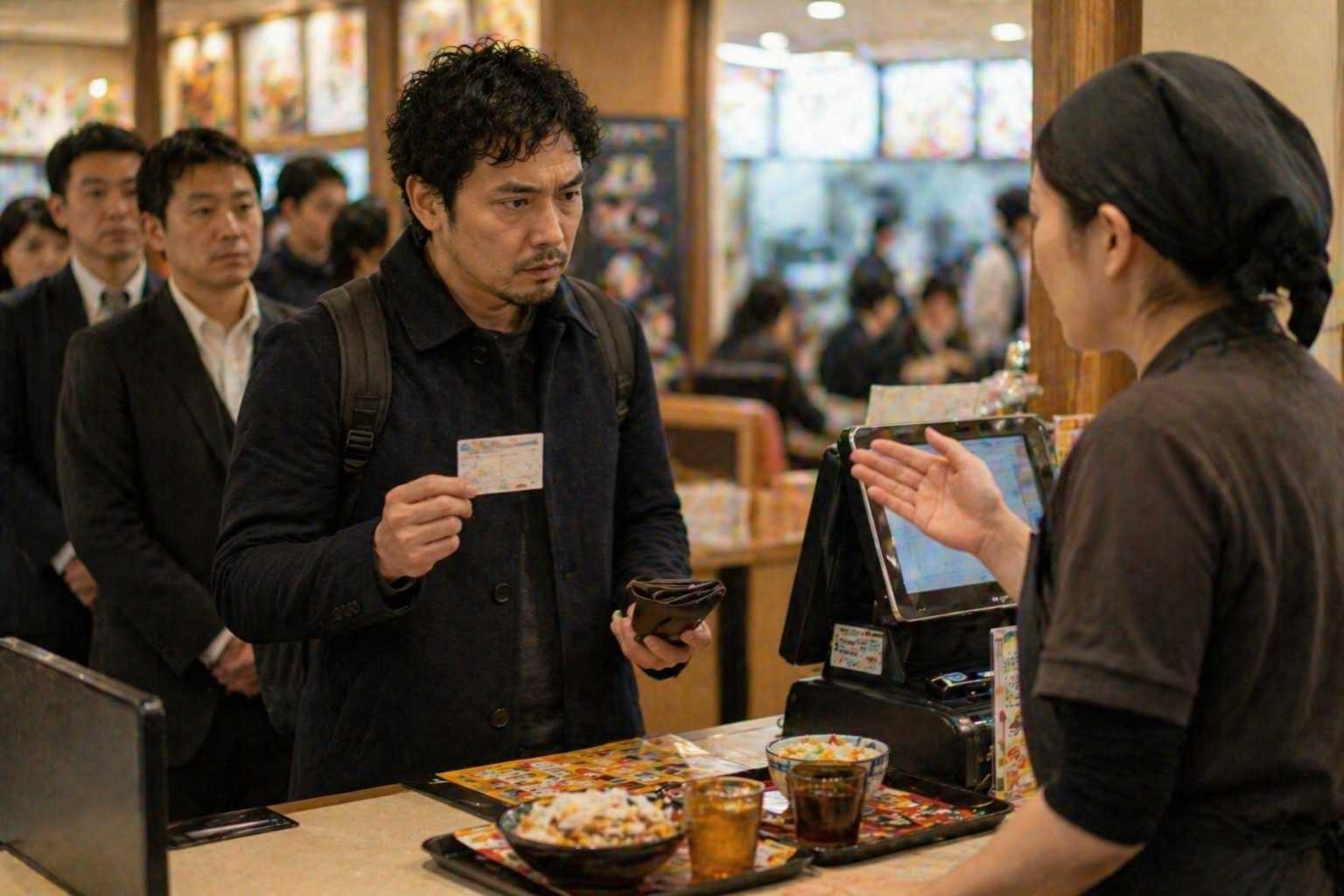
The ugliest price hike is often the one attached to your face. Same meal, same table, different price. Some places may want more money from “tourists” while locals pay less for the exact same experience, and that becomes especially hard for residents when the line between tourist and foreigner starts getting blurred.
That is where this issue hits harder than a normal budget complaint. You are not just buying lunch anymore. You are being quietly measured, sorted, and reminded that your place in the room may still be treated as conditional.
Why This Guide Matters
This topic matters because pricing is never only about money. A normal price difference can feel practical or annoying, but a price difference tied to how you are perceived can feel far more personal.
That is exactly why the issue cuts so deep. When the meal is the same, the table is the same, and the experience is the same, the higher price does not just feel like a business decision. It can feel like a signal about who is seen as “inside” and who is still being kept slightly outside.
The raw details make the emotional core clear. Some people argue that different pricing helps the economy. Maybe. But once the normal price depends on showing a residence card at the register, the experience can stop feeling like hospitality management and start feeling like humiliation.
That is especially true for people who live here, pay taxes here, and speak Japanese. The problem is not simply paying more. The problem is being asked to prove you belong before being allowed access to the price that looks ordinary to everyone else.
This is why it deserves an evergreen guide instead of just a hot take. The issue sits at the crossroads of money, identity, and routine. If it happens once, it is upsetting. If it becomes something you need to think about every time you sit down to eat, it becomes exhausting.
It also matters because the emotional confusion is built into the moment. On paper, the business may say the higher price is for tourists. In practice, many foreign residents know the feeling of wondering whether the first filter is really tourist status, or simply visible non-Japanese appearance.
That ambiguity is what makes the experience so difficult to shake off. You may be carrying a residence card, using Japanese, and living a completely ordinary local life, yet still feel that you are being sorted from the outside first and understood second.
This guide matters because the goal is not to win every argument about pricing policy. The goal is to help foreign residents understand why the situation feels so uncomfortable, and how to respond without turning every lunch into a private identity crisis.
What This Is and Who Needs It
This is a practical daily-life guide to handling local-vs-tourist pricing in Japan when the distinction feels unclear, unfair, or personally loaded. It is not a legal guide, and it is not a definitive explanation of every pricing policy. It is here to help people deal with the lived reality of being asked, implicitly or directly, to prove they qualify for the “normal” price.
This guide is especially for people who recognize any of these moments:
- You see different prices for locals and tourists and immediately wonder how you will be classified
- You live in Japan but worry that your face will place you in the higher-price category first
- You feel awkward about having to show a residence card just to avoid being charged more
- You speak Japanese and still feel like you are being treated from the outside in
- You are less upset about the money than about the message behind the price difference
- You are unsure whether to comply quietly, ask questions, or walk away
It is also for people who have not personally faced the situation yet but can see how it might unfold. The screenshot angle makes that tension instantly understandable: same meal, same counter, same service, but the person at the register is suddenly being asked to justify which price they deserve.
For many residents, that is the exact point where the problem changes shape. It is no longer just a question of “Can this business set different prices?” It becomes “Why do I need to prove I count as local enough to avoid the foreign-facing price?”
That question matters because it connects to a broader emotional pattern many foreign residents already know. They may be fully settled in Japan on paper, but still encounter moments where they are quietly reminded that belonging is something they may have to keep demonstrating.
This guide is also useful for spouses and families. Your raw details specifically point to the sting of being measured from the outside even when your life inside Japan is stable and ordinary. A small pricing decision can suddenly make a family lunch feel like a test.
Costs, Documents, or Setup Steps
There is a direct cost here and an indirect cost. The direct cost is obvious: paying more for the same meal or service. The indirect cost is the emotional toll of being asked to prove that you belong before you can get the price that appears to be reserved for “real locals.”
That is why it helps to have a simple practical setup before you walk into places where this may come up. If you do not, the moment can go from mildly awkward to emotionally overwhelming very quickly.
Start with a clear mental distinction between three separate questions:
- Is there a different price being offered?
- What category is that price supposedly based on?
- How is that category actually being applied in practice?
Those questions matter because the hurt often comes from the third one. A business may frame something as tourist pricing, but if the practical experience for many residents is that “tourist” and “non-Japanese” start looking interchangeable, then the issue is no longer only about marketing or economics. It becomes a question of social sorting.
A useful setup plan looks like this:
- Step 1: Read the situation calmly. Notice whether there appears to be a local and tourist distinction.
- Step 2: Check what is actually being asked of you. Are you being asked to show residence-based proof to receive the lower price?
- Step 3: Separate cost from principle. Sometimes the amount matters less than the way the process makes you feel.
- Step 4: Decide your line before reacting. Are you willing to show ID, ask questions, or leave?
- Step 5: Stay grounded in what is true. Living here, paying taxes here, and building a life here does not stop being real because a register moment made it feel conditional.
This setup helps because the moment itself is usually short. There is often no time for a perfect speech or a calm philosophical reflection. If you have not thought about your line in advance, the register decides the emotional tone for you.
There is also a document issue hidden inside the raw details: the residence card. The card may function as proof in some situations, but the emotional problem is not solved just because there is a card to show. In fact, for many people, the requirement to produce it is exactly what makes the experience sting more.
That is why you need to think beyond logistics. The question is not only “Do I have ID?” The question is “How do I want to handle the feeling of being asked for it in order to be treated as normal?”
For some people, showing ID may feel practical, fast, and worth it. For others, showing ID every time may feel like accepting a condition they deeply resent. Neither reaction is trivial. Both belong in the real-world setup.
[I Tried So Hard to Fit In Japan I Almost Erased Myself]
Common Mistakes and Practical Tips
One common mistake is pretending the issue is only about money. That usually leads people to minimize their own reaction and tell themselves they are overthinking it. But the raw details show why the response is emotional: the price difference can feel like a judgment about who counts.
Another mistake is collapsing every situation into one final conclusion too quickly. One experience may feel humiliating. Another may feel merely annoying. Another may not affect you much at all that day. It is better to stay precise about what happened than to force one total explanation onto every case.
A third mistake is reacting only from shock. These moments are uncomfortable partly because they happen in public and fast. When you feel measured at a register, your body reacts before your words catch up.
These practical tips help more:
- Do not dismiss your discomfort as “just being sensitive”
- Do not treat every price difference as emotionally identical
- Do not let one awkward interaction rewrite your entire self-worth
- Do decide in advance how much inconvenience or humiliation you are willing to accept
- Do remember that the hardest part may be the sorting, not the surcharge itself
It also helps to ask yourself one grounding question: What exactly is upsetting me here? Sometimes the answer is the money. Sometimes the answer is the ID check. Sometimes the answer is the realization that visible foreignness may be doing more work in the interaction than your actual life in Japan.
That clarity matters because it affects how you respond. If the issue is mainly financial, you may decide pragmatically. If the issue is dignity, the decision may feel very different.
Another useful tip is to separate your private sense of belonging from the business’s momentary classification. The register interaction may be unpleasant, but it does not define the reality of your life. Your home, work, relationships, language ability, taxes, and routines do not become less real because one lunch felt like an external review of your legitimacy.
A further mistake is assuming you must either accept everything quietly or turn every encounter into a confrontation. Most people do not want either extreme. The more practical path is to know your threshold and act consistently with it.
You should also watch for emotional carryover. A pricing moment like this can affect the rest of the day far more than the amount of money involved. The problem is not only what happened at the counter. It is the way it can reactivate other moments where you felt measured from the outside.
That is why small self-protection matters. The experience is easier to absorb when you name it accurately: same meal, same service, but the normal price feels conditional on proof of belonging. Once you put it in those terms, your reaction becomes easier to understand and less likely to turn inward into shame.
What To Do Next
If this situation is weighing on you, the next step is not to force yourself into one ideological answer. You do not need a perfect theory of business fairness before you decide how you want to protect yourself in real life.
Start by deciding your own practical line. Would you show ID to get the lower price if the difference is meaningful? Or would that process bother you enough that you would rather walk out? Your raw details end on exactly that tension, and it is the right question because the answer is personal.
A simple next-step checklist can help:
- Decide whether your priority is saving money, avoiding humiliation, or both
- Think through your response before you are standing at a register
- Keep your reaction anchored in the reality of your life, not the business’s classification
- Notice when the issue is a one-off irritation and when it is starting to feel like a repeated invisible wall
- Give yourself permission to leave situations that feel too degrading to normalize
This matters because ambiguity creates stress. If you have not thought about your response in advance, each encounter can feel like a fresh emotional ambush. A clear personal rule reduces that strain.
For some people, the rule may be practical: show ID once, pay the local price, move on. For others, the rule may be principled: if normal pricing requires repeated proof of localness, the experience is not worth supporting. The important part is that the choice is yours, not something forced by panic in the moment.
You should also give yourself permission to acknowledge the deeper feeling underneath the price issue. The raw details name it well: an invisible wall. Once that wall appears in ordinary places like lunch, it can change how daily life feels.
That is why protecting your interpretation matters so much. You are not “making it about race” or “making it too deep” just because the moment feels degrading. You are reacting to the fact that being asked to prove belonging at the cash register is never only a pricing issue.
The next step, then, is not only practical spending strategy. It is emotional clarity. Know your line. Know your threshold. Know that the sting is real even if the room stays quiet.
[PokéPark KANTO Is Pulling Spring Travelers West of Tokyo]
Official Note
This guide is based on the lived concern described above: different prices for tourists and locals, the blurred line between tourist and non-Japanese, and the discomfort of being asked to show a residence card to receive the lower price. It is a practical consumer and daily-life guide, not a legal judgment or a comprehensive review of business pricing policy in Japan.
[Eating While Walking in Japan Can Mark You Fast]
The hardest part of two-tier pricing is often not the extra amount on the bill. It is the feeling that normal treatment has become something you may need to prove you deserve.
Question for readers: If a restaurant in Japan asked you to show ID every time to get the local price, would you do it for the discount or walk out on principle?