
The rules that affect your career in Japan are not always written down.
For many foreign workers, the real culture shock starts after the job offer.
A growing share of Work in Japan advice is now centered on Japanese office unspoken rules rather than just salary, visas, or qualifications. That affects foreign workers, especially newcomers who may do the job well but still get the cold shoulder after missing a social cue. It matters now because many workers say these quiet etiquette signals can shape trust, team fit, and even promotion chances more than outsiders expect.
That contradiction is what makes the topic so explosive. You can follow the handbook, show up on time, and still feel that something is off if nobody explained the social hierarchy operating underneath daily office life.
Japanese Office Unspoken Rules: What Happened
According to the provided materials, the biggest source of engagement around Japan’s work culture is not the work itself, but the hidden etiquette that people rarely explain clearly. The issue is not usually one dramatic mistake. It is the accumulation of small signals that can reportedly change how coworkers and managers read you.
Foreign workers often describe this as the moment when “doing the job” stops being enough. The raw details suggest some people are passed over, distanced, or quietly judged not because of their output, but because they broke a rule they did not even know existed.
Several examples come up repeatedly in the materials:
- Reading the air (kuuki wo yomu): Workers are often expected to sense mood, hierarchy, and timing without direct instruction
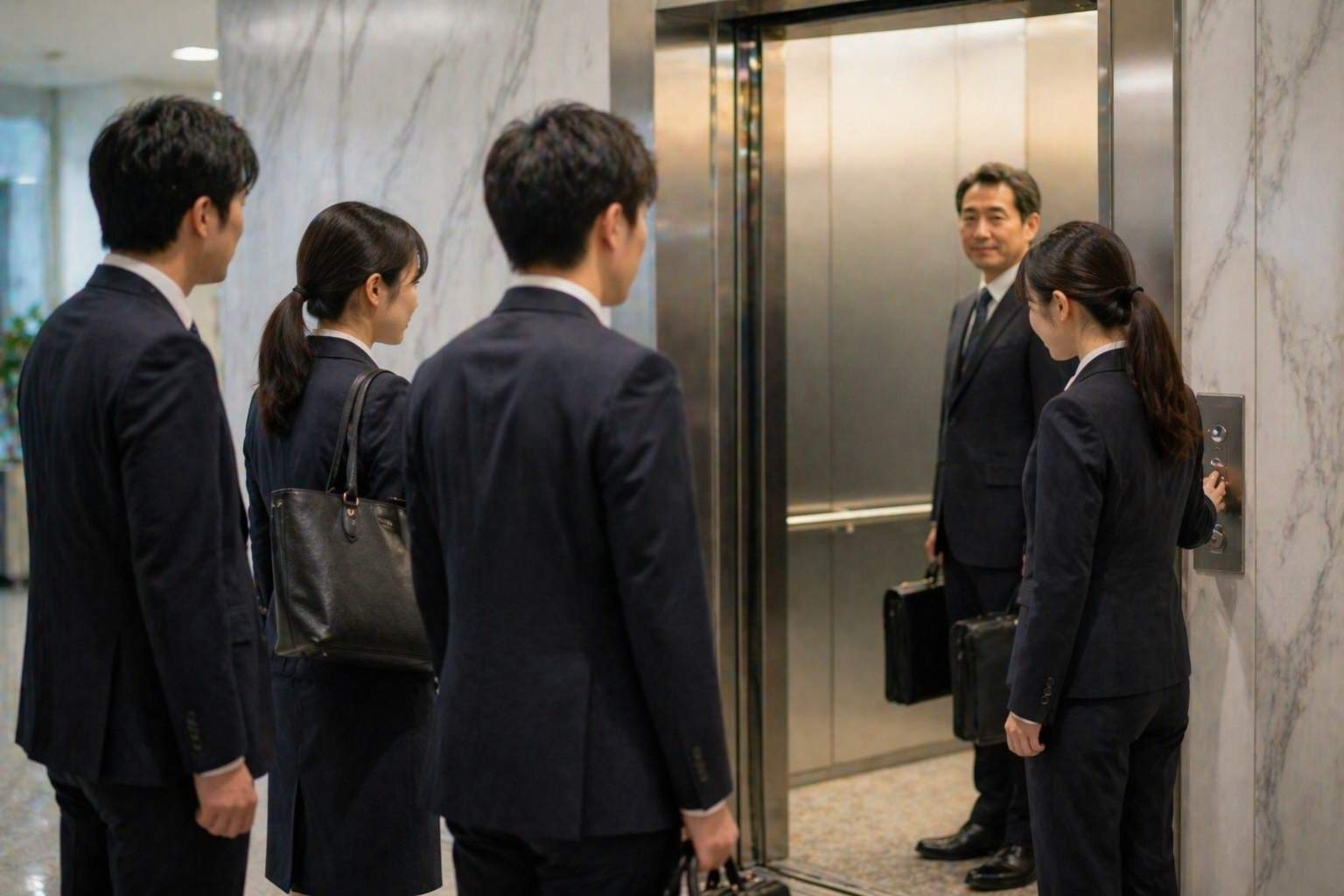
- Elevator hierarchy: The most junior person is reportedly expected to stand near the buttons, while the senior “boss” position is farther inside or at the back
- Zangyo optics: Staying late can be less about productivity and more about being seen leaving after the boss
- Nomikai pressure: After-work drinking events may be labeled optional, but some workers feel they operate like an unofficial team evaluation
- Hanko tilt: In some formal settings, subordinates are said to tilt their stamp slightly toward a superior’s stamp as a sign of respect
- Language rituals: Expressions like “Otsukaresama” can function as daily social glue rather than just polite wording
- Hierarchy awareness: Small positioning mistakes can reportedly be read as arrogance, not innocence
That is why the topic travels so well. To outsiders, some of these rules sound fake or exaggerated. To people already working in Japan, they often sound uncomfortably familiar.
Who Is Affected
This is most relevant for foreign workers entering traditional Japanese office environments, especially if they are expecting communication to be direct and rules to be fully stated. It can also affect Japanese employees, but the culture shock is usually sharper for outsiders because the expectations are often absorbed socially rather than taught openly.
The groups most likely to feel the pressure include:
- New hires in Japanese companies with layered hierarchy
- Foreign professionals transitioning from flatter office cultures
- Junior staff expected to manage etiquette around senior employees
- Workers hoping for promotion but unsure how they are being socially evaluated
- Employees in teams where after-hours attendance still influences belonging
The problem is not only embarrassment. According to the raw details, workers may start noticing subtle consequences such as colder interactions, less inclusion, or being seen as not fully “part of the team.”
Why This Matters for Workers
The hardest part about unwritten rules is that they are easy to miss and hard to defend against. If nobody tells you the rule, you cannot prepare for it, but people may still judge you for breaking it.
That is what gives this topic so much emotional weight. Foreign workers often assume performance should speak for itself, while some Japanese office environments reportedly still put heavy value on how well someone reads hierarchy, timing, deference, and group mood.
The raw details point to a few especially sensitive areas:
- Visibility over output: Staying late may be interpreted as commitment, even when little real work is happening
- Belonging over attendance labels: “Optional” social events may still affect how connected you seem
- Respect signals over intention: A small gesture in an elevator, meeting room, or document flow can reportedly carry symbolic weight
- Social fluency over explicit teaching: People may expect you to understand a rule without ever explaining it
This is also why the issue becomes career-related so quickly. If your manager sees you as skilled but socially tone-deaf, that can affect trust and future opportunities even if nobody puts the real reason in writing.
[Japan’s Common Work Visa Now Reportedly Needs N2 for Many Roles]
What To Know Now
The safest approach is not to panic or start copying every stereotype. It is to treat office culture in Japan as something you observe carefully before assuming your home-country habits will translate cleanly.
If you are new to a Japanese workplace, these are the most practical takeaways from the provided materials:
- Watch where senior and junior staff position themselves in shared spaces
- Notice who handles elevator buttons, greetings, and room entry order
- Pay attention to when people actually leave, not just what the policy says
- Treat “optional” social events as culturally meaningful unless you know your company clearly does not operate that way
- Listen for how often coworkers use phrases like “Otsukaresama” to smooth interaction
- Do not assume confusion will be read as innocence; sometimes it is read as indifference
It is also worth separating universal law from company custom. Not every office will care equally about hierarchy, hanko etiquette, or late-stay optics. But the raw details suggest enough workers recognize these patterns that ignoring them completely can be risky.
For many foreigners, the real breakthrough comes when they stop asking, “What is the official rule?” and start asking, “What do people here quietly expect from me every day?” That shift alone can explain a lot of awkward moments that otherwise feel random.
Official Note
This article is based on the provided materials and reflects commonly discussed workplace patterns and social expectations associated with Japanese office culture. These practices may vary widely by company, industry, age group, and management style, so readers should treat this as general cultural guidance rather than a fixed rulebook for every workplace in Japan.
That is the uncomfortable truth behind the topic. In some offices, the hardest part of fitting in is not the language test, the commute, or the workload. It is the silent system around the work.
Question for readers: What is the weirdest “unspoken rule” you’ve encountered in a Japanese office? Let’s settle this once and for all—is “Otsukaresama” the most powerful word in the world?