
The 28-hour cap is not new.
But enforcement around it appears to be getting much harder.
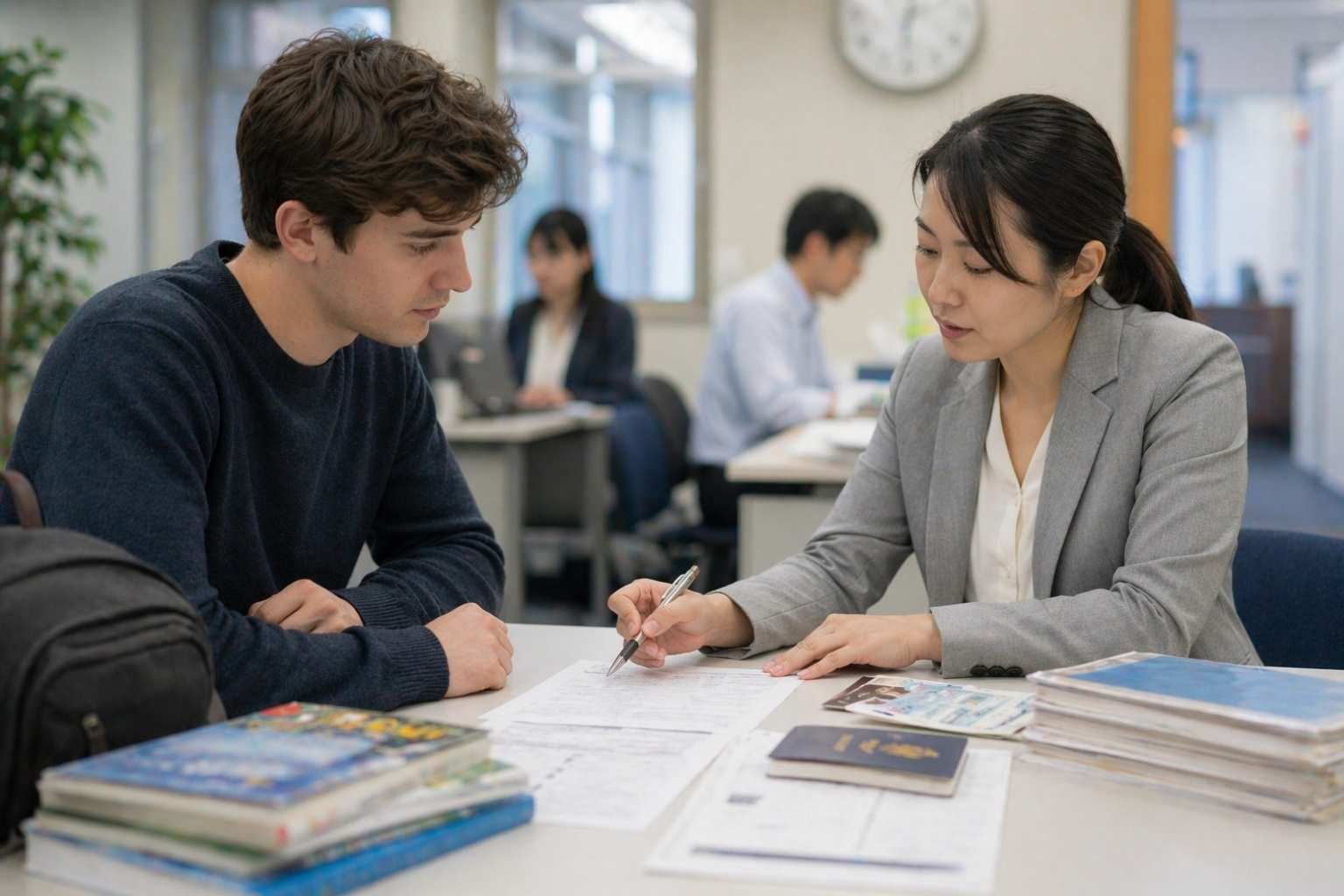
Japan is tightening scrutiny around the Japan student visa work limit, with foreign students who work beyond the permitted 28 hours a week at greater risk of being treated as illegal workers and, in serious cases, entering deportation procedures. That affects student visa holders first, but also schools and employers tied to part-time hiring. It matters now because official guidance already classifies over-limit student work as illegal employment, while recent reports say Japanese language schools will be asked to ascertain students’ employment status more closely.
According to the Immigration Services Agency, students who receive broad permission for activities outside their status may generally work only up to 28 hours per week, and up to 8 hours a day during long school vacations. That limit is a condition of the permission itself, not a rough guideline that can be averaged out later.
Japan Student Visa Work Limit: What Changed
The biggest shift is not the number. The 28-hour ceiling has already been part of the student work framework, but the tone around enforcement is becoming sharper as authorities focus more heavily on illegal employment and misuse of student status.
Official Ministry of Justice materials aimed at employers state clearly that students who work beyond their permitted hours fall under illegal employment examples. The same materials also warn that anyone who causes or arranges illegal employment can face up to 3 years in prison, fines of up to ¥3 million, or both.
Recent Nikkei Asia reporting has added another layer to that picture, saying Japanese language schools will be asked to ascertain students’ employment status. That suggests the government is not only looking at students and employers, but also increasing compliance pressure on the institutions that sponsor or monitor student attendance.
Who Is Affected
This is not only a student issue. It reaches across the chain of study, work permission, school supervision, and hiring.
The groups most directly affected include:
- student visa holders with part-time work permission
- Japanese language schools and other institutions monitoring attendance
- employers hiring students for shifts in restaurants, retail, logistics, or convenience stores
- managers and HR staff checking residence cards and work permission
- students relying on part-time income to cover tuition or living costs
For employers, the exposure is especially serious because the law does not only target the worker. Official guidance says businesses can be punished if they knowingly employ someone in a way that qualifies as illegal work, including when a student exceeds the permitted hours.
Old Rule vs New Rule
Old rule:
- students with permission could generally work up to 28 hours a week
- during long vacations, the limit could rise to 8 hours a day
- employers were already expected to confirm residence status and work eligibility
New reality:
- the legal cap itself has not changed
- over-limit work is being framed more aggressively as illegal employment
- recent reports say language schools will be asked to check employment status more closely
- employers remain exposed to criminal penalties for facilitating illegal work
That is why the story is bigger than one visa condition. The rule may be old, but the compliance climate around it appears to be moving into a much stricter phase.
What Applicants Should Know Now
Students should first confirm that they actually hold permission to work outside their main status of residence. Without that permission, even paid work within 28 hours can be a separate immigration problem from the start.
They should also track hours carefully across all jobs, not only one workplace. Official guidance treats the weekly limit as strict, and employer approval does not override immigration rules.
A practical checklist now looks like this:
- keep weekly work records and pay slips
- stay clearly below the 28-hour cap during regular study periods
- remember that long vacations follow a different daily rule, not unlimited work
- make sure your residence card and work permission are valid
- do not assume a school, friend, or employer can “informally” approve extra hours
The other reason this issue is drawing so much attention is the reentry risk. Immigration guidance says a person who is deported is generally subject to a 5-year landing denial period, although departure order and other procedures can be treated differently. That means not every violation automatically ends in the same outcome, but once a case moves into deportation, the consequences can become much heavier than many students expect.
Official Note
According to official Ministry of Justice and Immigration Services Agency guidance, student visa holders with permission may generally work only up to 28 hours a week, and students who exceed permitted hours are included in official illegal employment examples. Official employer guidance also states that facilitating illegal employment can bring up to 3 years in prison and fines of up to ¥3 million, while separate immigration guidance explains that deportation generally carries a 5-year landing denial period.
Recent reports suggesting tougher school-level monitoring fit that broader direction. Even if the 28-hour rule itself is familiar, the practical message now is much harder: study first, follow the permitted hours, and do not assume overwork will be ignored.
Information in this article is based on reports and official guidelines available at the time of publication and is for general informational purposes only. Japanese policies, prices, and event details change frequently. Always verify directly with official sources or licensed professionals before making travel, financial, or legal decisions.
Question for readers: Do you see this as overdue enforcement of a clear rule, or a crackdown that could hit financially struggling students the hardest?