
The issue is not tourists themselves.
It is the way some visitors turn shared space into content space.
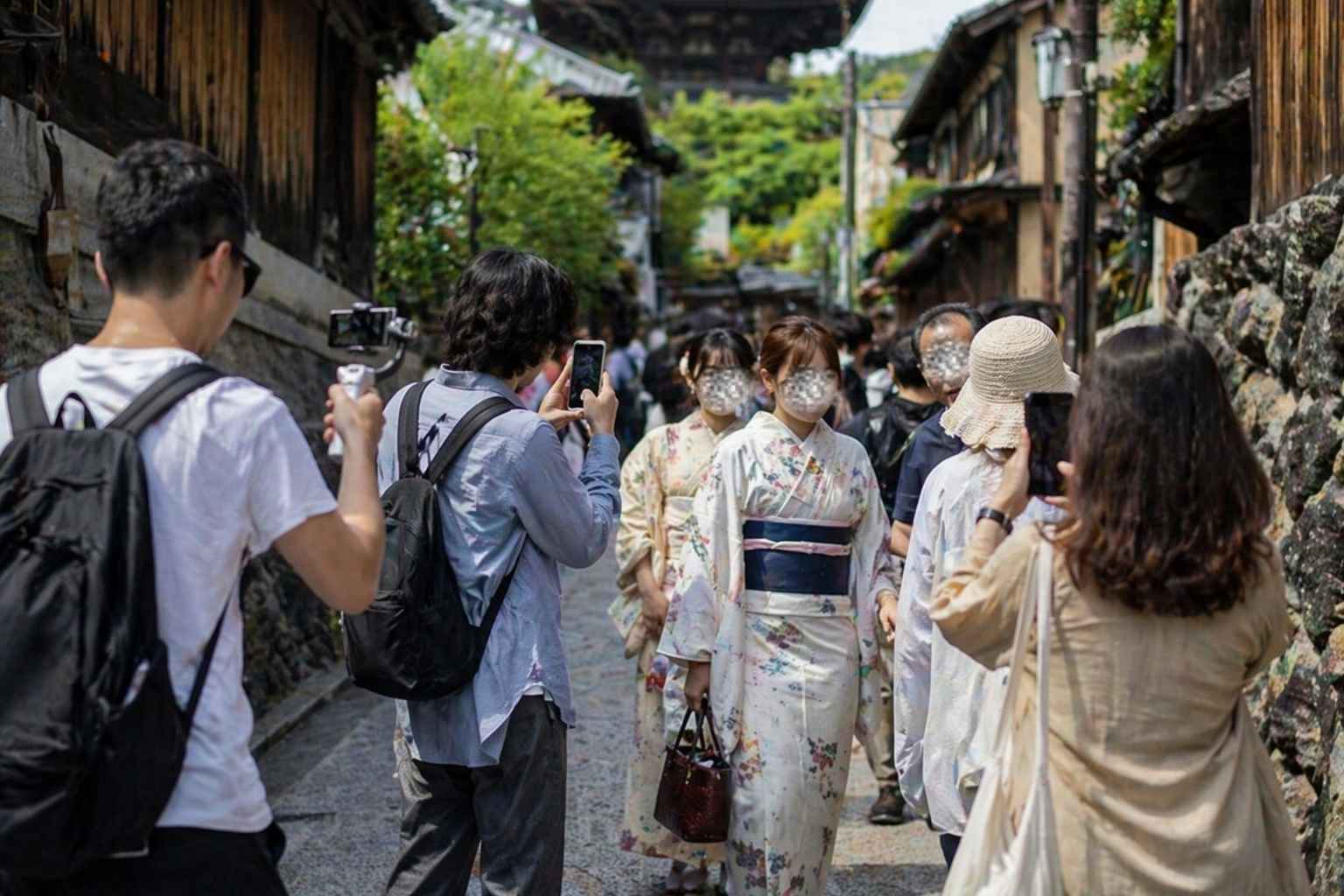
[Featured image: narrow Japanese alley with tourists filming while locals try to pass]
Japan tourist filming rules are becoming harder to ignore as local frustration grows over visitors treating quiet streets, shrine approaches, and old alleys like personal filming sets. This mainly affects travelers creating TikToks, reels, posed videos, and attention-grabbing street content in public areas. It matters now because behavior that feels normal online can quickly come across as disrespectful in places built around awareness, silence, and reading the room.
That is the part many first-time visitors miss. Japan is not rejecting travelers, but it is reportedly losing patience with performance-heavy content culture that turns everyday public space into a stage.
Japan Tourist Filming Rules: What Happened
Reportedly, the pushback is growing because some visitors are blocking narrow streets for video shoots, turning quiet neighborhoods into camera sets, and treating shrines and old alleys like props. What used to be handled through social pressure now appears to be drawing more direct messaging.
This is bigger than photos alone. It reflects a wider clash between content culture and shared public space, especially in places where loud, attention-seeking behavior stands out fast.
[AD PLACEHOLDER: Travel insurance / eSIM / Japan rail tools]
Who This Affects
This mostly affects travelers who build part of their trip around filming themselves in public. It also affects people who may not realize how quickly “normal content behavior” can cross a line in Japan.
Situations that can cause problems include:
- Stopping in narrow streets to film repeated takes
- Doing TikTok dances or posed content in quiet public areas
- Using shrines, alleys, or residential spaces like backdrops or props
- Speaking loudly while filming in places where silence matters
- Ignoring local reactions or continuing after drawing attention
A simple reality check helps: if locals are staring, waiting, or visibly uncomfortable, you may already be pushing too far.
Why This Matters for Travelers
For many visitors, the problem is not obvious until the moment it happens. What feels playful, harmless, or “just for content” can read very differently in Japan when it interrupts other people’s use of space.
That is why Japan tourist filming rules matter even without a formal ban everywhere. In practice, the standard is often less about what is technically possible and more about whether your behavior fits the atmosphere of the place.
Japan tends to reward low-disruption behavior. Travelers who move with awareness usually blend in better, while travelers who perform for the camera tend to stand out for the wrong reasons.
[INTERNAL LINK: Related article idea 1]
What To Know Before You Go
If you plan to film content in Japan, assume the setting matters as much as the shot.
A few safer habits can help:
- Do not block streets, shrine paths, entrances, or pedestrian flow
- Keep voices low in quiet neighborhoods and cultural spaces
- Avoid repeat takes in places where people live, pray, or pass through
- Treat old alleys and shrines as shared spaces, not sets
- Move immediately if your filming starts drawing negative attention
- When in doubt, skip the shot rather than force the moment
The smartest approach is simple: film smaller, faster, and more quietly than you think you need to.
[AD PLACEHOLDER: Portable Wi-Fi / SIM / booking slot]
Official Note
Reportedly, the concern is not ordinary sightseeing or casual photos, but disruptive filming that blocks public space or ignores local atmosphere. Travelers should treat direct signs, staff guidance, and visible local discomfort as serious warnings, not soft suggestions.
[INTERNAL LINK: Related article idea 2]
Japan remains one of the most rewarding places to visit, but it is not built for “main character” behavior in every corner. The more a place feels quiet, narrow, sacred, or residential, the more careful visitors need to be.
Question for readers: Should cities ban public filming and TikTok-style performances in sensitive areas, or are tourists being blamed too easily?